



Sunday Sonata (leçon)

Avec
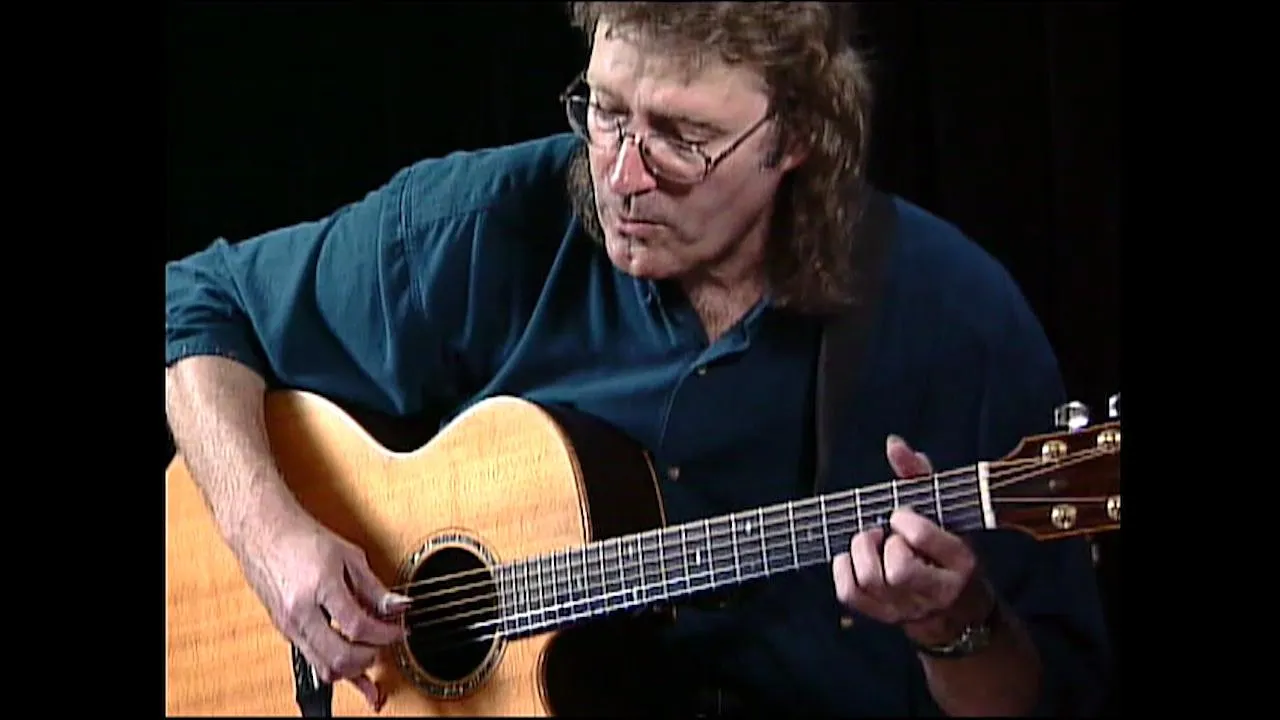
Doug SmithDoug Smith enseigne son morceau Sunday Sonata à la guitare acoustique en accordage drop D, construit autour d'un seul riff de six notes.
Le contenu du cours
13 leçons (1h 35min) · 1 gratuites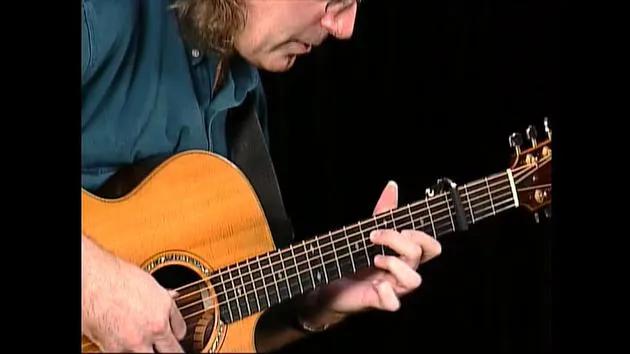
01. Renewal (interprétation)
Leçon gratuite5:25
02. Renewal (leçon)
10:30
03. Order Of Magnitude (interprétation)
4:48
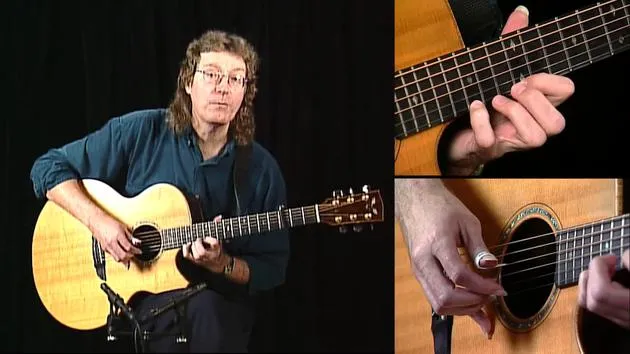
04. Order Of Magnitude (leçon)
10:07
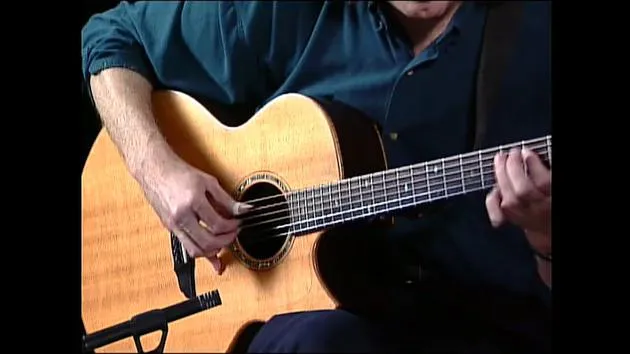
05. Sunday Sonata (interprétation)
4:23
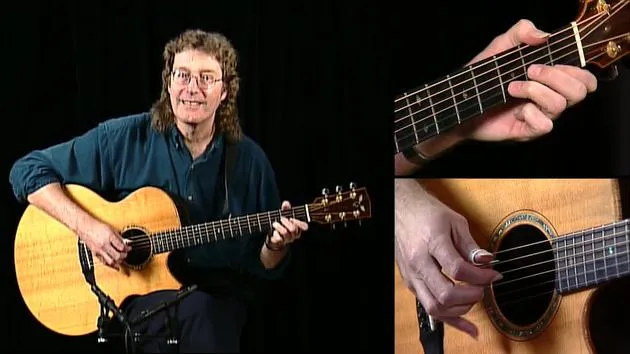
06. Sunday Sonata (leçon)
Tu es ici10:44
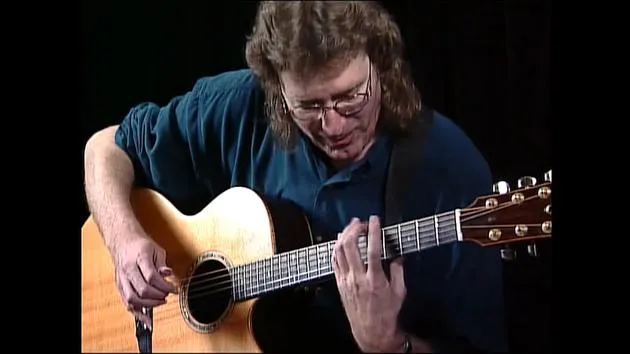
07. Crest of the Revolution (interprétation)
4:24
08. Crest of the Revolution (leçon)
10:33
09. Out of the Darkness (interprétation)
4:53
10. Out of the Darkness (leçon)
10:29
11. The Tempest (interprétation)
4:59
12. The Tempest (leçon)
10:31
13. BONUS : August 23rd (interprétation)
3:57
Transcription de la leçon
Sunday Sonata Music Lesson
The next tune I'm going to do is called Sunday Sonata. This appears on my CD, Labyrinth, as an ensemble tune. There's a full band playing behind me, but it's based on just a solo piece. In fact, when I recorded it, I recorded the solo piece first, and then we all overdubbed our parts over it.
Tuning
It's in dropped D tuning, which is, you know, similar to standard tuning, except the low E is dropped down to D. This allows you to play a full D chord, which is one of the most glorious sounds on earth, as far as I'm concerned.
Overview
This is fairly straightforward, but there are a few little funny rhythmic things I'd like to point out. Musically, it's probably the simplest tune of mine because the entire thing is based on a six-note riff. The riff is:
- 1, 2, 3:
Da da da da da da da da da da da da da.
So, you have this melody (1 and 2) that appears like this as well. Sorry. And then finally, you listen to this a couple of times, and it'll be on your mind all night, I guarantee it. Which is not entirely a bad thing.
Structure
Anyways, the tune starts out with an introduction that sets up the riff immediately, second position for the most part. It's broken up with this riff here.
Now, again, that's a combination of hammer-ons and pull-offs. I just think it's most effective. You could do a pull-off there at the end, but I like picking that note.
Main Part of the Tune
Then we get into the main part of the tune. The way I do the rhythm here is based on 1, 2, 3 - that's the only note on the downbeat. The other notes don't come in until one, but it doesn't really need anything on the downbeat, at least for this section, I don't think.
The accompaniment to it is:
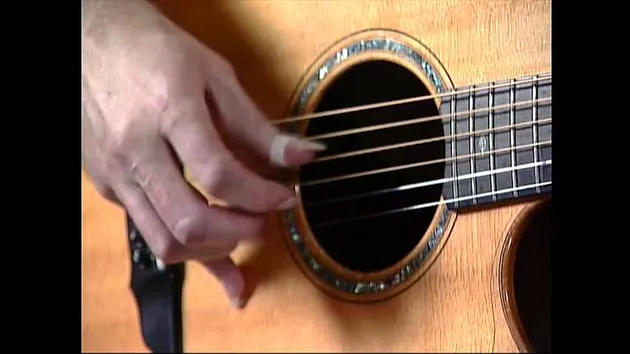
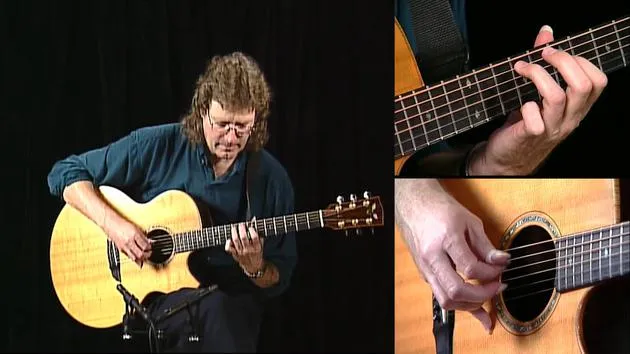
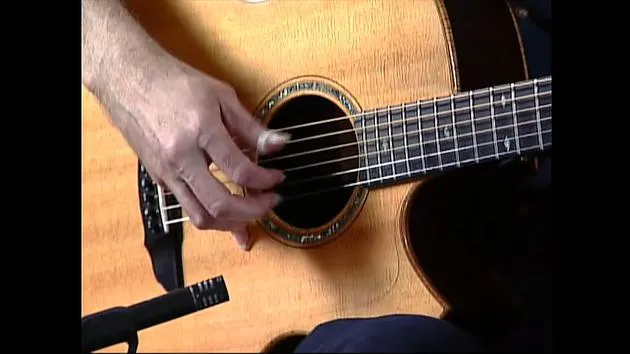
- Right Hand Technique: Take a look at my right hand; I'm muting the strings to give it a little more drive, but making sure that the high note rings out.
- Backbeat: Finally, the last thing I do is add a little backbeat with the back of my nail. You commonly see this as an "X" in tablature. I just kind of flick over a few of the strings to get that sort of, you know, what the snare would be doing, essentially.
It comes out sounding like this:
like that.
Left Hand Technique
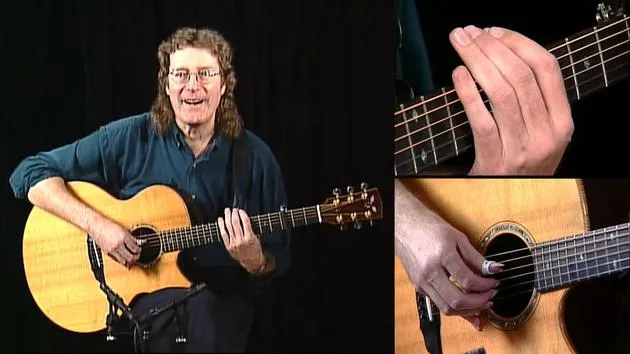
But I'm doing something else with the left hand just to make sure that everything is muted enough so I can do the backbeat. Notice I have my third finger there. I just lay my third finger across when I do that mute and the backbeat. See, that makes it for sure. Same thing here.
I just lift it up, see? So, there are a couple of different ways you can do it.
The Riff Variations
Now, there's two ways you can play that. I have my first finger barred here and I just keep it barred, but I move my second finger over. However, notice I get another unwanted note. So what I do is use my right hand for another mute.
I guess I do a lot of muting, but it helps bring out the melody in certain parts. You see, you can mute it with your first finger, or maybe you would prefer to just lift it up.
So that's kind of six of one, half a dozen of the other. I prefer the muting part of it.
Then we have A (which is essentially a G major 7), and then the same riff just over different chord progressions.
Chord Progressions
Now, that riff includes:
- Fifths that go up two frets with a G in the bass.
- All of a sudden, you have a G major 7.
Then lift that up so you have this parallel fifth thing, or parallel fourth, depending on how you look at it. Just by changing the bass note, you get a completely different texture.
Alternatively, you can play it the way I do and have the open B instead of this being here. I like the sharpness of that second string, which entails another mute, this time with the left hand.
Second Verse
Now we're ready for the second verse. Again, the second verse is based on the same thing as this, but now we're down an octave, and a secondary theme comes in. Hopefully, this theme can be brought out so the ear will hear it separately from the original theme:
bum, bum, bum, bum, bum, bum, bum, bum.
See if you can hear it.
Rhythm Play
The only thing that I do to play with the rhythm right there is when I play this, I play to get this part. My right hand does the following:
- I hit the note and then middle and thumb together.
- Index and thumb, middle and ring together.
- Index on the same string, and the middle just played.
- And then middle and ring on the upper strings.
What happens is I lift up the D chord here at certain times. So with the pick I just did, I get this.
It just... with the staccato notes, you get the melody, bum, bum, bum, but you also get a little rhythmic drive there.
Conclusion
Then we go on, not quite so rhythmic as before, but... you do that a couple of times and...
We run through that, change keys, and end up in G, where I play the same riff. This section is very light and airy.
A fingering trick I use here is in my left hand:
- 4, 4 down, 1 over here, 1, and 2 stays down.
- Then C major 7.
Finally, I do an upward run, which is pretty straightforward, and end up with some false harmonics, I'll get into that in a little more depth in another tune.
So that's pretty much it for that one. Hope you enjoyed!
13 leçons
1h 35m de leçons vidéo structurées
Fonctions vidéo avancées
Ralentissez, bouclez un passage, suivez la partition
Mobile, tablette et ordinateur
Pratiquez où vous voulez
Satisfaction garantie à 100 %
Garantie remboursement 30 jours
Rencontrez votre guru
Rencontrez votre guru
Doug Smith est un guitariste acoustique fingerstyle lauréat d'un Grammy et ancien vainqueur du Winfield International Fingerstyle Guitar Competition, dont le jeu a été mis en avant dans le film August Rush. Son style puise dans le folk, le classique et le jazz, et il a partagé la scène avec des instrumentistes tels que Tommy Emmanuel, Laurence Juber et Andy McKee. Dans son cours MusicGurus "Contemporary Instrumental Guitar", il décortique les techniques qui se cachent derrière ses arrangements en solo.







