



Crest of the Revolution (leçon)
Lesson time: (10min 33sec)
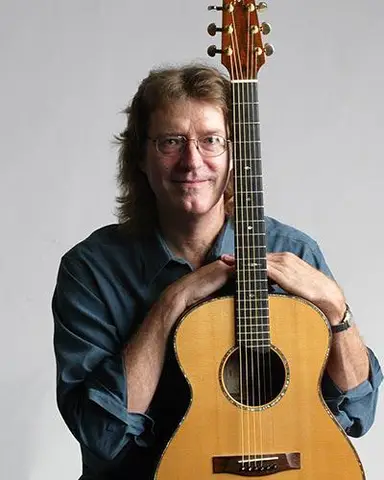
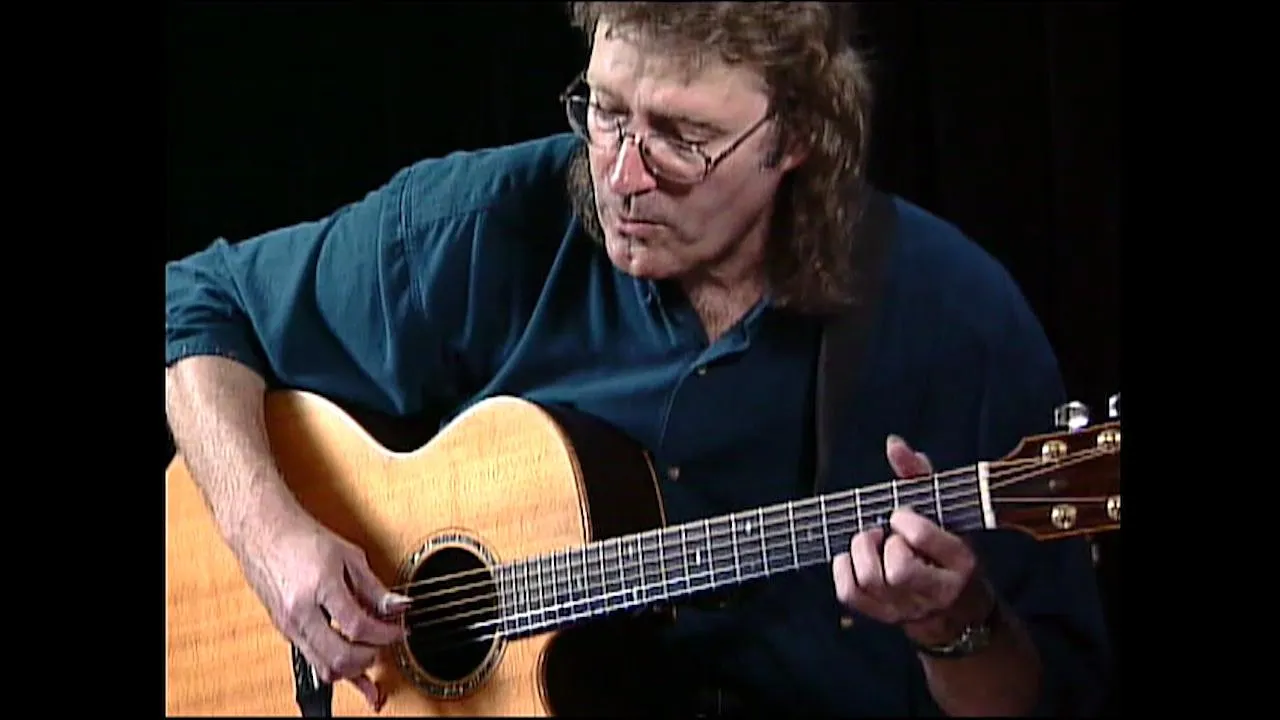
Doug Smith enseigne 'Crest of the Revolution', un morceau acoustique fondé sur du tapping à deux mains et des hammer-ons inspirés de son jeu au Chapman Stick.
Course preview
This lesson is part of the course Guitare instrumentale contemporaine
Watch a preview of the full course below.
Lesson transcript:
Crest of the Revolution
This next tune is called Crest of the Revolution. It's actually named after one of my favorite Southern California roller coasters. I guess you could say this is an example of one or two-handed tapping.
Tapping Technique
Now, this isn't necessarily my forte, but on each CD, I like to include something that involves a technique I used when I played in a rock band. I played the bass, and I also played an instrument called the Chapman Stick, which, if you've ever seen it, looks like a big guitar neck. You get sound out of it just by tapping with both hands, and it's electronic, so you don't have to tap real hard.
I thought it might be kind of nice to adapt some of that to the acoustic guitar. So I took one of those bass lines and put it on the guitar, and came up with Crest of the Revolution.
Hammer-Ons
This song involves hammer-ons, but not so much pull-offs. One thing that one of my professors back in college told me, and I always thought this was a really cool trick, was to get a good hammer-on by imagining that you're trying to fret a note.
- Imagine you're trying to fret a note, but someone's holding you back.
- Then, finally, they let go.
It's more of a snap than just a hammer-on. When done right, it really feels like a snap. Each finger should be able to do that separately. Of course, these two are a little bit harder to get at.
Chapman Stick Articulation
When you play the Chapman Stick, you articulate every single note. Doing that on the acoustic would be a little more difficult. By doing a hammer-on from another note, I lift my first finger off when I articulate, but leaving that finger down makes it come out better. So that's what I do in this song.
Again, my long fingers help me here, so I'm stretching between the third and the seventh frets. The riff is:
And the beat there is ...
That's the work the left hand does, and that's pretty much that riff for the whole song.
Right Hand Techniques
Now, what the right hand does is sort of an example of false harmonics, in a way, using natural harmonics. This is just a quick primer:
- Natural harmonics fall nicely at the 12th fret.
- You put your finger lightly over the 12th fret and pluck it with your right hand, then lift it off.
Instead of using one finger, I'm going to use another finger to lightly cover the note, then use my third finger of my right hand to pluck it this way.
If you already do false harmonics, many of you might do it like this with your thumb. As you can tell, it's not something I'm as well versed in. I was taught doing it this way. But you can get a nice clear harmonic that way.
Creating Chords
One thing you can do nicely is brush your third finger back in the right direction and cover more than one string to get a chord, especially using the second, third, and fourth strings, which happen to be a G. There's a lot of that in this tune, especially right here, just those two notes.
False Harmonics
Oh, I should point out one more thing, though it's not in this song, when I say false harmonics, if you do it this way on the 12th fret and fret the first fret, you can go up to the 13th, 14th, 15th, and create a harmonic on any fret of the guitar. But that's not a lesson for right now.
Combining Hands
Now, putting the right hand and left hand together, I haven't mentioned this yet, but the tuning of this song is, from low to high: E, A, D, G, B, C. So it's standard tuning, except the E is tuned down to C.
In the introduction, I hit the harmonic first and then start the riff, hitting the harmonic again. The melody, such as it is with the harmonics, goes all the way down to the fourth string and then third string up to the 19th fret.
Timing and Sections
The easy thing about doing this with this hand is that the notes are long, and you only hit a harmonic at the same time you're hitting a low G.
Check this out and correct me if I'm wrong.
The next little section is the only part that has actual two-handed tapping. Here's a little riff:
- Then I'll be up here watching both hands towards the end of the fretboard where the left hand would normally be.
- The second finger hits where it is, and the index finger comes up of the right hand to play the fifth fret.
You end up with the first finger of the left hand, creating this riff.
Important Tips
The important thing here is to:
- Don't just lift your finger up, make sure you pull it off to the side. This will make it come out clearer.
One more time:
Alright.
Recap and Final Thoughts
In the middle of the B verse, you start here and go into this:
- This is deceptive; it sounds like it's 1, 2, 3, 4.
- But actually, it's 1, 2, 3, 4, 1, 2, 3.
You just have to be sure that's clear.
Recapping:
- You might be thinking it's 1, 2, 4, 1, 2, 3, 4, but it's not.
- It's actually 1, 2, 3, 1, 2, 3, 4.
It's hard to count and play at the same time, I have to admit.
Final Riff
The last thing I want to mention is that at the very end of the song, I'm doing this riff that goes before the final harmonic, doing this:
The other sound you hear is the left hand tapping along with that.
So, in case you're wondering where that other note came from, that's pretty much it.
Have a good time with it!
About the instructor
Doug Smith est un guitariste acoustique fingerstyle lauréat d'un Grammy et ancien vainqueur du Winfield International Fingerstyle Guitar Competition, dont le jeu a été mis en avant dans le film August Rush. Son style puise dans le folk, le classique et le jazz, et il a partagé la scène avec des instrumentistes tels que Tommy Emmanuel, Laurence Juber et Andy McKee. Dans son cours MusicGurus "Contemporary Instrumental Guitar", il décortique les techniques qui se cachent derrière ses arrangements en solo. read more