



Order Of Magnitude (leçon)

Avec
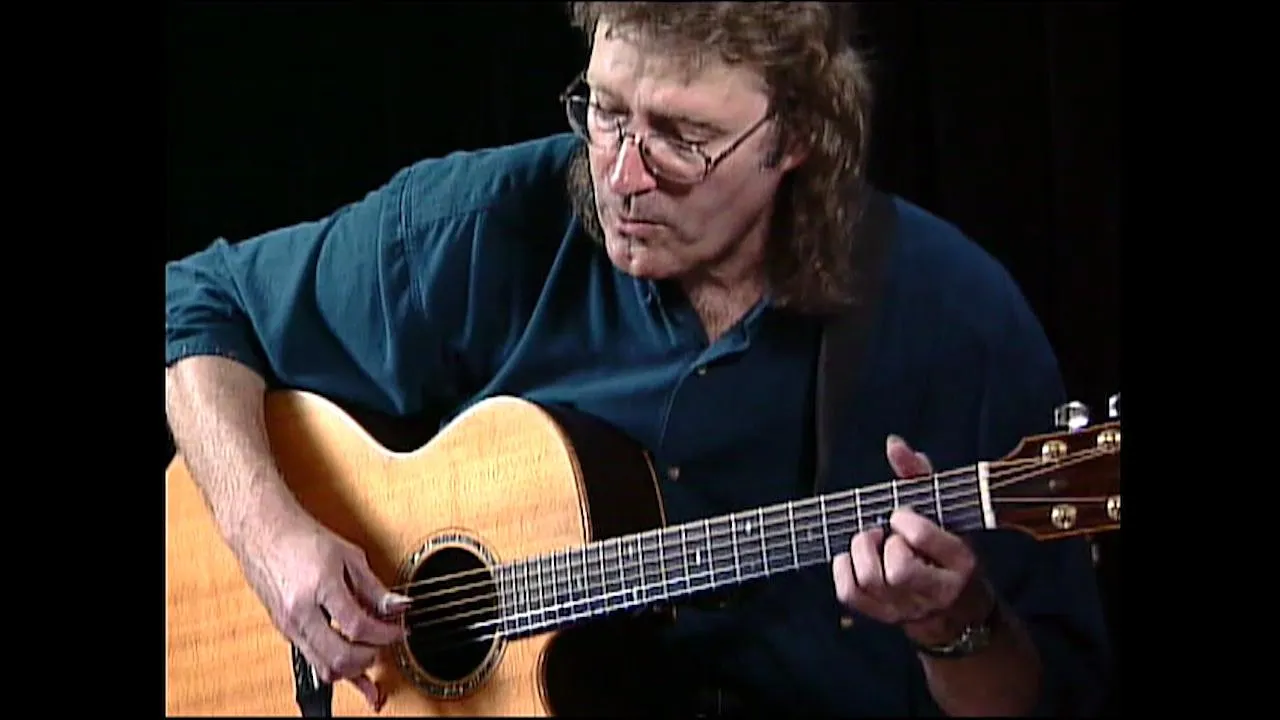
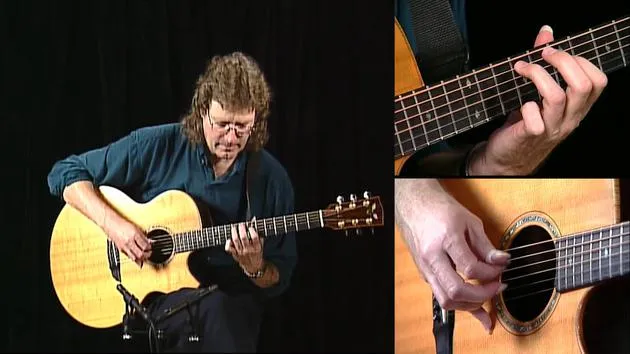
Doug SmithDoug Smith enseigne son morceau fluide en fingerstyle ‘Order of Magnitude’, joué dans un accordage alternatif DGDGAD.
Le contenu du cours
13 leçons (1h 35min) · 1 gratuites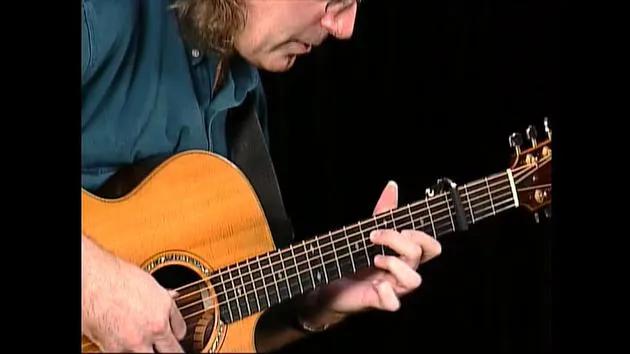
01. Renewal (interprétation)
Leçon gratuite5:25
02. Renewal (leçon)
10:30
03. Order Of Magnitude (interprétation)
4:48
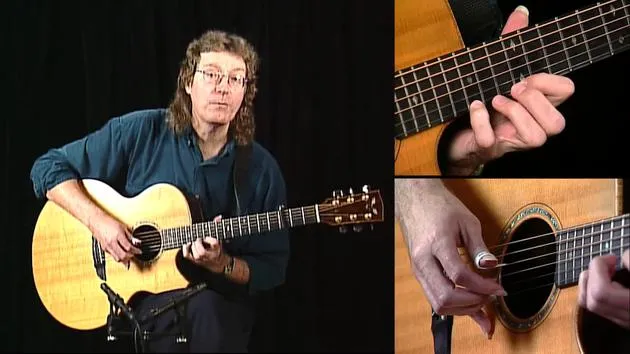
04. Order Of Magnitude (leçon)
Tu es ici10:07
05. Sunday Sonata (interprétation)
4:23
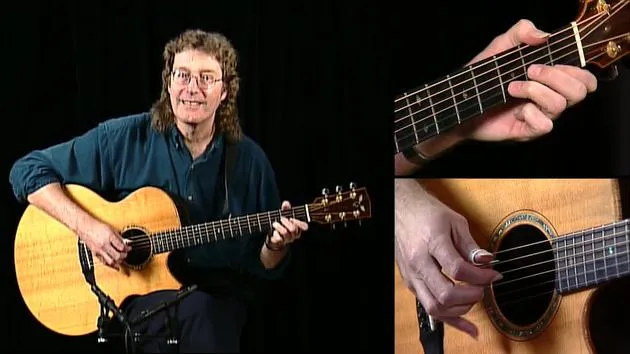
06. Sunday Sonata (leçon)
10:44
07. Crest of the Revolution (interprétation)
4:24
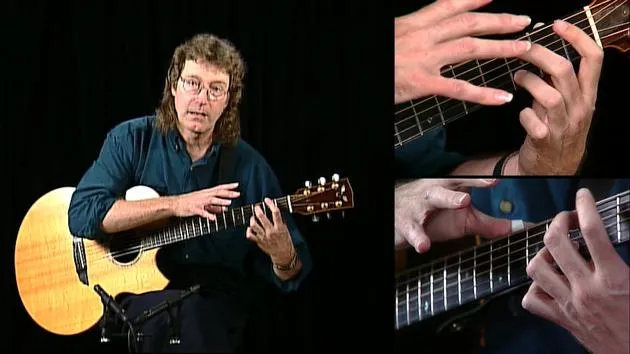
08. Crest of the Revolution (leçon)
10:33
09. Out of the Darkness (interprétation)
4:53
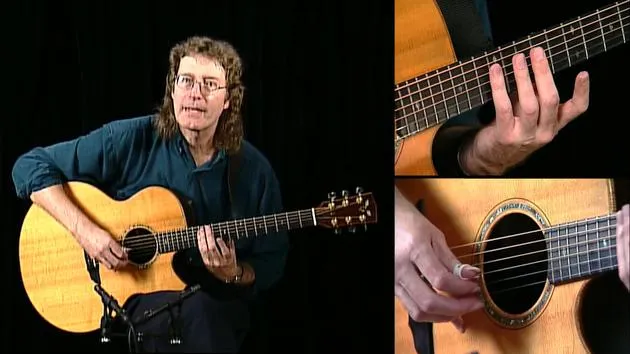
10. Out of the Darkness (leçon)
10:29
11. The Tempest (interprétation)
4:59
12. The Tempest (leçon)
10:31
13. BONUS : August 23rd (interprétation)
3:57
Transcription de la leçon
Music Lesson: Order of Magnitude
This next tune is called Order of Magnitude. It is in a tuning close to DAD.
Tuning
GAD: If you take DADGAD and tune the fifth string down further to G, you get this tuning of D, G, D, G, A, D.
Introduction
Okay. Da. Good, Dad. It starts off with a kind of flowing pick.
- The I and M fingers are basically covering the third and second strings, respectively.
- I'm playing thumb, thumb.
- Just like in "Renewal," I have my first finger on the second fret of the third string. I must like that.
- I'm using my ring finger to catch the first string.
Timing
When this is played up to tempo, the timing feels more like...
"Or the feel is more like... Like that."
The Riff: Horn Fifths
Once you go through this the required amount of times, there's a riff we used to refer to back in music school as horn fifths.
- It has a harmony that sounds like French horns, reminiscent of the king entering. I've always loved that harmony.
- Here is a version of that horn fifth harmony.
Left Hand Technique:
- Pick the note, then hammer with your first finger on the:
- Third string, second fret
- Second string, second fret
- Open string
While doing that, hit the open strings (fourth and third strings) with your thumb as you hammer down.
"See how when you're hammering down, the thumb is hitting a note, but the finger's not hitting the next note?"
Main Verse
Now we get into the main verse of the song, which is fingered up here.
- The melody will be played with the fourth finger.
- There's a challenging hammer-on in the left hand, which requires hitting a thumb note.
- Make sure to catch that!
Additional techniques include:
- Hammer on
- Pull off
- Throw this in again
- Barr? at the second fret
This is where the melody ends:
"Da da da da."
I want this to be like a secondary melody.
Challenging Riffs
Here comes a series of challenging riffs:
- Leave your second finger barred at the second fret, but reach over with your third finger to do a stretch.
Next Riff:
- Begin with bass notes.
- Jump back down here to another horn fifths type melody.
Note: In the spirit of honesty, I sometimes take a small pause when doing this riff to ensure I get back to the correct position.
"On my original recording, I nailed it. But I don't always nail it. Doing a pause like that is not only dramatic; it's practical."
Verse Repetition
Then we do the verse again, an abbreviated verse.
- We start it off, and those harmonies are important too.
The Real Challenging Riff
What I have is:
- Up at the 12th fret respectively to the capo
- Pull off to the ninth fret with the first finger, lining the fingers up on consecutive frets.
Right Hand Technique:
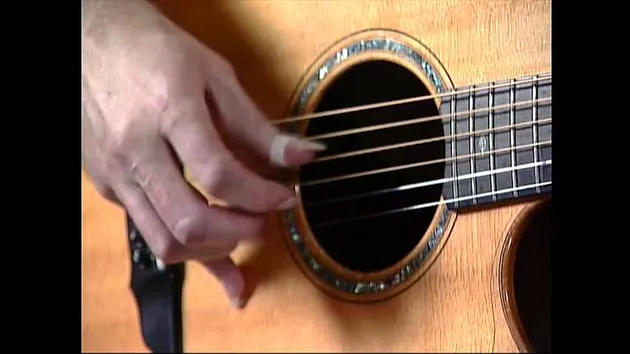
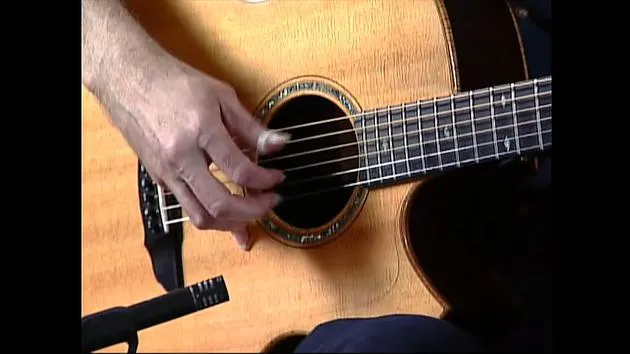
- Ring pull off, middle, index, thumb.
When you reach that point, do a flourish up and try to keep it in time. Repeat the same thing down two frets.
Ending the Riff
To expedite this, I start off with my ring finger, but after that riff, I switch to my middle finger because using the ring would be kind of tough.
This ends with...
Middle Section
This part is something you couldn't see on the page.
- The same formation: your left hand is in the same position as at the beginning of this whole riff and remains that way until the pause.
The middle section is fairly self-explanatory, although there are some differing rhythms.
- It starts off much like the beginning of the song or the riff that continues throughout.
- It's on different strings and accents different notes with a couple of tricky pull offs:
- Right here and right here.
The same right hand technique goes on.
Rhythm Change
The rhythm will change slightly coming up right here and then back to the original.
"Like this here, we've got: I like to be in America," that type of difference.
The rest of that is pretty self-explanatory.
Conclusion
Then it repeats the verse and ends with the flourishes.
Enjoy and have a good time with it, and good luck!
13 leçons
1h 35m de leçons vidéo structurées
Fonctions vidéo avancées
Ralentissez, bouclez un passage, suivez la partition
Mobile, tablette et ordinateur
Pratiquez où vous voulez
Satisfaction garantie à 100 %
Garantie remboursement 30 jours
Rencontrez votre guru
Rencontrez votre guru
Doug Smith est un guitariste acoustique fingerstyle lauréat d'un Grammy et ancien vainqueur du Winfield International Fingerstyle Guitar Competition, dont le jeu a été mis en avant dans le film August Rush. Son style puise dans le folk, le classique et le jazz, et il a partagé la scène avec des instrumentistes tels que Tommy Emmanuel, Laurence Juber et Andy McKee. Dans son cours MusicGurus "Contemporary Instrumental Guitar", il décortique les techniques qui se cachent derrière ses arrangements en solo.







