



Structure
Avec
Mike LovattMike Lovatt montre comment la structure de 'Transposition Blues', y compris son changement de tonalité de Ré à Fa, façonne une interprétation swing authentique.
Le contenu du cours
29 leçons (1h 2min) · 1 gratuites
01. Slinky - Introduction et interprétation
1:38
02. Articulation
5:21
03. Notes longues et courtes
1:44
04. Le coup de langue
3:12
05. Technique de pistons
1:13
06. Vibrato
4:19
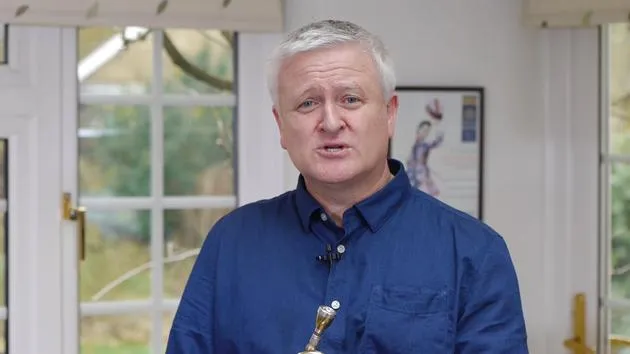
07. Récapitulatif
0:53
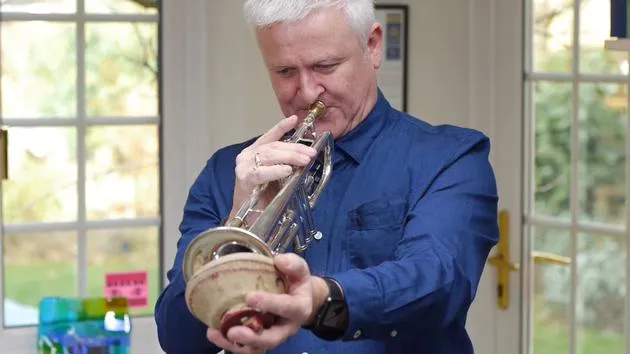
08. Interprétation avec sourdine
1:05
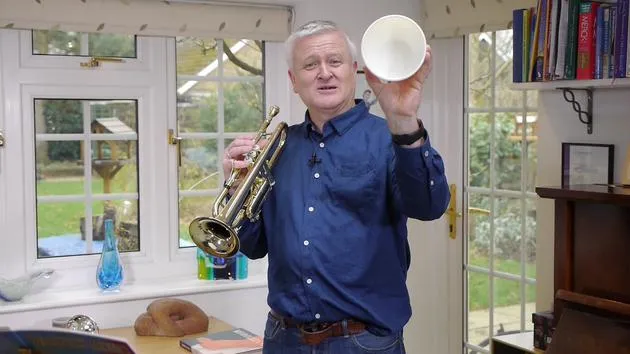
09. Comment utiliser une sourdine plunger
2:39
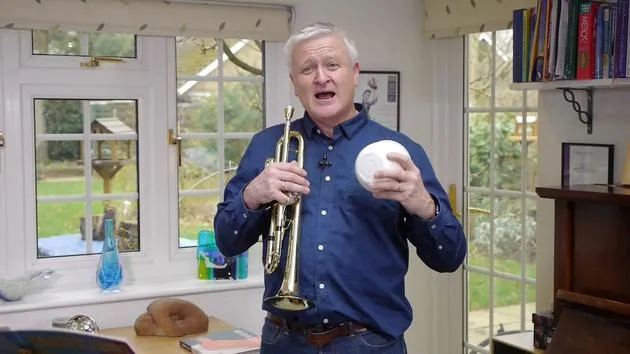
10. Défi (avec sourdine à piston)
0:49
01. Transposition Blues - Introduction et interprétation
2:05
02. Structure
Tu es ici1:51
03. Se plonger dedans
2:22
04. Bend de notes
2:40
05. Les nuances
3:00
06. Deuxième section, dans le style de Louis Armstrong
2:01
07. Shakes
5:03
08. Scoops
2:35
09. Sonorité, style et vibrato
3:00
10. Résumé
1:16
11. Défi (style Louis Armstrong)
0:39
Transcription de la leçon
Lesson Overview: Exploring Structure and Style in Music
In this lesson, we're going to learn about how we can use structure to change style and take us on that musical journey we've talked about in previous lessons.
Analyzing the Piece: Transposition Blues
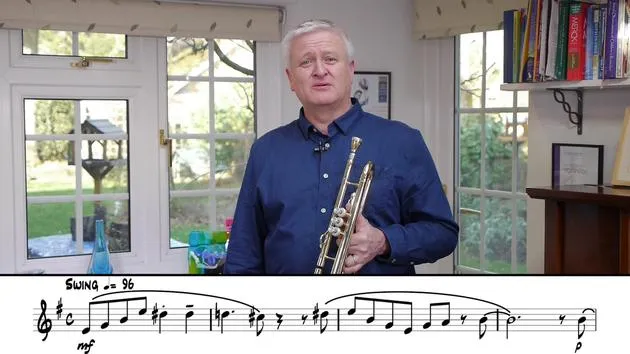
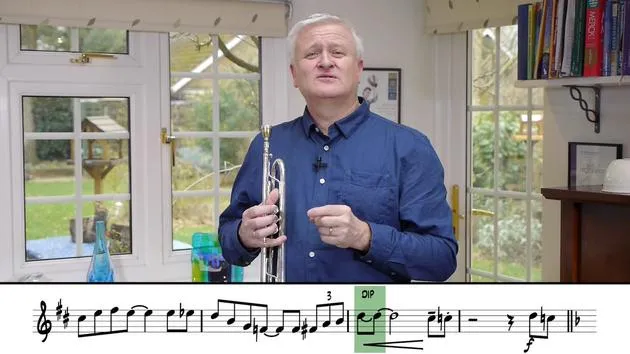
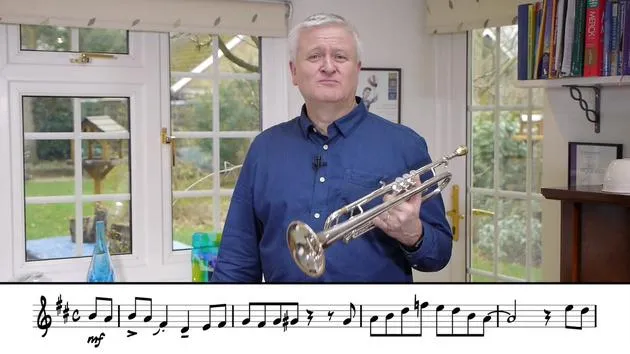
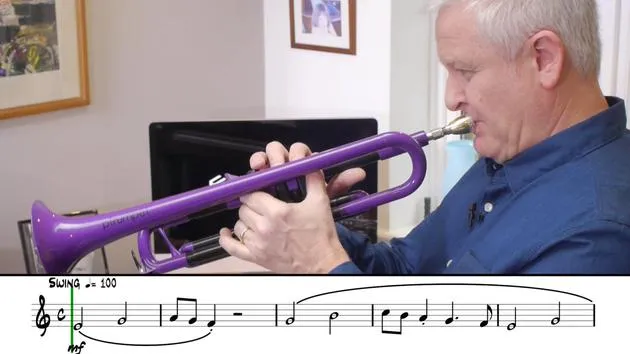
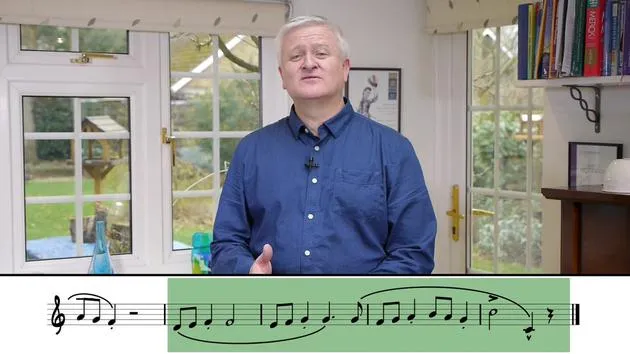
If we look at the piece, Transposition Blues, we can see it's kind of in two distinct parts:
- Part One: Starts off with two sharps in the key of D.
- Part Two: Moves into F.
You can see there's a three-beat rest as the key change goes into F. Halfway through the piece, there's a double bar marked that indicates that change in the structure.
Part One: A Groovy Slow Blues
The first half of the piece could be thought of as quite slow, a bluesy kind of digging in, groovy slow blues.
One of the pieces that springs to mind is from the Atomic Mr. Basie album. The Count Basie Orchestra were absolute perfectionists, playing with a fantastic groovy slow time.
Listen to the way in which they dig into this. We could play that first section thinking along those lines, considering that style.
Part Two: A Declamatory Louis Armstrong Style
The second section is more what I call a kind of declamatory Louis Armstrong style.
- Think of New Orleans.
- Think of Dixieland music.
We can apply that style to this piece, and I think it makes it sound really good.
29 leçons
1h 2m de leçons vidéo structurées
Fonctions vidéo avancées
Ralentissez, bouclez un passage, suivez la partition
Mobile, tablette et ordinateur
Pratiquez où vous voulez
Satisfaction garantie à 100 %
Garantie remboursement 30 jours
Rencontrez votre guru
Rencontrez votre guru
Mike Lovatt a étudié au Trinity College of Music, où il a reçu la Jon Kelly Jazz Scholarship. Il s'est produit et a enregistré dans une immense variété de styles avec des artistes tels que Quincy Jones, Robbie Williams, Eric Clapton, l'Orchestra of the Royal Opera House Covent Garden, le Royal Philharmonic Orchestra, Michael Buble, Oasis, Michel Legrand, Tony Bennett, Shirley Bassey et Danny Elfman, parmi bien d'autres.
En tant que trompette solo dans le West End de Londres, Mike s'est produit dans Jesus Christ Superstar, Evita, The Producers, Billy Elliot, Guys and Dolls, Saturday Night Fever, My Fair Lady et Spamalot, entre autres. Il a joué sur des bandes originales de films dont les James Bond, Harry Potter avec le London Symphony Orchestra, le film primé Chicago, Beyond the Sea de Kevin Spacey, Charlie and the Chocolate Factory, Madagascar et The Corpse Bride. On l'entend à la trompette et au cornet dans Mrs Henderson Presents de George Fenton, et à la trompette dans Looking for Eric.
Mike est trompette solo du John Wilson Orchestra, nommé aux Grammy, et a été mis en avant dans leurs célèbres concerts et enregistrements des BBC Promenade.
Mike est très demandé comme professeur et clinicien, et il est professeur de trompette à la Royal Academy of Music et au Royal College of Music. En avril 2013, il a eu la fierté de se voir décerner la prestigieuse Derek Watkins' Chair of Trumpet à la Royal Academy of Music de Londres.
Dans ses cours MusicGurus, Mike partage les secrets de sa polyvalence, te montrant comment maîtriser les styles authentiques de trompette swing, rock et latino afin que tu puisses jouer chacun d'eux avec assurance et le bon feeling.







