



Les nuances
Avec
Mike LovattMike Lovatt montre comment swinguer avec puissance tout en jouant doucement, à la manière de Count Basie, et comment nuancer les indications de crescendo et de diminuendo dans ce morceau de trompette swing aux accents blues.
Le contenu du cours
29 leçons (1h 2min) · 1 gratuites
01. Slinky - Introduction et interprétation
1:38
02. Articulation
5:21
03. Notes longues et courtes
1:44
04. Le coup de langue
3:12
05. Technique de pistons
1:13
06. Vibrato
4:19
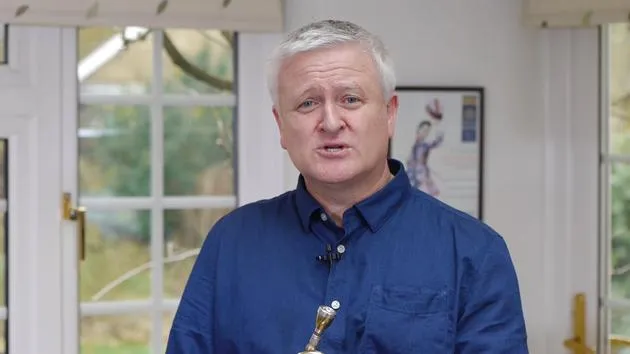
07. Récapitulatif
0:53
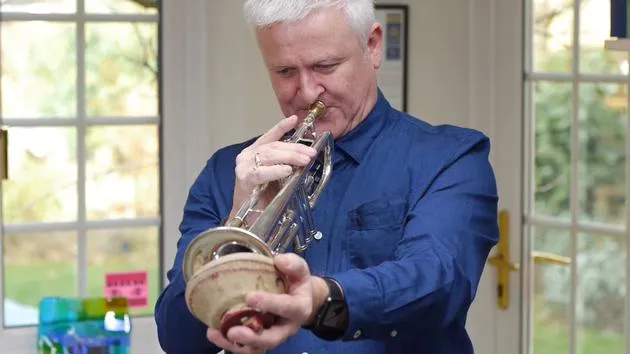
08. Interprétation avec sourdine
1:05
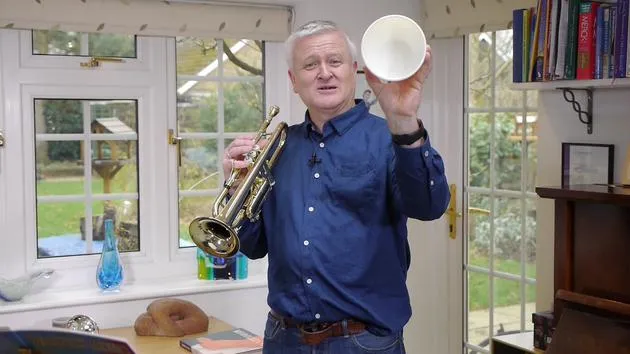
09. Comment utiliser une sourdine plunger
2:39
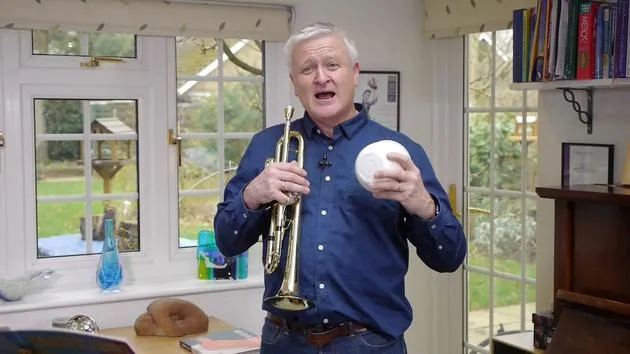
10. Défi (avec sourdine à piston)
0:49
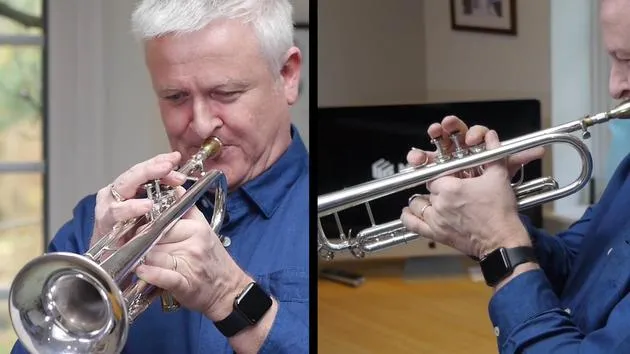
01. Transposition Blues - Introduction et interprétation
2:05
02. Structure
1:51
03. Se plonger dedans
2:22
04. Bend de notes
2:40
05. Les nuances
Tu es ici3:00
06. Deuxième section, dans le style de Louis Armstrong
2:01
07. Shakes
5:03
08. Scoops
2:35
09. Sonorité, style et vibrato
3:00
10. Résumé
1:16
11. Défi (style Louis Armstrong)
0:39
Transcription de la leçon
Dynamics in Performance
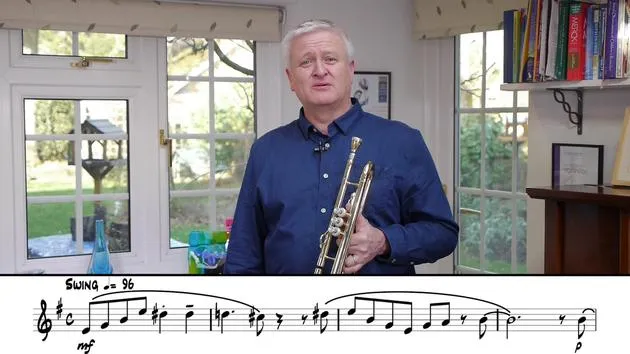
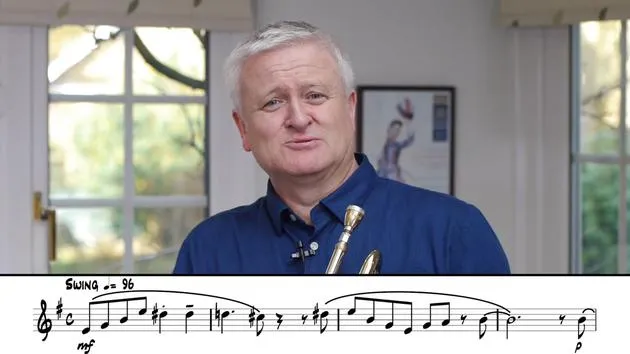
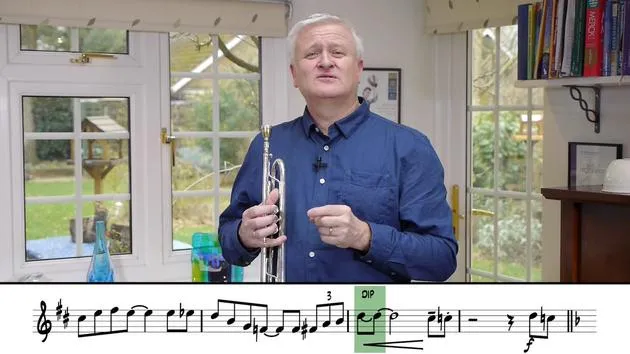
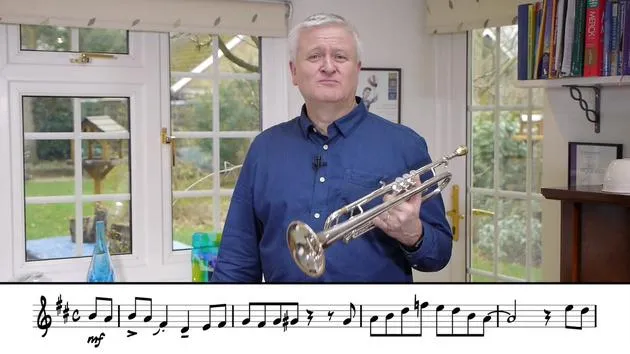
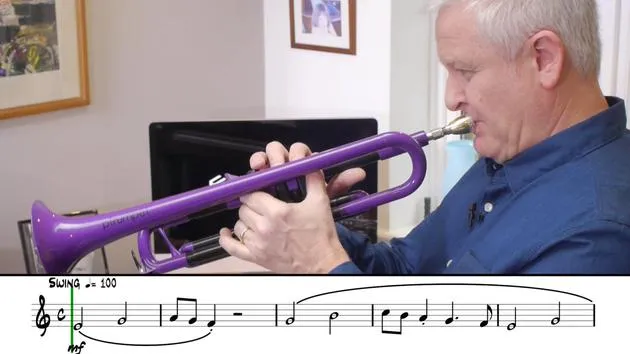
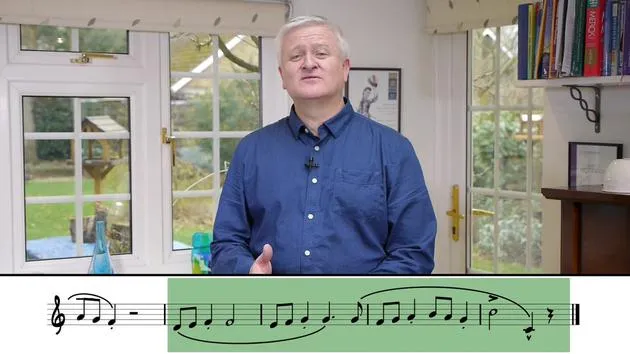
There are not loads of dynamics in this piece, but as you can see, Mark Nightingale has marked MF at the start, mezzo forte.
Playing with Dynamics
So what we can do is:
- Play a bit quieter to contrast with the section that is coming up afterwards, which is forte.
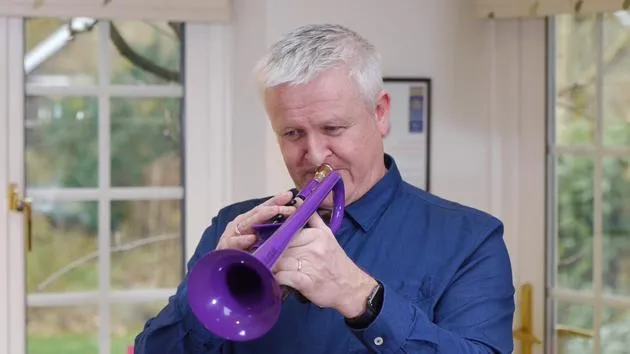
Let's try playing it softly. This is another thing the Count Basie Orchestra were absolutely brilliant at doing. They could swing really hard, but play very quietly. The intensity of that swing and the triplet feel needs to still be there, even though we're playing quietly.
Experimenting with Crescendo
Let's see what it sounds like when we do that.
Okay, where are we going to now with that crescendo at the end?
You heard how before I did the crescendo, I did another bend. But in this case, on the music, we see that there is a marking of dip.
Understanding the Dip
Now, what's a dip? It's another way of writing a bend, really.
- You can also see that between those two quavers, there is a little line, like an inverted kind of slur marking.
- That is a bend or a dip, achieved the same way as we did the bends in the earlier part of the tune.
You probably noticed that there, as well as the dip on the long note, I used vibrato, as we've learned to do in the other pieces.
Transitioning to the Next Section
A slinky and a small step. That crescendo leads us on nicely to the next section.
We have a three beat rest.
Now, when we have a three beat rest like that, it's really important in swing music, especially this bluesy kind of style, that when we come in with that next entry, which is forte, it's going to let the whole world know about it.
We need to go on the beat.
So we go:
- D2, 3,
- Bab du Bo.
Maybe when you listened and watched my performance with the backing track, you heard me really dig into that beat.
29 leçons
1h 2m de leçons vidéo structurées
Fonctions vidéo avancées
Ralentissez, bouclez un passage, suivez la partition
Mobile, tablette et ordinateur
Pratiquez où vous voulez
Satisfaction garantie à 100 %
Garantie remboursement 30 jours
Rencontrez votre guru
Rencontrez votre guru
Mike Lovatt a étudié au Trinity College of Music, où il a reçu la Jon Kelly Jazz Scholarship. Il s'est produit et a enregistré dans une immense variété de styles avec des artistes tels que Quincy Jones, Robbie Williams, Eric Clapton, l'Orchestra of the Royal Opera House Covent Garden, le Royal Philharmonic Orchestra, Michael Buble, Oasis, Michel Legrand, Tony Bennett, Shirley Bassey et Danny Elfman, parmi bien d'autres.
En tant que trompette solo dans le West End de Londres, Mike s'est produit dans Jesus Christ Superstar, Evita, The Producers, Billy Elliot, Guys and Dolls, Saturday Night Fever, My Fair Lady et Spamalot, entre autres. Il a joué sur des bandes originales de films dont les James Bond, Harry Potter avec le London Symphony Orchestra, le film primé Chicago, Beyond the Sea de Kevin Spacey, Charlie and the Chocolate Factory, Madagascar et The Corpse Bride. On l'entend à la trompette et au cornet dans Mrs Henderson Presents de George Fenton, et à la trompette dans Looking for Eric.
Mike est trompette solo du John Wilson Orchestra, nommé aux Grammy, et a été mis en avant dans leurs célèbres concerts et enregistrements des BBC Promenade.
Mike est très demandé comme professeur et clinicien, et il est professeur de trompette à la Royal Academy of Music et au Royal College of Music. En avril 2013, il a eu la fierté de se voir décerner la prestigieuse Derek Watkins' Chair of Trumpet à la Royal Academy of Music de Londres.
Dans ses cours MusicGurus, Mike partage les secrets de sa polyvalence, te montrant comment maîtriser les styles authentiques de trompette swing, rock et latino afin que tu puisses jouer chacun d'eux avec assurance et le bon feeling.







