



Allegro Con Brio - Bernard Haitnik donne son analyse et ses retours à Karim Said
Avec
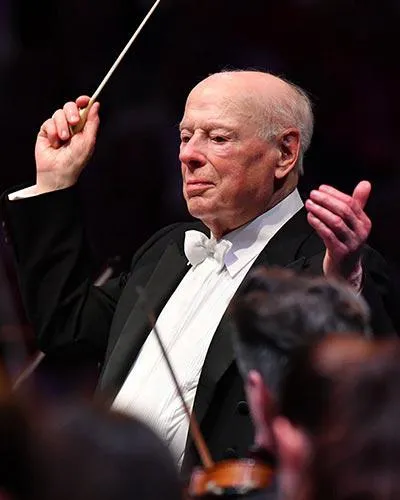
Bernard HaitinkKarim Said dirige la Troisième de Brahms tandis que Bernard Haitink livre des retours francs sur la façon de communiquer avec l'orchestre et de façonner l'Allegro con brio.
Le contenu du cours
14 leçons (3h 22min) · 1 gratuites
01. Introduction de Bernard Haitink
Leçon gratuite1:28
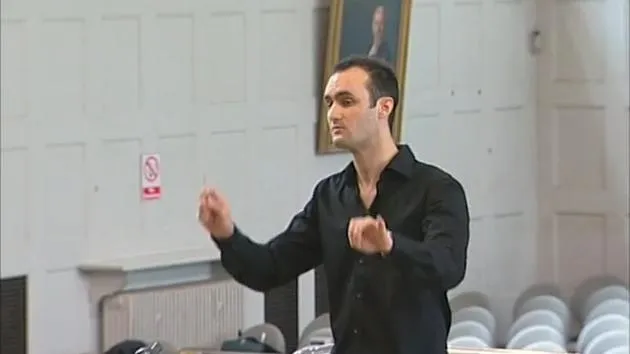
02. Allegro Con Brio - Bernard Haitink donne son analyse et ses retours à Thomas Blunt
5:54
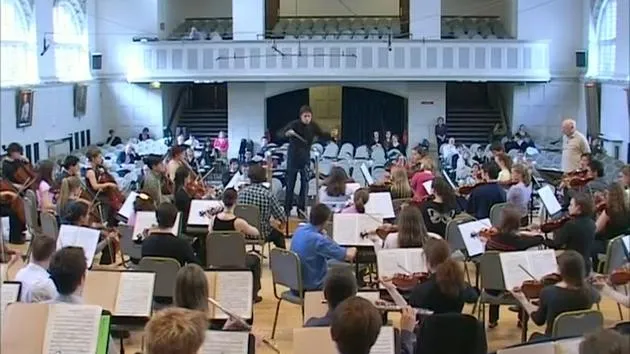
03. Allegro Con Brio - Bernard Haitnik donne son analyse et ses retours à Leo McFall
9:35
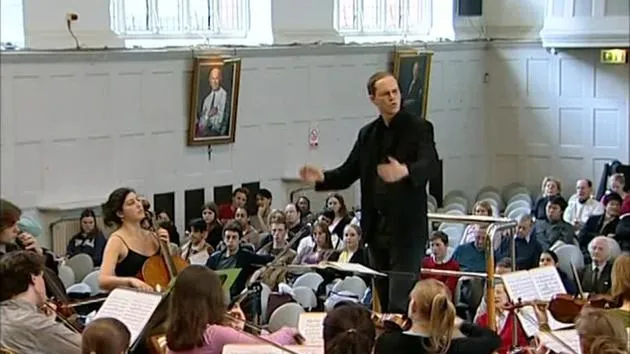
04. Allegro Con Brio - Bernard Haitnik donne son analyse et ses retours à Timothy Henty
19:49
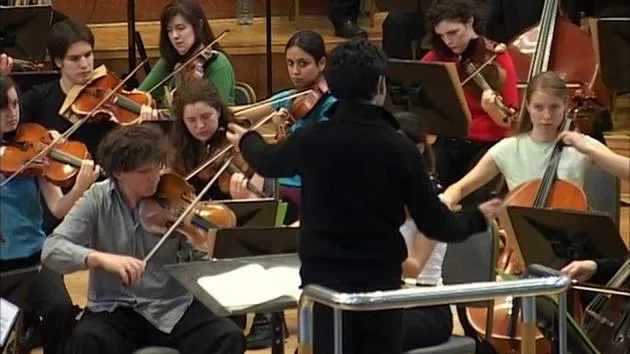
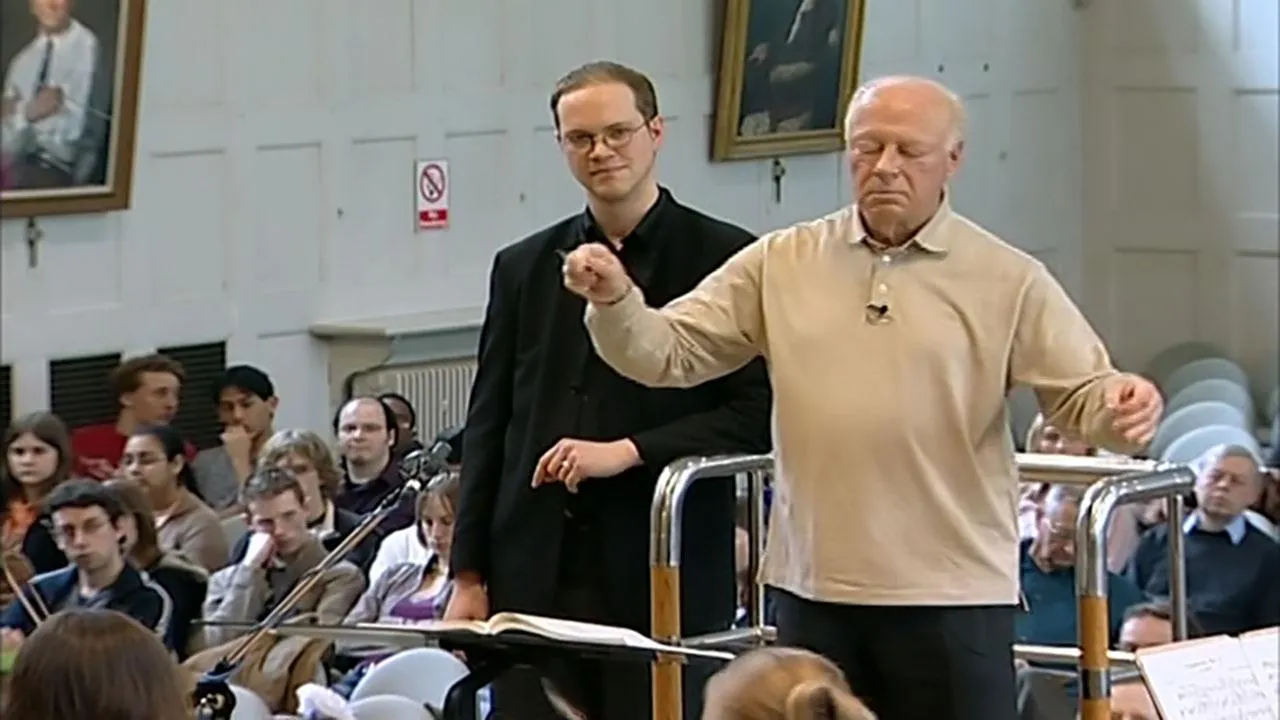
05. Allegro Con Brio - Bernard Haitnik donne son analyse et ses retours à Karim Said
Tu es ici10:54
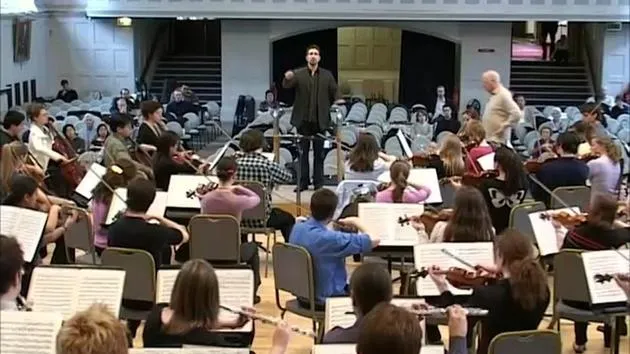
06. Allegro Con Brio - Bernard Haitnik donne son analyse et ses retours à Michael Young
15:03
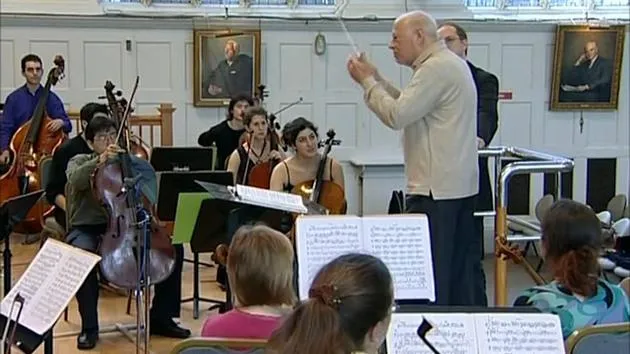
07. Andante - Bernard Haitnik donne son analyse et ses retours à Timothy Henty
18:49
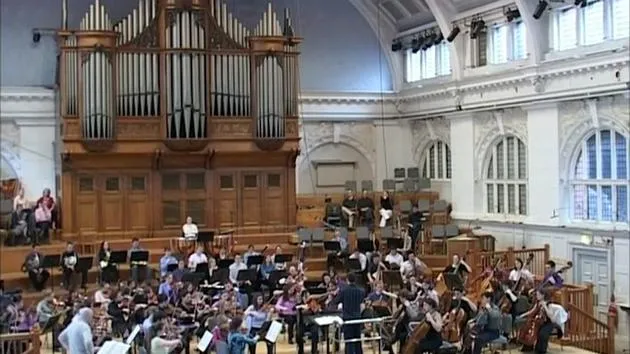
08. Andante : Bernard Haitink partage son analyse et ses retours avec Michael Young
20:20
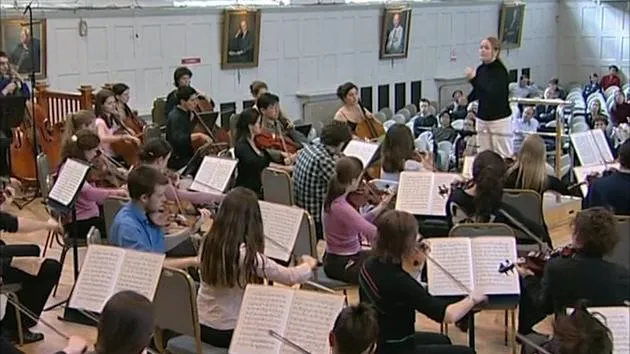
09. Poco Allegretto - Bernard Haitink donne son analyse et ses retours à Anne-Marie Granau
21:37
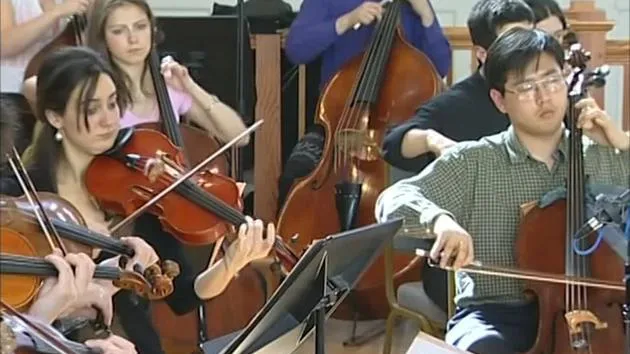
10. Poco Allegretto - Bernard Haitnik donne son analyse et ses retours à Leo McFall
7:02
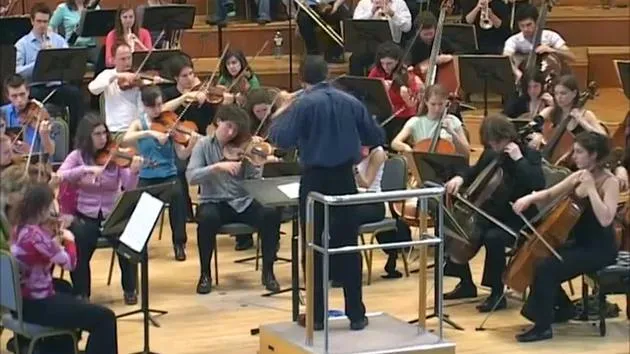
11. Allegro - Bernard Haitink donne son analyse et son retour à Leo McFall
10:10
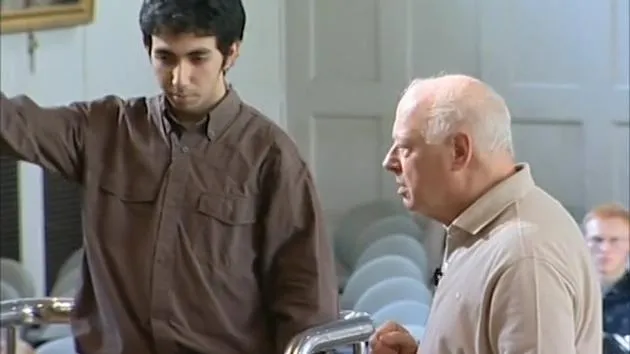
12. Allegro - Bernard Haitink donne son analyse et son retour à Karim Said
7:52
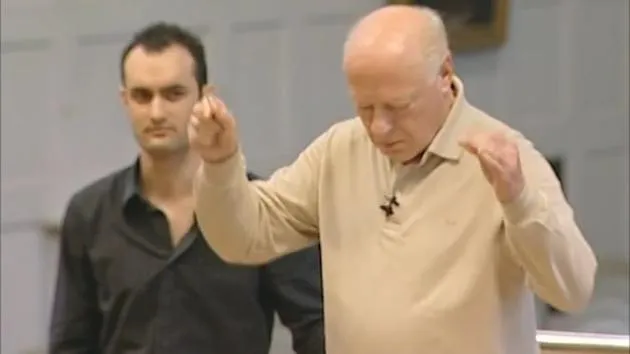
13. Allegro - Bernard Haitink donne son analyse et ses retours à Thomas Blunt
24:02
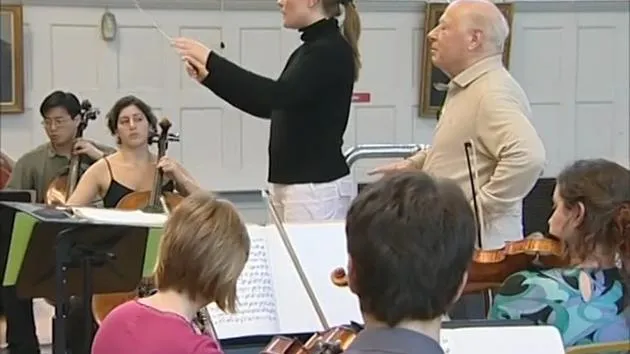
14. Allegro - Bernard Haitnik donne son analyse et ses retours à Anne-Marie hGranau
29:48
Transcription de la leçon
Music Lesson
Enjoy yourself. Thanks. May I just ask for two things before I start?
I would first start. Start. Okay. Because that's a very dangerous thing when you start. Start.
The Importance of Connection
At most difficult moments of a conductor is when he comes to the orchestra, the first time he comes on the platform and starts to talk. That is very dangerous because orchestra musicians are wonderful, but they can be very cruel.
"Oh God, another talker."
The thing is gone. First, show that you have contact. Then you can do what you want. Well, do what you want. What you think is necessary at that moment.
Feedback for Karim
Good. Letter D, please.
"Well, sorry, one moment."
You are a difficult case for me because you have enormous talent, Karim, but sometimes I don't want to interfere with your interpretation. There is already an interpretation, but it is a dangerous one.
Sometimes I'm not sure if you really want what you are doing because it goes very often slower, faster. And you want to take the orchestra with you, which is good. But I miss a little bit,
"And it's an unpleasant, unartistic word."
It misses a little bit of control. You do sometimes things which I don't understand, and I'm surprised that the orchestra takes it.
Revisiting the Performance
I want to see it once more. Where was it? Here? Where did you start? Sorry.
"Yeah, do that once more. Same place, two bars before the second time. Bar, please."
Well.
"And Carjan and Baron Boyne would be extremely impressed with that."
They would do it themselves. But after 30 years with an orchestra, what you are doing is all of a sudden at a critical moment.
"Well, come on, play on."
I don't know how you do it, but they play. Maybe I'm a bit envious, but I should say try to give it a little bit more clarity for the time being. Later on, you can say,
"Come on, boys and girls, play."
And I'm standing here and I'm enjoying it, and it works. But I would now be a little bit more careful. So do the same once more.
Clarification on Expectations
Okay. Are you talking about this? Because I think I should be clear here.
"Yes."
I think that a conductor's life goes in several phases, and you are in phase one. It has to be clear.
That doesn't mean that you should neglect the music. There were some very great conductors who were very clear, and there were some very great conductors who were not that clear. That's a personal choice. But now at this time.
"Yeah, okay."
Okay, I have to rub it in. Letter E.
"Can we just have more sustained, please?"
Should I go from the same place? Okay. More bows on the crotchets, please. Where?
"At the beginning."
PI. Yum. Bum. Bum bum to give it more sound and especially more bass. Bass in general, it could be a lot more double basses.
"I mean, shadow is great."
Thank you. Yes.
"Karim, that's too dangerous."
That's dangerous. There's too much air there. You don't know where to start with this. After the second beat, I don't want you to beat it out.
"Can you give me three before H that they must have?"
Yeah. Okay. It's no sin to be a bit more clear there.
"There is too much air here."
It doesn't work. So do once more from here. Okay. Same place, please.
"Yes, yes. Poker it."
Okay. What you lack at the moment still is these little, little subdivisions.
And even after three performances, you don't have to do that anymore. But a first performance, a first rehearsal, it is nice when you can keep that under control.
"We do tomorrow."
Yeah. Thank you.
14 leçons
3h 22m de leçons vidéo structurées
Fonctions vidéo avancées
Ralentissez, bouclez un passage, suivez la partition
Mobile, tablette et ordinateur
Pratiquez où vous voulez
Satisfaction garantie à 100 %
Garantie remboursement 30 jours
Rencontrez votre guru
Rencontrez votre guru
Avec une carrière internationale de chef d'orchestre qui s'étend sur plus de cinq décennies, Bernard Haitink, né à Amsterdam, est l'un des chefs les plus célébrés de notre époque.
Nommé chef principal du Chicago Symphony Orchestra dès le début de la saison 2006-7, il a dirigé nombre des plus grands orchestres du monde, dont plus de 25 ans à la tête du Royal Concertgebouw en tant que directeur musical. En outre, M. Haitink a auparavant occupé les postes de directeur musical de la Staatskapelle de Dresde, du Royal Opera, Covent Garden, du Glyndebourne Festival Opera et du London Philharmonic. Il est chef lauréat du Royal Concertgebouw Orchestra, chef émérite du Boston Symphony Orchestra et membre honoraire de la Philharmonie de Berlin. Il s'est produit fréquemment comme chef invité avec la Philharmonie de Berlin, la Philharmonie de Vienne, la Radio bavaroise, le London Symphony et d'autres orchestres de premier plan.
M. Haitink a beaucoup enregistré pour les labels Phillips, Decca et EMI, notamment des cycles complets des symphonies de Mahler, Bruckner et Schumann avec le Concertgebouw et un vaste répertoire avec les Philharmonies de Berlin et de Vienne et le Boston Symphony Orchestra. Ses enregistrements les plus récents sont les intégrales des symphonies de Brahms et de Beethoven avec le London Symphony Orchestra sur le label LSO Live. Sa discographie comprend également de nombreux enregistrements d'opéra avec le Royal Opera et Glyndebourne, ainsi qu'avec l'Orchestre de la Radio bavaroise et la Staatskapelle de Dresde. L'enregistrement par M. Haitink de Jenufa de Janáček, avec l'orchestre, les solistes et le chœur du Royal Opera House, Covent Garden, a reçu un Grammy Award du meilleur enregistrement d'opéra en 2004.
M. Haitink a reçu de nombreuses distinctions internationales en reconnaissance de ses services rendus à la musique, dont un titre honorifique de chevalier et l'Ordre des Compagnons d'honneur au Royaume-Uni, ainsi que l'Ordre de la Maison d'Orange-Nassau aux Pays-Bas. Il a été nommé « Musicien de l'année » par Musical America en 2007.
Dans son cours MusicGurus sur la Symphonie n° 3 de Brahms, Haitink puise dans toute une vie passée au pupitre pour t'emmener au cœur de la partition — comment il en façonne le phrasé, l'équilibre, le tempo et la structure — offrant un aperçu rare de la façon dont l'un des grands chefs lit une symphonie de Brahms et lui donne vie, que tu sois chef d'orchestre, musicien d'orchestre ou auditeur passionné.







