There Will Never Be Another You (solo)

Avec
Joe GlossopJoe Glossop montre comment construire un solo sur "There Will Never Be Another You" à l'orgue Hammond, en mêlant des idées pentatoniques et de gamme blues à des licks qui suivent les changements.
Le contenu du cours
24 leçons (2h 18min) · 1 gratuites
01. The Funk Brothers - How Sweet It Is (interprétation - vue clavier)
1:42
02. The Funk Brothers - How Sweet It Is
8:51
03. Marvin Gaye - What's Going On (interprétation - vue clavier)
1:54
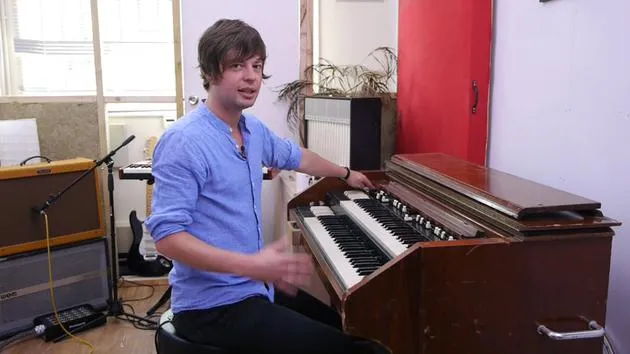
04. Marvin Gaye - What's Going On
8:49
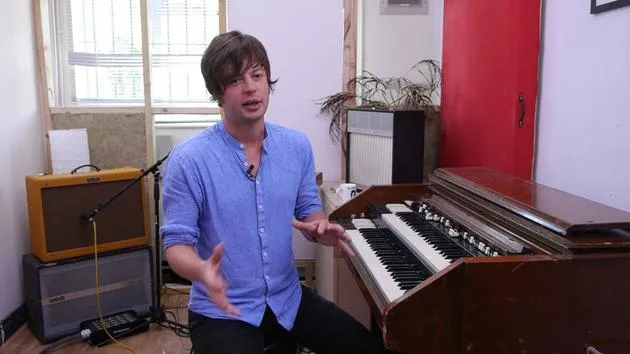
05. Carole King - You've Got A Friend (interprétation - vue clavier)
1:51
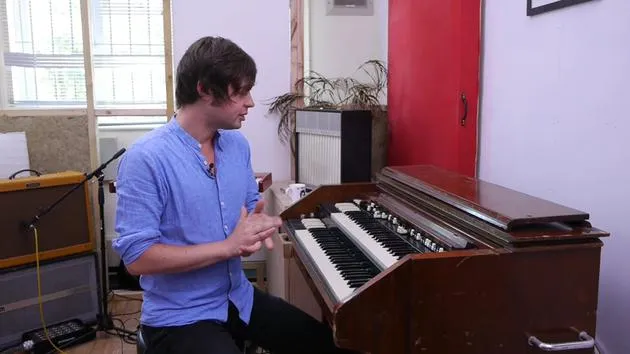
06. Carole King - You've Got A Friend
8:22
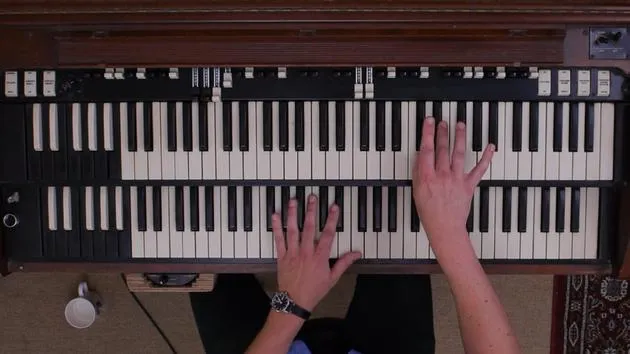
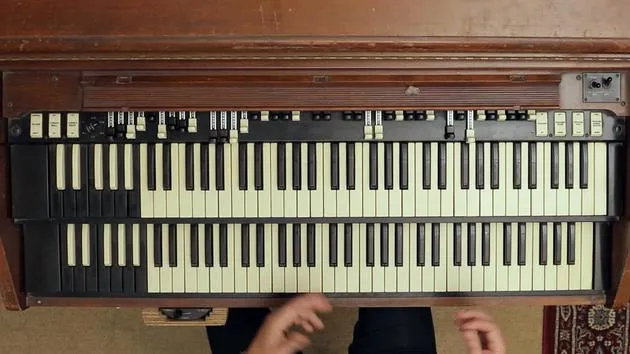
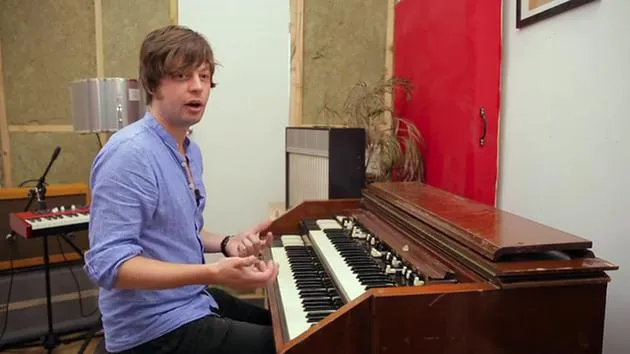
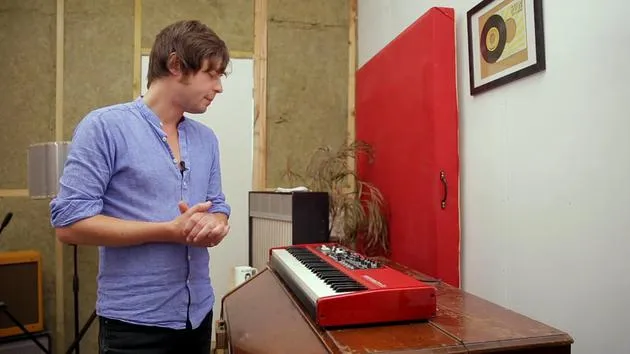
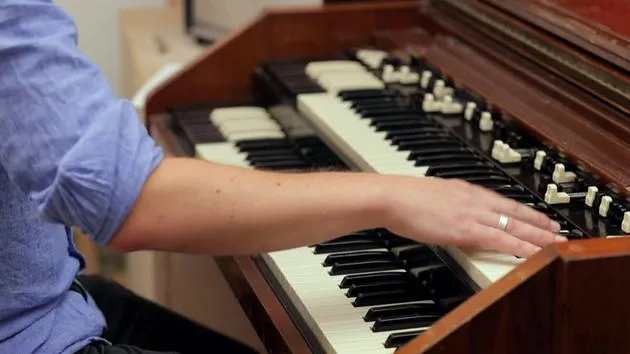
Transcription de la leçon
Soloing Over Changes
Introduction
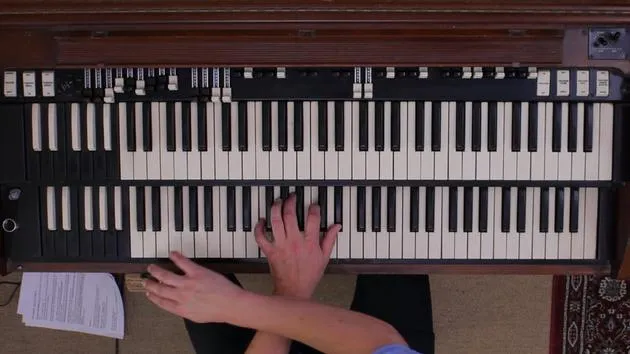
So how do we solo over a tune like this? There's quite a lot of changes, and I think the answer is to keep it fairly stripped down and not get too carried away. We should use a mixture of the pentatonic scale we talked about, including:
- Your AB major scale
- Your F blues scale
- Throwing in some licks that relate to the changes in the harmony
Starting Your Solo
So I can't remember exactly what I did in the solo because I made it up. But when you go to that G, think about what notes are in the G minor. You might stick something like that in there, and that sounds quite interesting. I don't want to say the word "jazzy" because it makes my skin crawl, but it gives it a color that doesn't come from the pentatonic feel, you're going somewhere else.
Technique and Style
I think I started with a kind of McGriff style.
- We got that B flat out of the chord there.
- You can still come down and reinforce that.
You don't need to solo all the time; you can be quite sparing, again using notes from the chord.
Key Tips for Soloing
One of my biggest tips with soloing is:
"If you're not sure, and in fact, even if you are sure, a great place to start is to play the melody from the tune and then let that evolve into something else."
You can reference that all the way through the solo. I just played through licks and then suddenly threw in some of the tune, because that keeps people's ears engaged, oh, yeah, we know who we are!
You might not play with the same phrasing, but referencing it keeps people on side.
Exploring Different Ranges
Don't be afraid to go low again. That's something different! If you stay in the same sweet spot all the time, that is like your meat and potatoes on the organ. Sure, that part is your real money shot moment, but there's really no harm in exploring down here.
- If you start a solo down low, it's a bit different.
- When you do go up there, it's all the more glorious because you spent time in a different place.
Breaking Down the Solo
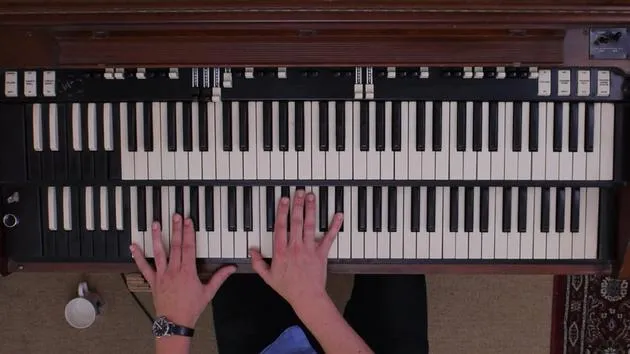
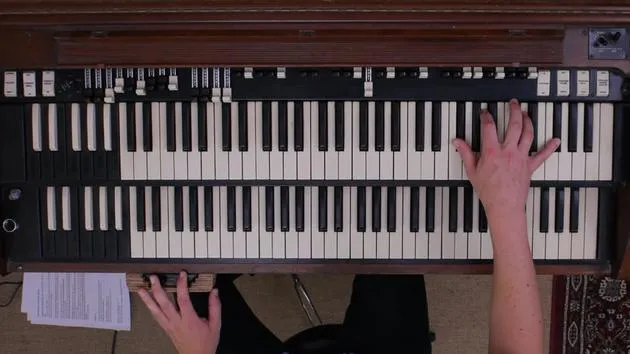
Very quickly, I'll break down the solo. I play it very slowly and include some of these moments that augment it and incorporate some of the melody.
- That's a really nice change coming down there.
- Accent the B flat there for the second time around.
- Coming off the B, play it as a 13 and roll up.
That's a really sweet thing to do.
"That trick always works a charm."
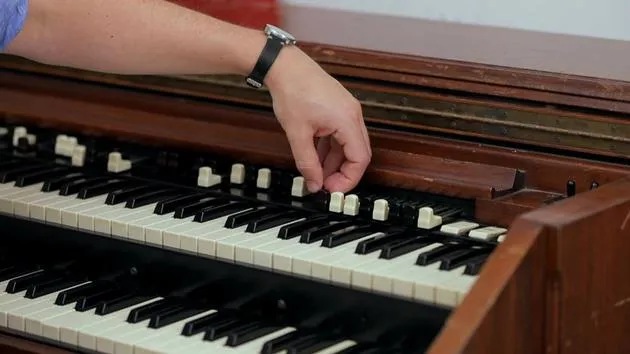
Rolling that one note with the thumb and forefinger.
What I've got there is a flat 13, and I'm about to go back to the one, so that's returning home.
Conclusion
So there you have it. There will never be another!
24 leçons
2h 18m de leçons vidéo structurées
Fonctions vidéo avancées
Ralentissez, bouclez un passage, suivez la partition
Mobile, tablette et ordinateur
Pratiquez où vous voulez
Satisfaction garantie à 100 %
Garantie remboursement 30 jours
Rencontrez votre guru
Rencontrez votre guru
Joe Glossop est un claviériste de Sheffield qui s'est fait un nom à l'orgue Hammond. Il occupe actuellement le poste d'organiste dans le groupe de tournée de Tom Jones, et a joué avec Van Morrison et James Hunter, ainsi qu'au piano et au Rhodes. Ses cours permettent de tirer le véritable son Hammond de n'importe quel clavier : le réglage des drawbars, le Leslie, la basse walking à la main gauche, et le vocabulaire d'accompagnement et de solo des traditions de l'orgue soul-jazz, blues et rock, de Jimmy Smith à Booker T.