



Booker T & the MG's - Be Young, Be Foolish, Be Happy
Lesson time: (11min 19sec)
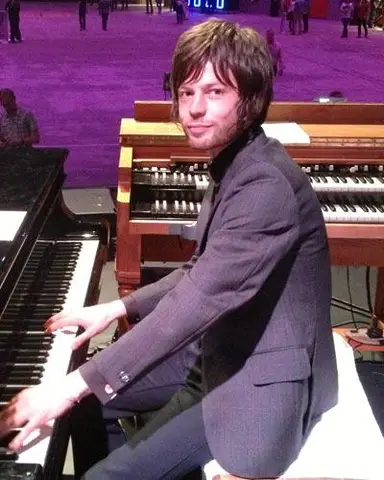
Joe Glossop étudie 'Be Young, Be Foolish, Be Happy' de Booker T & the MG's à l'orgue Hammond, en faisant ressortir le phrasé soul de ce titre de 1968 issu de Soul Limbo.
Course preview
This lesson is part of the course Le langage authentique du Hammond pour le soul et le jazz
Watch a preview of the full course below.
Lesson transcript:
Music Lesson: Be Young, Be Foolish, Be Happy
So in this book of C track, we're gonna have a look at Be Young, Be Foolish, Be Happy. Good advice for its author, I think.
This is from an album called Soul Limbo from '68. The title track, Soul Limbo, is a very famous tune. It's been used for a lot of things, one of them being Test Match Special. If you follow cricket, this tune has been the Test Match Special theme since the '60s or '70s, I think, a long time. It's quite an obscure reference, but don't worry, if you're not into cricket, it doesn't affect things.
This tune is the opening track on the album; that's possibly my favorite Booker T album. So check all of that out! A couple of tunes on there were featured on the last course, if any of you bought that.
Playing the Tune
Anyway, let's do a little bit of Be Young, Be Foolish, Be Happy.
- So, there's the tune.
- Really lovely tune.
- A great soul track that a lot of you will be familiar with.
Booker T's treatment of it, in terms of the way he plays melodies and the tones he uses, is, as always, just amazing. He shows great economy of the instrument and gets the different parts over brilliantly.
On the bottom, as is quite often with Booker T, he's got this kind of lovely tone underpinning everything in the left hand.
Chord Progression
- We got C3 vibrato up there.
- The tune's in B flat, B flat, D minor 7, C minor 7, F7.
So that's the verse in the left hand. To begin with, there's a little opening thing that he comes back to. I didn't play the RE intro just for the sake of showing you each constituent part in the song.
- The right hands play together.
- The way he slips onto that is quite cool.
So what you've got there is an F11, but also it has the 13 in it. That's a really nice voicing if you want to think about it in easier terms. It's the same shape as a C minor 9, or in E flat major 7.
That's the voicing he uses:
- These stay where they are: The E flat and the G.
- And these move around on top of it.
The Intro Part
So that's the intro part. Then the verse he plays alternately single notes and then a couplet phrase.
- The same melody, he just plays it alternately, slightly differently.
- The second time you've got this fifth at the top, F and B flat.
- You've got the extra run on that he does afterward.
That's pentatonic stuff there and that's just G blues scale stuff. We're in B flat, its relative minor, obviously. We're still using the second set of drawbars here, all four out, that classic, very classic Booker T setting.
Switching Between Settings
He uses that for the intro and the first verse, then switches to a fuller, richer sort of gospel-y setting.
- On this setting, he always uses the fifth.
- He doesn't do the single note so much. It's always:
- And there's often a little slide down off it, because you can catch those top harmonics without.
- If you're on a multi-contact key like the Hammond, you can catch the top harmonics without getting all of them for a little trail-off like that.
The Middle Eight
So then there's a middle eight part. And this is really lovely.
- It goes to D flat major 7.
- I'm playing the bass there just to put this in context. You don't need to do that.
- So all you've got is D flat major 7.
On the record, I think he's just playing a minor 7, E flat minor 7, but I quite like to put the minor 9 in.
- So back into the melody there.
- There's a big switch that goes on.
So F7 at the end. While you're on F7, you want to switch onto that set of drawbars, flick the Leslie, and then slide up to,
Conclusion
So the whole thing again. This switching is really important.
That's a classic thing out of a very kind of subdued, relaxed section, like the mid-section. It's got an airy quality to it.
- F7, switch the drawbars, flick the Leslie, and up to one more time.
And there you have the tune: Be Young, Be Foolish, Be Happy.
About the instructor
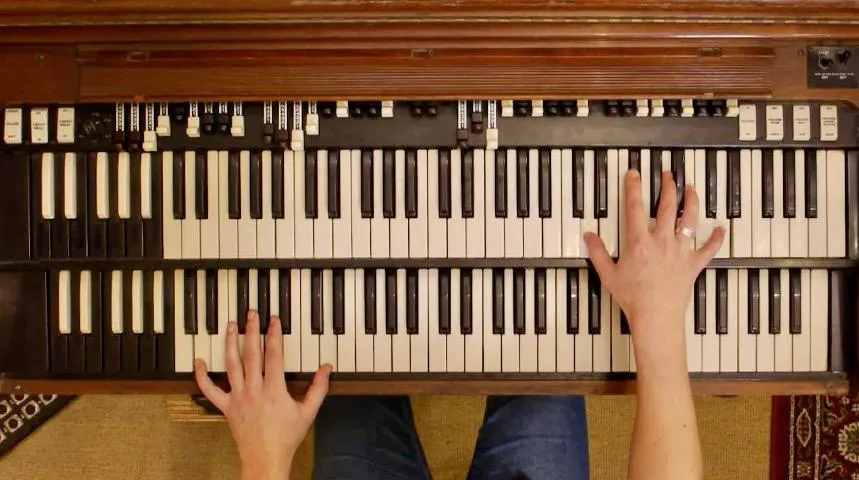
Joe Glossop est un claviériste de Sheffield qui s'est fait un nom à l'orgue Hammond. Il occupe actuellement le poste d'organiste dans le groupe de tournée de Tom Jones, et a joué avec Van Morrison et James Hunter, ainsi qu'au piano et au Rhodes. Ses cours permettent de tirer le véritable son Hammond de n'importe quel clavier : le réglage des drawbars, le Leslie, la basse walking à la main gauche, et le vocabulaire d'accompagnement et de solo des traditions de l'orgue soul-jazz, blues et rock, de Jimmy Smith à Booker T. read more