



Elegir temas para álbumes o directos
Qué incluye el curso
8 lecciones (1h 4m) · 1 gratis
01. Componer y colaborar
11:54
02. Cómo se escribieron los temas más famosos de Youngblood
8:33
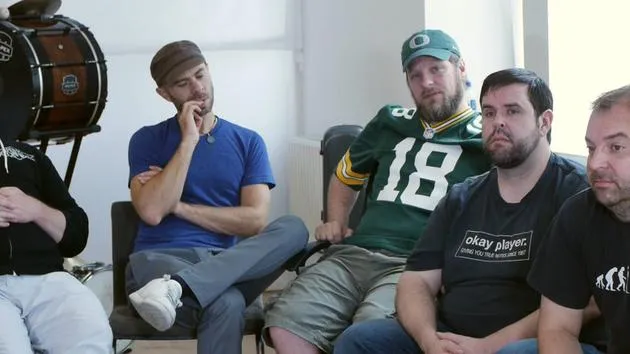
03. Elegir temas para álbumes o directos
Estás aquí6:18
04. Cómo abordar las versiones
8:12
05. Cómo reconocer una "buena idea"
Lección gratis4:44
06. La estructura y cómo convertir ideas en una pieza terminada
8:15
07. ¿Qué es una idea?!
4:17
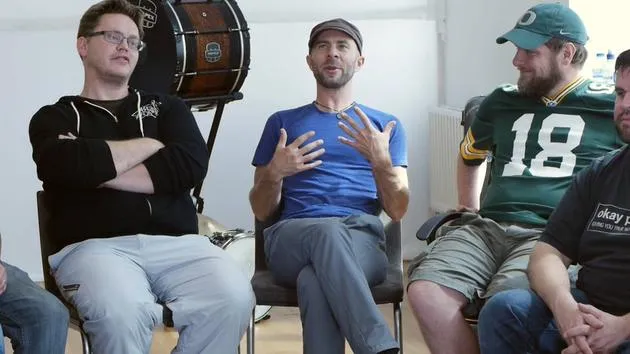
08. Componer y arreglar para vientos
12:18
Transcripción de la lección
The Evolution of Our Music: From Writing to Performing
During our tours, we create a set list, and for the first half of the tour, we're constantly adjusting it. Here's a closer look at our process:
Set List Adjustments
- We evaluate the flow of the set.
- Songs that feel slow or don't fit well may be replaced or repositioned.
- The goal is to keep the performance engaging by:
- Changing tempos.
- Varying focus from song to song.
Recording Process
When it comes to recording, I don't think about specifics until I start hearing sounds in my head. Eventually, we accumulate a lot of material and decide what's optimized for the album, keeping in mind that sequencing is the final piece of the puzzle.
Changing Album Lengths
- 10 years ago: An album typically aimed for 72 minutes.
- Current long-term goal: Albums like PAX Volume clock in at around 64 minutes.
- We've shortened the number of tracks, aiming for:
- Four-minute songs.
- Old tracks often ranged from six to six-and-a-half minutes.
This shift has necessitated more editing, leading to more concise song forms.
The Live Show vs. Studio Recording
In our earlier albums, we aimed to encapsulate the live show experience:
- Typical live performance: Songs featured multiple solos (often two or three).
- Over time, we learned it's challenging to fully capture that energy in the studio. Now, we write with both the studio and live performance in mind:
- Newer albums tend to have one solo per song, occasionally two.
Writing and Performing
Previously, we developed songs through extended live play. Now, since we're often in different locations, the process has changed:
- We focus on writing the album, recording it, and then learning how to perform the new material live.
What Comes First?
The question arises: Do we write for the album or for live performances first?
- Creative Mode vs. Touring Mode: We oscillate between both states, making it difficult to pinpoint which comes first.
As I reflect on our newer work, it's different than past albums. For instance, the tracks on Younger Brass Bands:
- These songs didn't originate as live tunes. Instead, they came from years of writing, aiming to craft enjoyable material both for the studio and the stage.
The Challenge of Opinions
Managing a band with many opinions can be challenging.
- We need to collectively decide which songs to play, which can be complex.
- Ultimately, this responsibility falls to Dave and me:
- I serve as the musical director.
- Dave is the bleeder, guiding the band.
Together, we determine when a song truly becomes a "Youngblood tune."
The Collaborative Process
Having a collaborative approach is essential:
- It prevents the burden of creation falling on one individual.
- Cohesion in sound relies on someone determining when a track is complete, a role we often fulfill in Dave's basement.
Our process reflects our growth and adaptability in both writing and performing. While it can be complex, the art of collaboration ensures our music continues to evolve.
8 lecciones
1h 4m de lecciones en vídeo estructuradas
Funciones de vídeo avanzadas
Ralentiza, repite un pasaje, sigue la partitura
Móvil, tablet y ordenador
Practica donde quieras
Garantía de satisfacción 100%
30 días de garantía de devolución
Conoce a tu gurú
Conoce a tu gurú
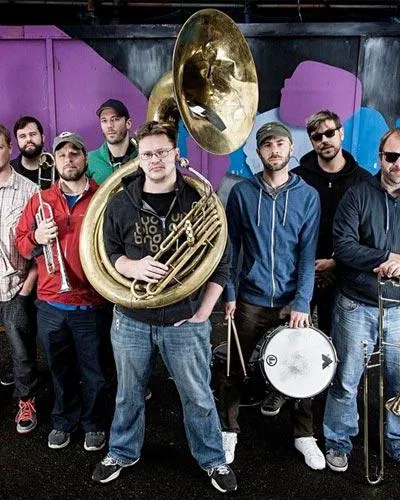
Youngblood Brass Band fusiona los metales sin concesiones de Nueva Orleans con la energía y el lirismo del hip-hop. Procedente de Madison, Brooklyn, Minneapolis y Chicago, este grupo de diez integrantes ha girado por todo el mundo desde 2000 y ha colaborado con figuras como Questlove y Talib Kweli. Se sienten igual de cómodos liderando una banda de marcha con sus propias composiciones que encabezando un festival de punk. En MusicGurus desglosan su sonido que mezcla Nueva Orleans y hip-hop: cómo componen y arreglan para los metales, el vocabulario rítmico y armónico que lo mantiene todo unido, y cómo tocar una línea de viento como parte de una sección compacta, incluidas las partes completas de su tema 'Brooklyn'.







