



Cómo se escribieron los temas más famosos de Youngblood
Qué incluye el curso
8 lecciones (1h 4m) · 1 gratis
01. Componer y colaborar
11:54
02. Cómo se escribieron los temas más famosos de Youngblood
Estás aquí8:33
03. Elegir temas para álbumes o directos
6:18
04. Cómo abordar las versiones
8:12
05. Cómo reconocer una "buena idea"
Lección gratis4:44
06. La estructura y cómo convertir ideas en una pieza terminada
8:15
07. ¿Qué es una idea?!
4:17
08. Componer y arreglar para vientos
12:18
Transcripción de la lección
Brooklyn's Simplicity and Musical Evolution
Yeah, Brooklyn's pretty simple. I used to live in a little suburb of a suburb in Wisconsin called Brooklyn. I was walking around one night and the song came to me.
So I wrote it in my head, then I taught it to everybody, and that wound up being the one that everybody really loved. I didn't know at the time that it was going to be our big hit, but that one was pretty simple.
The Band's Live Performance
I think it's kind of interesting, though. One of the things I know Nat thinks about when he's writing is considering the way the band performs in the live show and what it feels like the show is lacking.
- Live Performance Focus: When we think about playing gigs, the band has always existed to perform live.
- Filling the Gap: After doing a duo and playing 30 dates in a row, we ask ourselves: what feels like it's missing? What can only this band do in a certain way to enhance the live show?
Brooklyn might have been partially about that, where it's like:
- Jam and Sing Along: We need something you can jam to and sing along with.
Influences and Sound Development
I think it was one of the first songs where we were taking primarily hip-hop beats and applying New Orleans brass band styles or phrases.
It's interesting for me to think about how our approach to music has evolved:
- Youngblood's Sound: I feel like now, Youngblood sounds like a singular entity. It's not just a bunch of ideas smashed together. Youngblood things sound like Youngblood things.
- Evolution Over Time: The difference in the type of tune just feels like our ears hear music differently than we did 15 years ago.
Writing for Personalities
Again, writing has progressed to focus more on the personalities in the band rather than just instrumentation.
- Unique Appeal: What makes Youngblood unique and appealing is the raw power and emotion that comes through when we play.
- Individual Contributions: I'm not writing a trombone part; I'm writing a Joe part, a Zach part, a Tony part, and definitely writing for me.
Nuclear Summer and Experimentation
"Nuclear Summer" embodies a point in Youngblood's history. We pondered, how far outside the box can we get with instrumentation?
- Dancehall Beat: That song started with a classic Jamaican dance hall beat, which felt incredibly punk and aggressive.
- Creative Noises: During recording, we had band members capable of making unique sounds, allowing us to incorporate "nice weird noises" into the track.
In "Nuclear Summer," parts of the tune were left open for creativity:
- Improvisation: There's a whole section of the tune with no written parts for horns, just following rough chord changes and creating noise. We hadn't done that before.
Growth as Musicians
It's a sign of us maturing as musicians. When we were younger, we relied on Nat for all the parts because we were still developing.
- Current Capability: Now, everyone in the band is a consummate professional, capable of contributing to the creative process without specific directions.
New Record: Two Approaches
On the new record, two songs demonstrate different writing processes:
- 20 Questions: This hip-hop tune started with voice memos on my phone. I recorded everything on an organ, capturing the clicking of broken organ keys.
- Lyric Integration: Unlike past records, I waited to write lyrics until after completing the instrumental, making them intrinsically tied to the music.
Zach pointed out something interesting, what are the 20 questions? I realized that the question, Who am I? is asked 20 times in that song.
8 lecciones
1h 4m de lecciones en vídeo estructuradas
Funciones de vídeo avanzadas
Ralentiza, repite un pasaje, sigue la partitura
Móvil, tablet y ordenador
Practica donde quieras
Garantía de satisfacción 100%
30 días de garantía de devolución
Conoce a tu gurú
Conoce a tu gurú
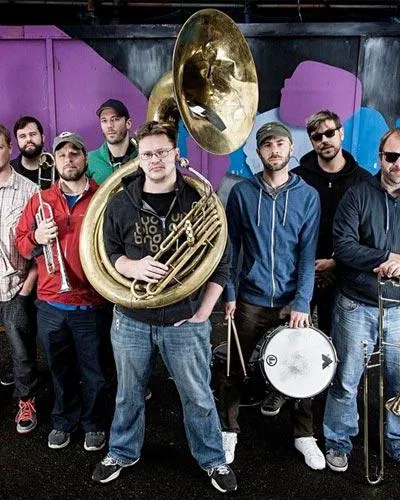
Youngblood Brass Band fusiona los metales sin concesiones de Nueva Orleans con la energía y el lirismo del hip-hop. Procedente de Madison, Brooklyn, Minneapolis y Chicago, este grupo de diez integrantes ha girado por todo el mundo desde 2000 y ha colaborado con figuras como Questlove y Talib Kweli. Se sienten igual de cómodos liderando una banda de marcha con sus propias composiciones que encabezando un festival de punk. En MusicGurus desglosan su sonido que mezcla Nueva Orleans y hip-hop: cómo componen y arreglan para los metales, el vocabulario rítmico y armónico que lo mantiene todo unido, y cómo tocar una línea de viento como parte de una sección compacta, incluidas las partes completas de su tema 'Brooklyn'.







