



Cómo reconocer una "buena idea"
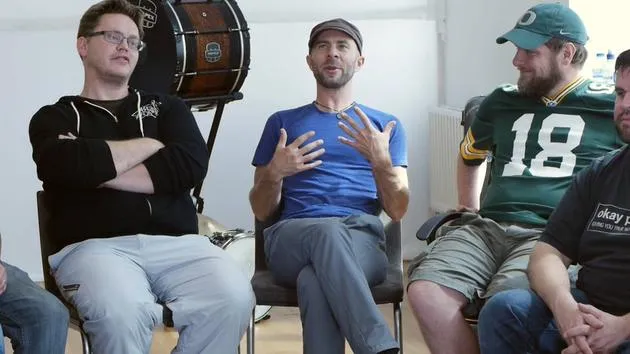
The Youngblood Brass Band explican cómo distinguen una buena idea musical de una floja, y por qué una idea sólida te lleva rápidamente a la siguiente.
Qué incluye el curso
8 lecciones (1h 4m) · 1 gratis
01. Componer y colaborar
11:54
02. Cómo se escribieron los temas más famosos de Youngblood
8:33
03. Elegir temas para álbumes o directos
6:18
04. Cómo abordar las versiones
8:12
05. Cómo reconocer una "buena idea"
Estás aquí4:44
06. La estructura y cómo convertir ideas en una pieza terminada
8:15
07. ¿Qué es una idea?!
4:17
08. Componer y arreglar para vientos
12:18
Transcripción de la lección
Music Composition and Collaboration
Understanding Good Ideas
I think you can tell. I think it's easy to tell because, for me, if an idea is good, it leads me to other ideas really quickly. It's not super hard to figure out what more the song needs or whatever.
Trusting Each Other Musically
- The reason we trust each other musically is that as soon as one of us has an idea that we think is good, we tend to share it.
- If eight people say, "hate it," we're probably gonna drop it.
- I trust my instinct on it before I even send it to anyone.
Honest Music Creation
If you're making music that's really honest, there's not really another way to do it. If you try to consider other people's opinions before your own, you're just gonna make music that sounds like a facsimile of something or music that tries to appease some perceived desires of imaginary fans.
That's the game that real musicians aren't supposed to play, right?
The Role of Marketing in Music
That's the game that advertising people are supposed to play. They're good at knowing what people will want to buy by finding the most common denominator and investing a lot of money into it.
What musicians should excel at is:
- Knowing exactly what they want to hear
- Creating the best music from that knowledge
Navigating Musical Preferences
We have spoken and unspoken rules in this band. We all have a pretty good idea of what works and what doesn't work, as well as what we like and dislike about pop music.
I heard an interview with U2 recently, where the guitarist, The Edge, explained that the band decided, as a theory, they didn't want any bent notes. This rule helped them craft a distinct sound.
Forbidden Rhythm
In our band, we have some licks we've given derogatory names. For instance:
- The Forbidden Rhythm: If you play it, you get ridiculed, unless it's done tastefully and ironically.
- Ironically, you can play it as a joke during sound checks or once during a show if there's intent behind it.
Learning from Live Performances
Reflecting on our last album, there were things that worked well in the studio but didn't translate live.
- A couple of tunes I wish we played live were attempted, but something just didn't pop.
- You can create something great in the studio, but it may not work live.
Context Matters
It's not just that it doesn't work live; it may not work live in the context of the show. For example, a song like "August Inside the God" may sound great on the record, but fitting it into the flow of a 75-minute show is challenging.
- It has a down tune with up verses and a weird tonality that makes it hard to place alongside 12 other songs.
Sometimes you have to recognize what sounds good in the context of a set, not just because you love the tune.
Conclusion
To create a cohesive performance, sometimes you have to part with certain songs to ensure that the show flows harmoniously, maintaining the integrity of the music next to each other.
8 lecciones
1h 4m de lecciones en vídeo estructuradas
Funciones de vídeo avanzadas
Ralentiza, repite un pasaje, sigue la partitura
Móvil, tablet y ordenador
Practica donde quieras
Garantía de satisfacción 100%
30 días de garantía de devolución
Conoce a tu gurú
Conoce a tu gurú
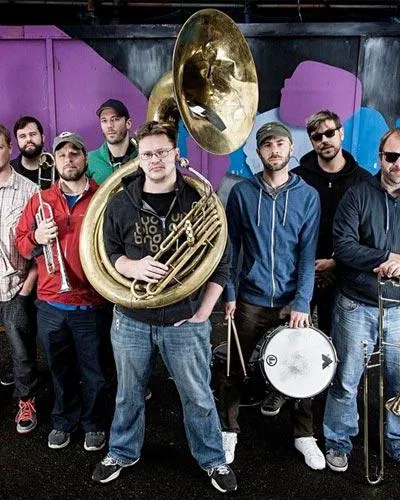
Youngblood Brass Band fusiona los metales sin concesiones de Nueva Orleans con la energía y el lirismo del hip-hop. Procedente de Madison, Brooklyn, Minneapolis y Chicago, este grupo de diez integrantes ha girado por todo el mundo desde 2000 y ha colaborado con figuras como Questlove y Talib Kweli. Se sienten igual de cómodos liderando una banda de marcha con sus propias composiciones que encabezando un festival de punk. En MusicGurus desglosan su sonido que mezcla Nueva Orleans y hip-hop: cómo componen y arreglan para los metales, el vocabulario rítmico y armónico que lo mantiene todo unido, y cómo tocar una línea de viento como parte de una sección compacta, incluidas las partes completas de su tema 'Brooklyn'.







