



Escalas - Grade 3
Un recorrido por los ejercicios técnicos de piano de Grade 3: escalas, arpegios, escalas en movimiento contrario y voicings, con consejos para los más complicados.

Qué incluye el curso
32 lecciones (2h 17m) · 1 gratis
01. Unfaithful, Rihanna (interpretación)
Lección gratis1:40
02. Unfaithful, Rihanna (Interpretación de Jono)
1:35
03. Skyfall, Adele (Interpretación)
4:54
04. The Dock Of The Bay, Otis Redding (interpretación)
2:19
05. Overrated, Bob Graceful & Kung Fu Drummer (Interpretación)
2:06
06. Reggae Island, Noam Lederman (Interpretación)
1:59
07. Maiden Voyage, Joe Bennett (Interpretación)
2:05
01. Unfaithful, Rihanna (lección)
7:19
02. Unfaithful, Rihanna (Lección de Jono)
8:00
03. Skyfall, Adele (Lección)
8:49
04. The Dock Of The Bay, Otis Redding (Lección)
13:50

05. Overrated, Bob Graceful y Kung Fu Drummer (Lección)
10:10
06. Reggae Island, Noam Lederman (lección)
12:38
07. Maiden Voyage, Joe Bennett (Lección)
5:33
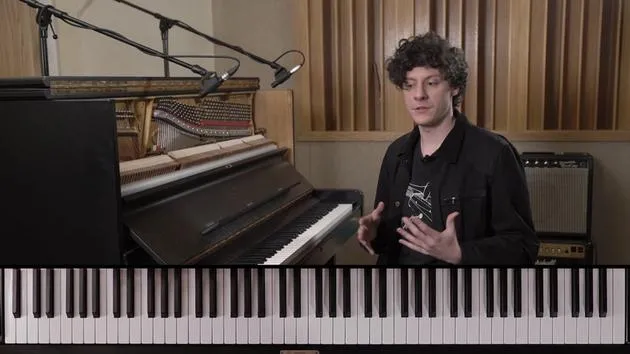
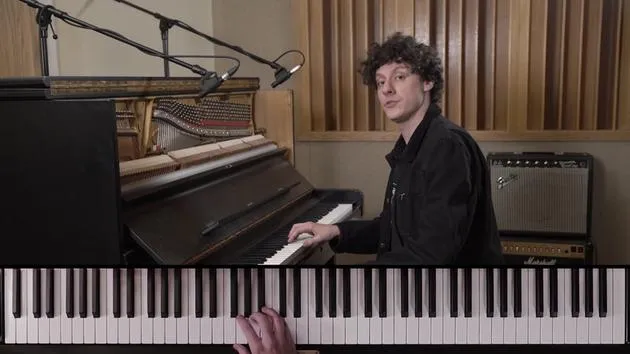
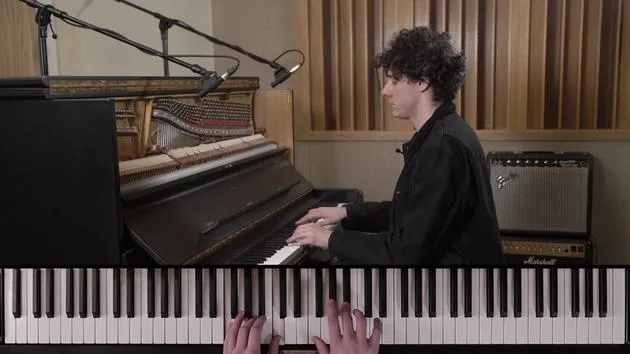
Transcripción de la lección
Grade Three Technical Exercises
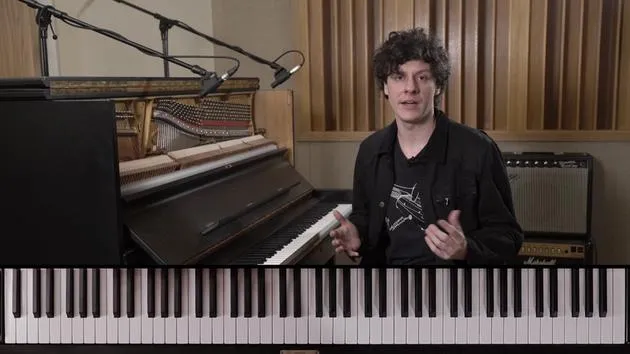
Hey guys, it's James here! Today we're looking at grade three technical exercises, including scales, arpeggios, contrary motion scales, and voicings.
Overview
Many of these scales you will already be familiar with if you've completed some of the exams before. If not, take a look at the book where all the scales are written down, fingerings are provided, and helpful advice on how to play these different things is included.
I'm not going to go through all of them in this video, but I will highlight some of the more interesting and new concepts that you may not have encountered before.
Contrary Motion Scales
One particular item we'll focus on is the A Major Scale in Contrary Motion.
What is Contrary Motion?
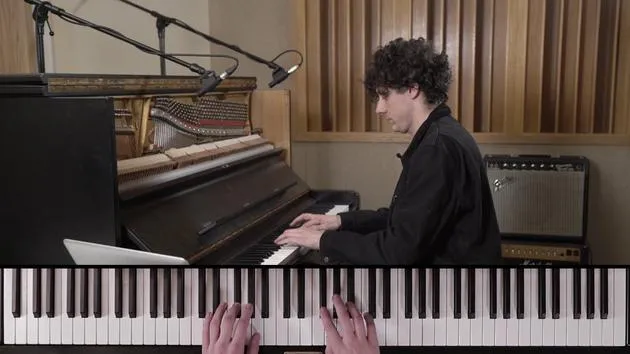
Contrary motion involves playing a scale with your right hand going up while your left hand goes down. Essentially, it's like playing a backward scale in either hand, where you initially move apart and then come together.
Tips for Practicing:
- Different Fingerings: The biggest challenge is that you're using different fingerings while playing different notes simultaneously. This can make it difficult to keep track of your position.
- Peripheral Vision: Try to maintain a slight stereo vision. Avoid staring too much at either hand; instead, look at everything using your peripheral vision.
- Start Slow: Practice slowly and hands separately at first, then gradually bring it together.
Musicality in Scales
The key to playing any scale, particularly contrary motion, is to make it sound musical. There should be a flow, almost like a crescendo as you get louder, followed by a gentle return.
- Climactic Finish: Chords will accompany the scale throughout, except for the very end, creating a dramatic finish.
While scales are often perceived as dry or boring, they can be very musical in their own right. They form the backbone and foundation of many different genres, especially pop, jazz, and rock music.
I strongly recommend practicing scales thoroughly, slowly, and working on them hands separately before combining them to achieve a pleasing sound.
Key Signatures
There are a few new key signatures introduced in these grade three scale exercises.
-
F Sharp Natural Minor: This scale is similar to its major counterpart. The natural minor is the same as the major scale a minor third higher. F sharp natural minor (number 5 in your book) aligns closely with A Major.
- Remember, F sharp can seem daunting with many sharps, but it's merely the same notes starting from a different point.
-
C Lydian Scale: Number 9 in your book, the C Lydian scale is the fourth mode of C.
- Essentially, it's G major starting from a different root. While the names may seem overwhelming, they represent the same notes but with different fingerings.
Chromatic Scales
Chromatic scales may be familiar if you're progressing through early grades, but they serve as a unique way of playing. Unlike other scales that cover wide areas with a few notes, the chromatic scale plays every note on the piano from a specific starting point.
Purpose:
- The chromatic scale helps you navigate tricky fingering passages, especially in faster sections with chromatic elements.
Execution:
- For exercises, you'll mainly use fingers 1, 2, and 3 in both hands due to the weakness of the fourth and fifth fingers and because their use isn't necessary for the number of notes covered.
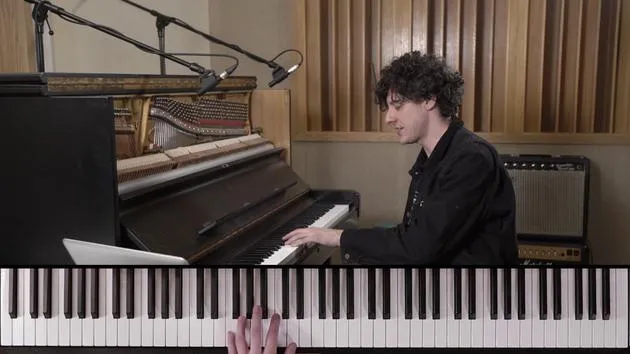
I'm going to demonstrate the chromatic scale on A in the right hand.
Note on Exercises:
In these exercises, when it states "etc.," it indicates the same pattern continues both ascending and descending. After exhausting the musical passage, return to the note you started on chromatically.
Memorization
A vital point to remember with scales is to memorize them as soon as possible.
Benefits of Memorization:
- Focus on Technique: Once you've internalized scales, you can direct your attention away from the sheet music and concentrate on your technique.
- Internalization: This process allows you to use your ears and instincts, which is especially crucial in genres like rock, jazz, pop, funk, reggae, and soul where sheet music is often not utilized.
Scales indeed form the foundation of much of our practice. By internalizing them, we can rely on our instincts and feel, resulting in more natural and instinctual playing.
32 lecciones
2h 17m de lecciones en vídeo estructuradas
Funciones de vídeo avanzadas
Ralentiza, repite un pasaje, sigue la partitura
Móvil, tablet y ordenador
Practica donde quieras
Garantía de satisfacción 100%
30 días de garantía de devolución







