Primera banda - análisis
Lesson time: (17min 28sec)
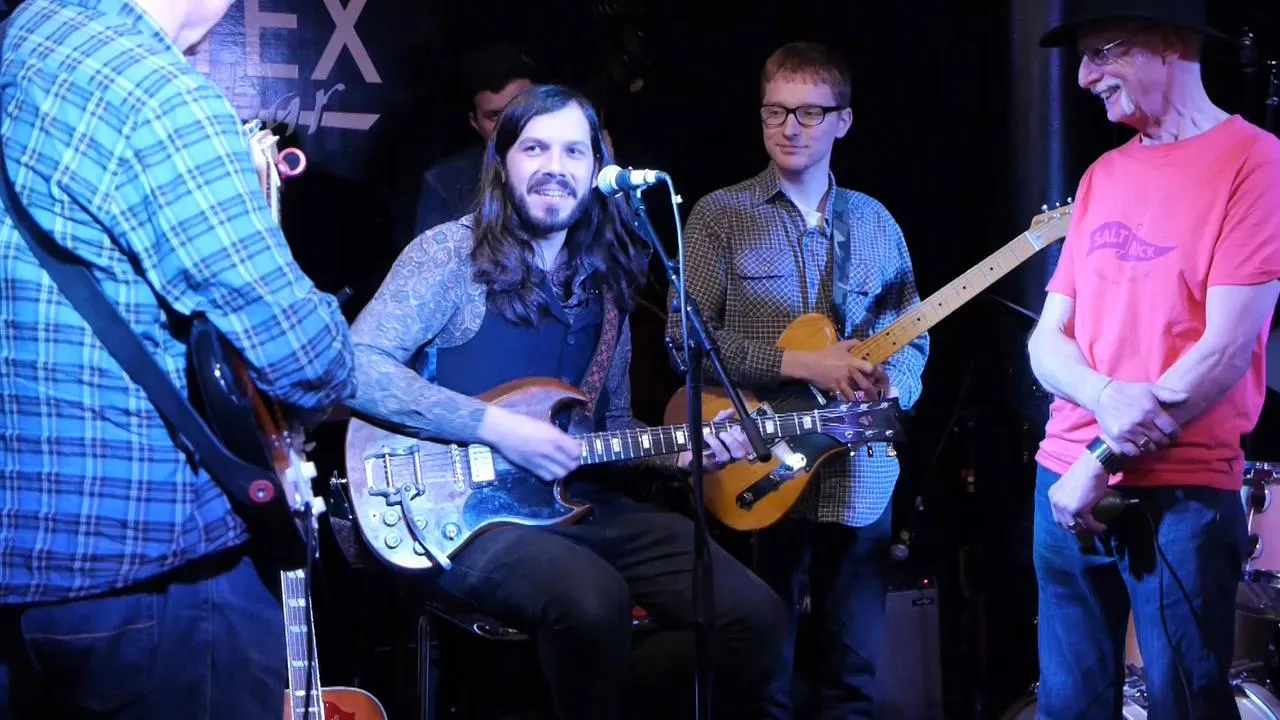
Paddy, Marcus, Pat y Jay dan su feedback a la primera banda, con consejos específicos sobre cómo improvisar solos y liderar la banda.
Course preview
This lesson is part of the course Taller de blues en el Vortex de Londres
Watch a preview of the full course below.
Lesson transcript:
Music Lesson
General Feedback
Yeah, I mean, yeah. I mean, you guys clearly rose to the occasion. Paul clearly played different stuff. So, I mean, I guess, what points could we look at? Any suggestions?
Starting Points
-
Rhythm: The rhythmic thing would be a good place to start.
- In terms of what everyone's playing and locking in together.
-
Solos: On the subject of solos as well, I think we both played well.
- You could afford to lead the solo a little bit more. This is your thing.
- As the band, we kept it quite steady behind you, which is cool.
- But with certain phrases, as we talked about, with eye contact and looking around, you can afford to have a bit more confidence to lead the band during your solo. That's what makes for a great solo.
"We're all eyes on you. Where are you taking us? We're with you here."
Key Areas to Improve
-
Confidence in Leading:
- That's the confidence to lead the solo a bit more.
- That's what we're here for: as the rhythm, as the backup for you guys. We want to be taken on the journey.
-
Dynamics:
- Maybe it stayed on the same kind of dynamic throughout the solo.
- Think about gradually increasing the dynamic throughout the whole solo, or using certain points in the 12-bar blues to aim for, like perhaps the fifth bar when we go up to the chord four, the B flat.
Suggestions for Dynamics
-
Aim for a phrase that gets louder or more intense, perhaps resolving onto the four chord.
-
Implement:
- A bit of attitude: Yes!
- You could be a bit quieter right on the drums.
- It's probably because I'm deaf. Do you think that might be half the reason?
Playing in an Acoustic Venue
- When you're playing in an acoustic venue like this, you have to do your own mix on stage.
- A lot of the time, drummers get a lot of stick for being the loudest, but not always.
"You can't play like John Bonham when you're doing a slow tune. Everyone will just get destroyed."
Tips for Drumming
-
Stick Height: Try to have a shorter stick height but twist your wrist a bit more for a bit more snap but less volume.
-
Ending the Tune:
- When it comes to endings, it's important to leave the piano player or guitarist to their own.
- You might have a conflict of ideas if you both end it differently.
"There's nothing worse than getting the ending wrong."
Clean Endings
-
It's great to have a clear end to the tune.
-
A nice little snare or kick thing just to finish it off, but watch whoever's ending the tune.
-
Final Thoughts:
- Clean endings are important for the audience to know when to clap.
- "Good endings are vital."
Understanding the Sound from Different Positions
-
Sound Perception:
- How does the sound of the band feel when you're standing on stage compared to sitting in the audience?
- "To be frank, it is a bit different. I can hear so much less."
-
Complementing Each Other:
- The task is to complement each other while playing.
"It's all about trusting each other on stage."
Listening and Adapting
- When playing with two guitar players, it's a discipline.
- You have to be adaptable and listen to each other.
- If one isn't listening, the sound could become messy.
Final Encouragement
- Once you establish something cool, keep that groove going.
- If you've found a cool part that's working with the rest of the band, please keep playing it, because that's what the groove is all about.
"Well done, boys! Give me a round of applause!"
Conclusion
- Any piano players fancy playing next?