



Primeros acordes
Lesson time: (7min 12sec)
Lissie numera las cuerdas de la guitarra y te enseña tus primeros acordes abiertos -la menor, do, mi, sol y fa- además de cómo leer un diagrama de acordes.
Course preview
This lesson is part of the course Aprende guitarra con Lissie
Watch a preview of the full course below.
Lesson transcript:
Understanding Your Guitar Strings and Chords
So you want to know what number your strings are? Just for simplicity, when I try to show you a chord, I'll tell you about that.
String Numbers
- High E - 1
- B - 2
- G - 3
- D - 4
- A - 5
- Low E - 6
There you have it!
Common Chords
When I started playing the guitar, it seemed like A minor, C, E, G, and F were in a lot of the songs I was playing. The big ones were really A minor and C. The great thing about those two chords is that you can move easily from one to the next.
Playing A Minor
To play an A minor:
- Pointer Finger: Place on the second string of the first fret.
- Middle Finger: Place on the fourth string, second fret.
- Ring Finger: Place on the third string, second fret.
Tips for Chord Charts
When you look at chord charts (found in books or online), they will indicate:
- Frets
- Fingers
- Position on the string
This way, you can learn any chord through practice.
If you have really big hands, you might be able to add seventh chords and more with your pinky. However, I don't know a lot about seventh chords, so I'm not going to attempt to explain them to you.
Callusing Your Fingers
Warning and Tip
- Warning: If you want to get good at playing the guitar, you're going to have to callus your fingers. It hurts at first, but over time, you'll develop calluses, making it easier to play.
- Tip: After long stretches without playing, I've noticed it can be a bit painful at first to get back into it. However, the calluses will come back.
Finger Placement
For the A minor:
- Use your fingertips and get as close to the fret (the metal bar) as possible.
- Push down hard so that the string contacts the fretboard.
If you don't push down hard enough, the sound won't come through as you desire.
Transitioning Between Chords
As for the placement of your fingers:
- Your middle and ring fingers should not get in each other's way.
- Always aim for the fret as close as you can to achieve the best sound.
Here we go, this is an A minor!
Moving to C Major
A fun early exercise is to move your ring finger (third finger) up to the fifth string, third fret. This is how you can transition from A minor to C.
Practice Chord Transitions
Practicing among:
- A minor to C back to A minor
- C to D (which is a harder jump since you move to a different fret)
Believe it or not, it does get easier with practice.
A Minor and E Major
A tip I wish I had known earlier is this:
- If you move every finger from the A minor shape up one string, you get E.
So while making A minor and E, your fingers essentially just hop up one string while staying in the same position.
- A Minor to C: Great for building confidence since you don't have to move your fingers far.
- A Minor to E Major: Just hop every finger up one string.
Make it easy as you build confidence. You can move from chord to chord without panicking and moving your whole hand down the fretboard.
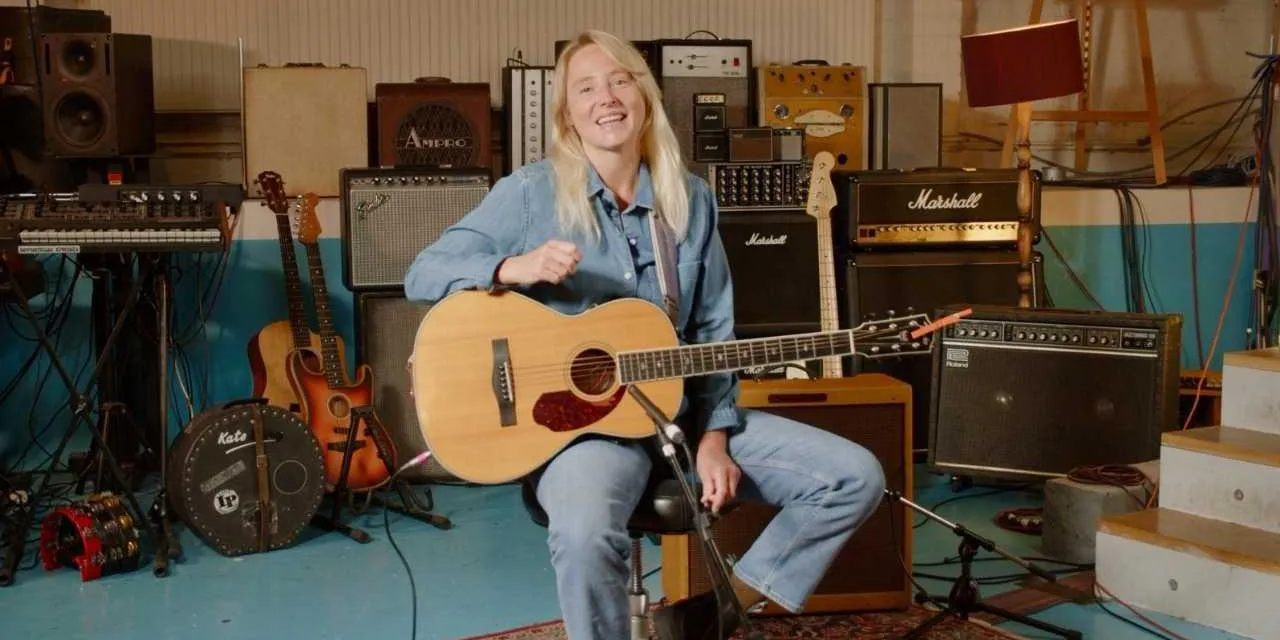
About the instructor
Lissie es una cantante de folk-rock que creció en Rock Island, Illinois, cerca del río Misisipi, diciendo lo que pensaba y componiendo canciones desde muy joven. El público se enamoró por primera vez de su voz con el EP de cinco canciones 'Why You Runnin'', producido por Bill Reynolds de Band of Horses, que Paste Magazine incluyó entre sus Ocho debuts musicales más prometedores. En 2010, su primer álbum de larga duración 'Catching A Tiger' consolidó sin pretensiones a Lissie como una voz global. Los elogios en Estados Unidos se vieron igualados en el Reino Unido con el reconocimiento de la BBC, el Evening Standard, Uncut y The Independent, que lo describió como "una rebanada de pop tan refrescante como estos oídos hastiados no habían escuchado en años". El álbum llegó a vender 300.000 copias en todo el mundo, 100.000 de ellas en el Reino Unido, donde fue certificado Oro. Momentos destacados a lo largo del camino: Nominada a Mejor artista revelación en los Q Awards, y elegida por VH1 como artista "You Oughta Know" Actuaciones en festivales como Glastonbury, Hard Rock Calling, Latitude, Secret Garden Party y Bestival Apariciones en televisión, entre ellas Later with Jools Holland y Sunday Brunch Papeles en pantalla en Loudermilk y en Twin Peaks de David Lynch, donde NME elogió su "intensa" interpretación al cerrar el episodio con la canción de aire Stevie Nicks 'Wild West': "la trovadora más apasionante de Rock Island se ganó con creces el tiempo en pantalla que le encargó Lynch". 'Carving Canyons' (a la venta el 16 de septiembre), su primer álbum de larga duración desde 'Castles', que llegó al Top 10 británico en 2018 En su curso de guitarra, Lissie comparte los acordes, el rasgueo y el instinto compositivo que hay detrás de sus canciones: todo lo que necesitas para empezar a tocar como la mejor trovadora de Rock Island. read more