



Preguntas y respuestas con Elisa, aspirante a DJ

Lesson time: (10min 19sec)
DJ Deep responde a las preguntas de Elisa, aspirante a DJ, desde cómo aborda un set de club hasta cómo elige las cápsulas de sus platos.
Course preview
This lesson is part of the course Encuentra tu propio camino en el house y el techno con DJ Deep
Watch a preview of the full course below.
Lesson transcript:
Music Lesson: DJ Techniques and Insights
Introduction
I'm now joined by Elisa, who's a young aspiring DJ. I think you have a few questions about equipment and music in general, and I would love to discuss it with you.
Elisa: Yes, I'm really happy to be with you and learn about your experience as a DJ.
Preparing for a Set
Elisa: My first question is maybe a little bit basic, but how do you approach a set in a club?
You know what, I have a few ways of approaching a set in a club. If it's a club I've never been to, I'm trying to find some information about it:
- I might call friends who have played there and ask them:
- How was the vibe?
- What is their favorite style?
- How did you feel it?
- How was the sound system?
- What equipment do they have?
Just basic inquiries to learn more.
On a musical level, I would prepare playlists. As I mentioned before, I transfer my vinyls to digital, creating playlists to align with the club's vibe:
- Example: If it's a place known for house and techno, I would create:
- One house playlist
- One techno playlist
Every time I play somewhere, I make a specific playlist for that location. Of course, I have many backup playlists stored on my hard drive.
Every gig I approach, I now envision as if I'm bringing a record case with me. I think, "Let's bring 100 house records and 100 techno records." I approach it as I would have with a real record box.
Managing Equipment
Elisa: I have a bit of difficulty managing cartridges.
DJ: Yes, I know it's a big topic, the differences between cartridge brands can be complicated. It took me a long time to choose. I was a big fan of the Shure M447, which got discontinued, unfortunately. However, there are some nice alternatives, such as:
- Ortofon (I mentioned this before)
- Some Japanese brands are redoing the Shure models
Cartridges are very important because they are the source of your music. They are the first thing that your record touches before the mixer, the amplifier, and the sound system.
Let me show you a few cartridges, such as the Grado cartridges Kerry Chandler gave me as a present in Paris. They're really nice, especially for jazz, as they have a very nice high end.
Each cartridge has its own character, and I recommend finding one equivalent to the Shure M447, like the Ortofon I mentioned.
Sometimes stores let you test cartridges. Follow your ears, bring a record you love, try it out on the system, and see which one feels right for you.
Preparing vs. Improvising
Elisa: How do you think? Should I prepare my set beforehand, or can I improvise?
You know what? I'm very tempted to say both!
- Key Point: Always read the crowd.
- In the past, I made mistakes by wanting to replicate a set I heard from Frankie Feliciano. I would prepare my records and mixes meticulously, and sometimes it wouldn't translate well in front of people.
You have to be connected with the audience.
Preparing for a set helps. For instance, consider:
- This record works with that one.
- Plan your deep intro, harder moments, softer moments, and key songs.
So, it's beneficial to prepare a few blocks of music so that if you sense a change in the crowd's energy, you can easily adapt.
Finding Your Style
Elisa: Sometimes I feel a little lost about my style. I love house music, but I want to play techno. Can I play both at a party?
You know what? I get lost sometimes too. Like you, I enjoy different styles and collect so much music, wanting to play it all. However, not every crowd is open-minded enough to go left and right and up and down.
It's essential to prepare and organize, think of it as a safety net. Once you have that in place, you can let go and have fun during the party.
For example, you might want to try a new song that you're unsure about. If it doesn't work, you can pivot back to something familiar.
From many DJs I admire, I've learned that sometimes they play tracks I didn't like initially. Still, their reasoning often makes sense after some context, showing that music is a journey of feelings and vibes.
Understanding Different Tracks
Elisa: So, tell me more about learning to like tracks you may not enjoy.
You're right; it sounds a bit extreme. But sometimes, I've heard tracks I didn't feel initially, but once I heard them in a different context, I began to appreciate them.
I view DJing as guiding people through a musical journey, through mountains and valleys. For an audience to relish the peaks, you need to navigate them through lower moments too.
This is part of respecting art, as we all play other people's music. It's a significant part of the culture.
Final Advice for Young DJs
Elisa: What advice do you have for young DJs like me?
DJ: That's tough. I think the most crucial thing is to play what you love. Of course, you're playing for people, so it's not just about what you want to hear. Tune into the vibe and feel what resonates with the audience.
However, never compromise by playing something you don't like. Throughout my career, I always believed there's at least one track in my collection that the crowd will enjoy.
It's a dialogue between you and the audience.
To quote my brother and mentor, Kerry Chandler: "A good night is 50% the people, 50% you."
You could be the best DJ, but if the crowd isn't grooving or if you're not fully understanding their vibe, it simply won't work.
Thank you very much!
Elisa: Thank you! Thank you!
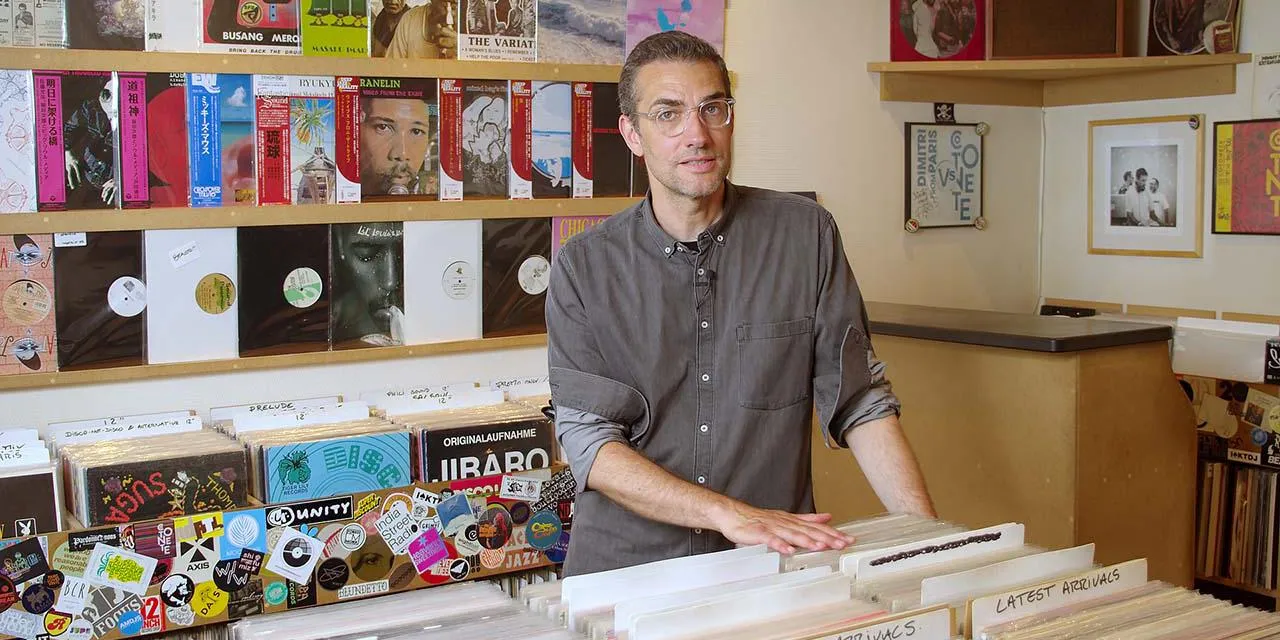
About the instructor
DJ Deep es un productor y DJ francés de house y techno, y el hombre detrás del sello Deeply Rooted (antes Deeply Rooted House). A lo largo de más de 20 años ha sido uno de los grandes curadores de la música de baile, y ese oído para lo que hace que un disco funcione de verdad es exactamente lo que lo convierte en un guía del que merece la pena aprender. 'Veo mi trabajo como el de ser un gran filtro', dice, restándole más bien importancia al papel que este francés ha tenido en el desarrollo de la música house. 'Como yonqui del vinilo, estoy en las tiendas de discos buscando temazos casi cada día. Compartir lo que considero los mejores discos del momento o los clásicos personales más atemporales es algo que me ha motivado a lo largo de los años.' Cyril Etienne emergió de la escena parisina para causar un verdadero impacto en el escenario mundial. Empezó pinchando para Laurent Garnier en fiestas como Oz y Zoo en el club Palace, luego se convirtió en habitual del Rex Club y estableció su singular sentido del gusto con sus programas 'A Deep Groove' en la emisora pirata Radio FG y más tarde en Radio Nova. Rápidamente pasó a pinchar por todo el mundo, llevando siempre consigo un sentido de la historia nutrido por su amor por Chicago, Nueva York y Detroit. Difuminando las líneas entre house y techno, también une los puntos entre cortes clásicos y contemporáneos con su propio sentido de la narración, no solo como DJ y productor, sino también como jefe de sello y curador de fiestas. Desde 2003 dirige su propio sello con visión de futuro, Deeply Rooted, sinónimo de house y techno con clase y fiel a sus raíces, de artistas nuevos y ya consagrados como Kerri Chandler, Ben Klock, Francois X, Ben Sims y Roman Poncet, así como la estrella francesa emergente y habitual de Concrete Paris Marina Trench. Su propia serie Raw Cuts tiende un puente entre la emoción sentida del house y el impacto directo del techno. Más allá de su propio sello, ha publicado en Rekids, Kaoz Theory y Tresor, y como remezclador ha reelaborado a artistas como Carl Craig, St Germain, DJ Honesty, Scan 7, Borderland (Juan Atkins) y Point G, aportando siempre sus atmósferas singularmente cálidas a todo lo que saca. También hace música bajo diversos otros alias: Rebeval, con material de sonido más crudo en L.I.E.S.; Sergie Rezza, un proyecto colaborativo y sello del mismo nombre junto a Roman Poncet que explora un house y techno más experimental, teñido de ambient, tanto en formato EP como LP; Fang, para house contemporáneo; y Adventice, para un techno enérgico y de raíces clásicas, con lanzamientos en Tresor y directos en lugares como Berlin Atonal. Su faceta más ecléctica aflora en sus programas de radio Open Library en Worldwide FM: ventanas de dos horas de jazz, soul, dub, funk y ambient que constituyen bandas sonoras muy especiales e inmersivas. Sea lo que sea lo que pinche o produzca, DJ Deep siempre tiene algo que merece la pena escuchar. En Find Your Own Path in House & Techno, comparte cómo selecciona, ordena y da forma a los temas para que, en lugar de perseguir tendencias, puedas construir un sonido y un gusto que sean inconfundiblemente tuyos. read more