



The White Pass Trail (lección)
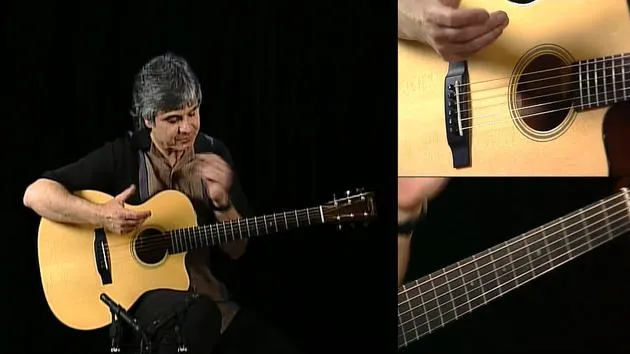
Laurence Juber enseña su tema de guitarra acústica The White Pass Trail, repasando su patrón celta ondulante, los hammer-ons y pull-offs, y un rasgueo estilo frailing.
Qué incluye el curso
12 lecciones (1h 22m) · 1 gratis
01. Cobalt Blue (interpretación)
3:20
02. Cobalt Blue (lección)
Lección gratis10:18
03. The White Pass Trail (interpretación)
4:58
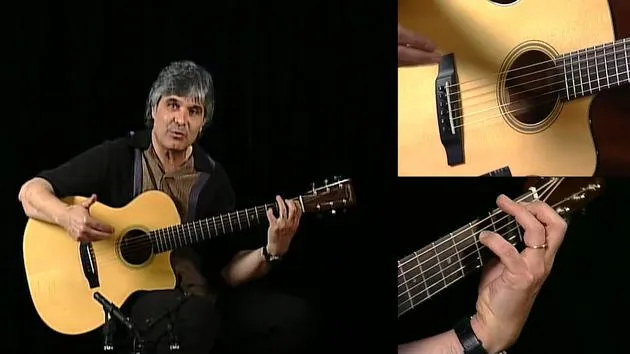
04. The White Pass Trail (lección)
Estás aquí10:17
05. Breaking Point (interpretación)
3:28
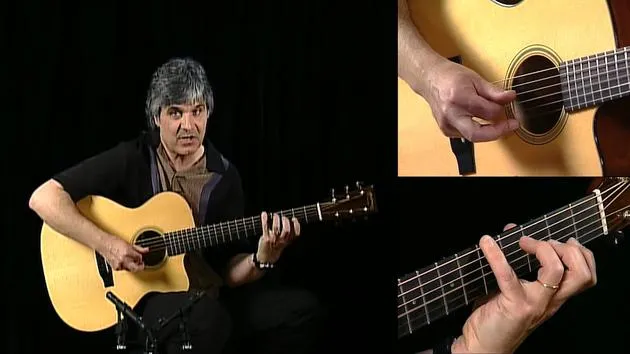
06. Breaking Point (lección)
8:35
07. Buffalo Nickel (interpretación)
3:41
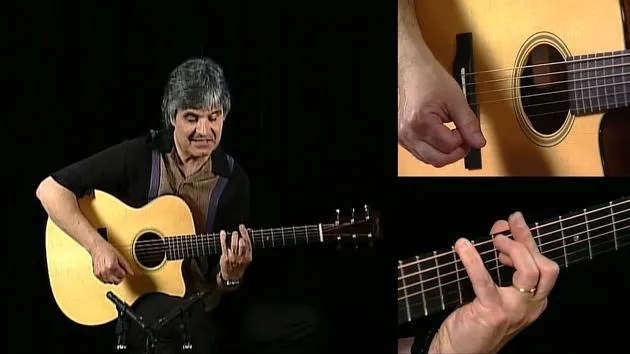
08. Buffalo Nickel (clase)
10:29
09. Catch (interpretación)
3:31
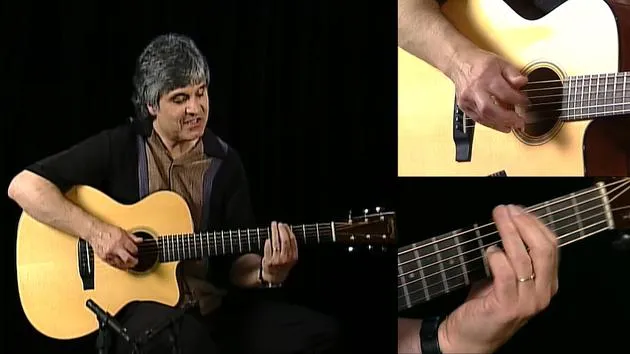
10. Catch (lección)
10:38
11. The 555 (interpretación)
2:49
12. The 5.55 (lección)
10:44
Transcripción de la lección
White Pass Trail Lesson
Introduction
So here we go with the White Pass Trail, which starts with a kind of a rolling Celtic type pattern.
Techniques and Patterns
Left Hand Momentum
- There is a lot of hammers and pulls.
- Feel the momentum of the piece from what the left hand is doing.
- The accents come from some of these hammers.
Section Breakdown
- B Flat Bass Note: The same pattern comes over a B flat bass note and then a C.
- Low F Bend: Just a little bit of a bend on that low F.
Frailing Pattern
- Moves into a frailing pattern.
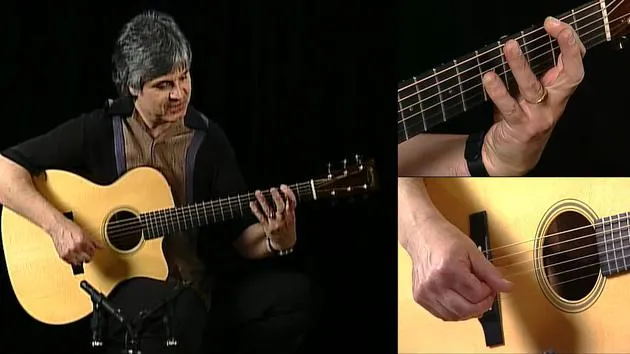
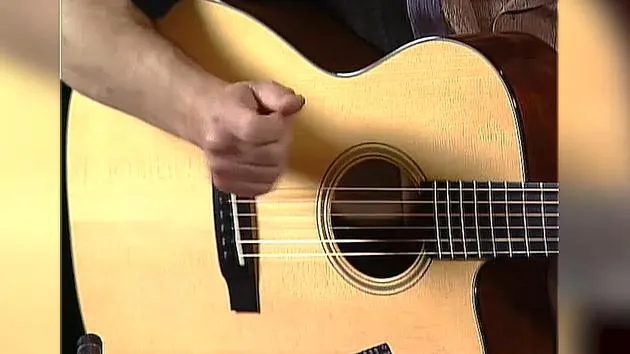
- Lightly brush the strings, hitting the bass note, and then a downward strum with the back of the second fingernail.
- A bit of an up and down strumming motion is occurring.
Expanding Melody and Strum
- The melody expands while keeping the frailing going.
- A strum comes up to signal the end of the first section of the tune.
B Section
Introduction to the B Section
- The B section, which follows, gets a little tricky.
- It has a strum happening on the C chord followed by an octave pattern.
Octave Pattern
- Hammering, hitting the octave above, and then pulling off.
- Here's how it goes: "I'll do that slowly like that."
Moving Up the Neck
- Moves up the neck. This section is pretty tricky.
- Hammering
- Sliding
- Sliding back
- Pulling off
Repetition and Power Chords
- The whole pattern repeats.
- Like in "Cobalt Blue," strum using little power chords.
- Strumming the bottom three strings with the back of the first finger.
Distant Train Impression
Creating the Sound
- A whole episode in this piece gives the impression of a distant train.
- I've got a bend with a little bit of vibrato.
- "I try and take my time on that and just let it die out naturally."
- After that, I slide up to a unison off the open string.
Unique Lick
- The particular lick is done a little differently every time, embodying a "bluesy, slightly Celtic" feel.
Percussive Section
Technique Overview
- In this section, I hit the bass note with my index finger, followed by a finger slap of the 12th fret to bring out the harmonics.
- Using hammers and pulls to punctuate it.
Keeping the Rhythm
- Slides up in the bass, keeping the rhythm going, while also hammering.
- Using the backs of the fingernails to get little strums.
Aggressive Section
Building Intensity
- This is where it gets aggressive; do a hit here and a hit here.
- Just strumming and pulling up, leading to a busy hammer-pull pattern.
- The last note is played by strumming down for a muted pattern.
Returning to the Pattern
- Return to this pattern and repeat, which brings back the strum.
Final Licks
Closing the Lesson
- Slowly slide on the second and fifth strings from the 10th fret to the 12th fret, picking strings four and one open.
- The final lick involves raking across the strings using my thumb, followed by some power chords back to the original riff.
Harmonic Analysis
Simplicity and Complexity
- Looking at the harmonic point of view, there's not a lot of complexity.
- We have this C shape in DADGAD since everything on the first two strings and the bottom string is tuned a whole step lower.
Impressionistic Quality
- The melody evolves by playing the strings across the chord.
- The B flat bass note with a G, A, and D on top gives a rich B flat major 7 with an added 6.
- Some interesting textures arise from using open strings to generate extra overtones.
Conclusion
And there's the White Pass Trail with a nice strum at the end!
12 lecciones
1h 22m de lecciones en vídeo estructuradas
Funciones de vídeo avanzadas
Ralentiza, repite un pasaje, sigue la partitura
Móvil, tablet y ordenador
Practica donde quieras
Garantía de satisfacción 100%
30 días de garantía de devolución
Conoce a tu gurú

Conoce a tu gurú
Laurence Juber se dio a conocer primero como guitarrista principal de Wings, la banda de Paul McCartney. Desde entonces ha construido una carrera como guitarrista fingerstyle, compositor y arreglista, trabajando en gran medida con la afinación DADGAD, que le valió el apodo de 'the Duke of DADGAD'.
Los lectores de Fingerstyle Guitar Magazine lo han votado Guitarrista del año, y la revista Acoustic Guitar lo ha incluido entre los mejores guitarristas, junto a una larga lista de álbumes en solitario y giras por todo el mundo.
En sus cursos enseña su técnica fingerstyle y la afinación DADGAD por la que es conocido, cómo combinar melodía, armonía y bajo en un arreglo para guitarra sola, y las piezas -como su emblemática 'Wooden Horses'- que lo reúnen todo.







