



Catch (lección)
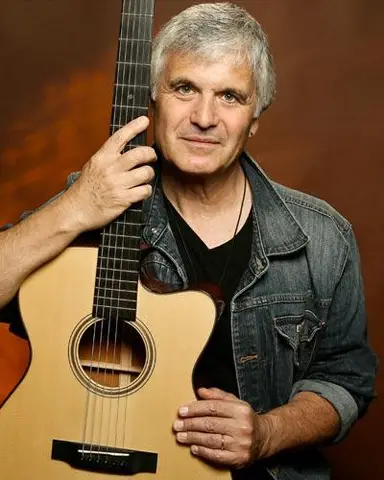
Lesson time: (10min 38sec)
En esta lección, Laurence Juber te enseña a tocar su tema "Catch" con la guitarra acústica.
Course preview
This lesson is part of the course The Guitarist: Seis temas originales en DADGAD y afinación estándar
Watch a preview of the full course below.
Lesson transcript:
Music Lesson: "Catch"
Introduction to Techniques
Let's take a look at Catch. This one opens with a little bit of the old two-hand slap and tickle.
Hammer-On and Pull-Off
- I'm doing the hammer with my INM fingers of the right hand.
- Follow this with a pull-off and then a hammer-on with fingers two and three of the left hand.
- After this, another pull-off and then a hammer again on the seventh fret.
The whole pattern goes like this:
- I hit the back chord using the back of my index fingernail.
- Alternating between the two, you'll notice I slide in twice.
Pickless Pick Technique
This kind of technique is what I think of as the pickless pick. Imagine you're holding a pick, but there is no pick. Instead:
- The back of the first fingernail serves for the downstrokes.
- The back of the thumb serves for the upstrokes.
You'll get a little bit of the flesh involved on the back of the thumb, but you kind of get used to it after a while.
Chord Explanation
Looking at this chord for a second:
- A bass note
- C sharp
- F (augmented fifth)
- G (seventh)
- C (sharp nine)
Essentially, it is an A7 sharp nine augmented, which is a very cool kind of jazzy chord and not a particularly complicated fingering. It's the same chord, same basic shape we use here.
Verse Techniques
So, moving on into the verse, I have a very staccato approach:
- I'm hitting the bass note, then using my third finger to make a staccato melody note.
- There's a slide picking out the melody followed by another slide.
I'm also incorporating the percussive effect, pretty much like a snare drum would do:
- That's a nice chord. I'll keep that same shape, F13.
Harmonic Characteristics
This seems to be characteristic of my harmonic style. I often use thickened lines to articulate a melody without a conventional series of harmonies. Instead, I maintain a consistent fourth, fifth, octave pattern.
The whole thing repeats, including a little lick in the middle, using octaves, a straightforward jazz lick.
Transitioning Sections
Now into the next section, I slide up:
- I think this is cool in DADGAD; if you play this shape, you've got a G7.
- The open G string paired with the same note on the fifth string creates a nice slight dissonance as you slide in.
Exploring Chords
- Bass line: a little walk-up.
- Here's an E7 chord, with a tenth between the bass note and the melody.
Here's the tenth and another lick:
- A slide, a slide, and then back to the head. Try and add a little vibrato there.
Continuity and Improvisation
Repeat. I think the trick with this stuff is to take all these individual moves and create continuity with the groove:
- Each one is articulated a little differently.
- There's a mix of slides, hammers, and pulls, but the overall groove maintains a swing feel.
After that, it goes back to the intro figure. Now, we walk up to that same basic chord: the seven sharp nine.
Beginning the Solo
I've walked it up to an F sharp, starting the solo in a cycle of fifths pattern:
- B7 to E7 (actually an E9).
- Here's an A and now to a D.
I never play exactly the same way twice. I look at this as a bit of an improvised solo.
Chord Shapes
- Here's your basic B7 in DADGAD.
- Here's your E9.
The second time it occurs:
- I hit the A over an A pedal.
- A flat, A, B flat, B, C, going up to the D.
B Section and Call and Response
Going around that whole sequence again, we return to the B section, which has a call-and-response feel.
Observe this:
- The F sharp and the C create a tritone, leading to the D7.
This will go around again and then comes back into the melody. The last time changes a bit, featuring a coda that I love.
Conclusion
In the final iteration, there's a B bass note and the open strings on top:
- Another walk-up then vamps with little licks over it.
- The last time serves as my signal that it's going to end.
I keep walking up the fingerboard and hit the following chord, but wait, I hit this chord, which resembles an augmented 11th. It's a D, F sharp, C, E, and G sharp.
So, we get a nice kind of jazzy ending.
Virtual whammy bar, and that's Catch!
About the instructor
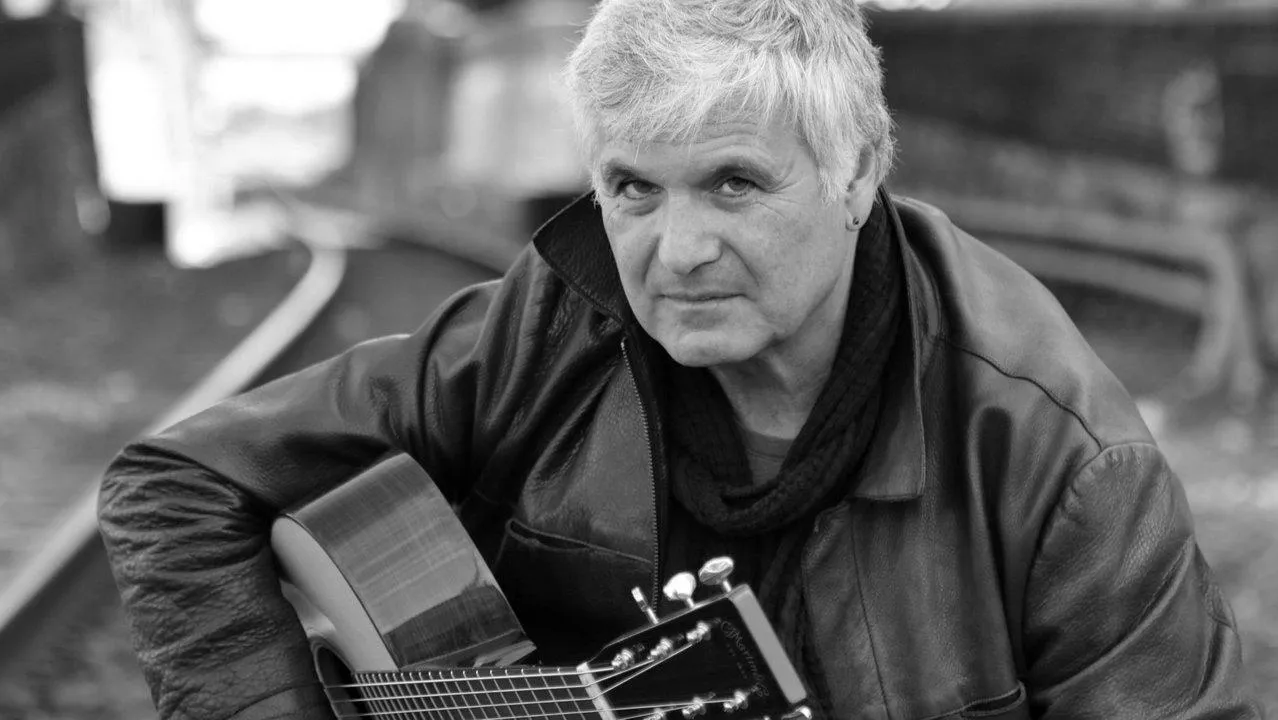
Laurence Juber se dio a conocer primero como guitarrista principal de Wings, la banda de Paul McCartney. Desde entonces ha construido una carrera como guitarrista fingerstyle, compositor y arreglista, trabajando en gran medida con la afinación DADGAD, que le valió el apodo de 'the Duke of DADGAD'.Los lectores de Fingerstyle Guitar Magazine lo han votado Guitarrista del año, y la revista Acoustic Guitar lo ha incluido entre los mejores guitarristas, junto a una larga lista de álbumes en solitario y giras por todo el mundo.En sus cursos enseña su técnica fingerstyle y la afinación DADGAD por la que es conocido, cómo combinar melodía, armonía y bajo en un arreglo para guitarra sola, y las piezas -como su emblemática 'Wooden Horses'- que lo reúnen todo. read more