



The Ornament Waltz
En esta lección, Laurence Juber te enseña a tocar su tema The Ornament Waltz a la guitarra acústica.
Qué incluye el curso
14 lecciones (1h 33m) · 1 gratis
01. Enough Is Never Enough
8:12
02. Guitar Noir
5:34
03. The Crow's Nest
Lección gratis5:15
04. Maple Avenue Strut
9:05
05. The Ornament Waltz
Estás aquí10:38
06. Rufus
7:19
07. Highway 17
8:38
08. Being Here With You
4:51
09. Wooden Horses
7:42
10. Double Agent
7:01
11. Shebeg & Shemore
4:44
12. Around The Block
6:39
13. Portobello Road
6:28
14. Reflexiones finales
1:03
Transcripción de la lección
DADGAD Tuning for the Ornament Waltz
Welcome back! Today we're diving into DADGAD tuning for the Ornament Waltz. This piece features a simple melody with light accompaniment. Here are some key points to keep in mind:
Fingering and Chords
-
Building Fingering:
- The melody is played across multiple strings while other chord tones sound simultaneously.
-
Careful Attention:
- In measure 9, be cautious as things start to get complex.
- Measure 10 features a moving inner line.
B Section Introduction
-
At measure 19, we transition into the B section:
- The chord is a BB flat major 7 with an add 13.
- Focus on playing the melody with the bass note while incorporating some inner voices.
-
Fingering Tips:
- Finger the upper strings and then reach for the lower string to play the B flat.
- Prepare the entire bar with your pinky at the beginning, as there won't be time for changes.
Accompaniment Parts
- In measure 26, avoid adding the fifth string to ensure smooth arpeggiation.
- Notice how I anticipate the chord with the bass note. I'll play that section again at 31.
Important Exercises
- Be mindful of measure 34, as it features a C bass note which offers a good exercise.
- After measure 34, we da capo (dc) and return to the beginning, ensuring it is played in a swung, jazz waltz style.
Advanced Techniques
-
When you play the third time at measure 37, remember:
- Instead of ascending a chromatic scale on a single string, take advantage of two adjacent scale tones.
-
Moving into measure 39:
- This features an E9 chord transitioning to an E flat 7 over an A.
Further Sections
- Let's play measure 43 up to speed again.
- In measure 46, there's a little bend to emphasize.
Exploring Voicings
- I particularly enjoy the E minor voicings in DADGAD, transitioning to F sharp 7.
- In measure 49, notice the pivoting to maintain the bass note.
Harmonics and Fingering
- At measure 50, incorporate harmonics with the picked bass note.
- Be careful in measure 51 with fingering ? it's all notated for clarity.
Sliding and Melody Positioning
- In measure 54, slide down on that diminished tonality.
- Measures 55 and 59 showcase the melody line spread out wide; watch for those glissandi.
Chord Transitions
- Ensure proper fingering from B minor 7 to D7. Use your fourth finger on the fourth string for these transitions.
Coda Preparation
-
As you go into the coda, prepare for a slight variation:
- Instead of the regular progression, I'm using a seventh flat nine (just a flat nine, actually) and then transitioning to E9.
-
In measure 74, notice the movement up by minor thirds on the diminished tonality, culminating in a clean D chord at the end.
Final Thoughts
It's crucial with this tune to:
- Embrace the Swing: Allow the tempo to breathe and let the rhythm flow.
- Focus on Ornamentation: Think about it as adding filigree, giving it a festive mood.
Enjoy practicing the Ornament Waltz!
14 lecciones
1h 33m de lecciones en vídeo estructuradas
Funciones de vídeo avanzadas
Ralentiza, repite un pasaje, sigue la partitura
Móvil, tablet y ordenador
Practica donde quieras
Garantía de satisfacción 100%
30 días de garantía de devolución
Conoce a tu gurú
Conoce a tu gurú
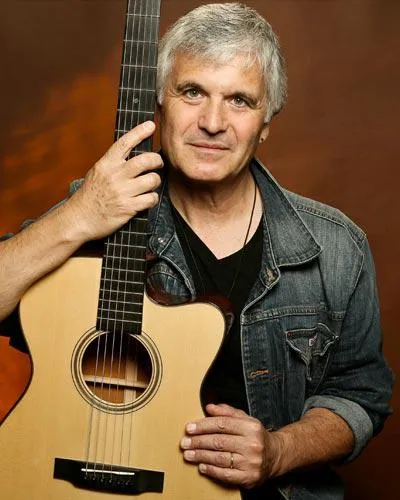
Laurence Juber se dio a conocer primero como guitarrista principal de Wings, la banda de Paul McCartney. Desde entonces ha construido una carrera como guitarrista fingerstyle, compositor y arreglista, trabajando en gran medida con la afinación DADGAD, que le valió el apodo de 'the Duke of DADGAD'.
Los lectores de Fingerstyle Guitar Magazine lo han votado Guitarrista del año, y la revista Acoustic Guitar lo ha incluido entre los mejores guitarristas, junto a una larga lista de álbumes en solitario y giras por todo el mundo.
En sus cursos enseña su técnica fingerstyle y la afinación DADGAD por la que es conocido, cómo combinar melodía, armonía y bajo en un arreglo para guitarra sola, y las piezas -como su emblemática 'Wooden Horses'- que lo reúnen todo.







