



Bajo

Con
Paul Whalley
Qué incluye el curso
26 lecciones (1h 43m) · 1 gratis
01. Parte de guitarra - conceptos
1:37
02. Parte de guitarra
4:58
03. Voces - conceptos
1:22

04. TAREA: Recrea la producción de la guitarra
0:37
05. Voces
9:42
06. DESAFÍO #1: CONSTRUYE EL ARREGLO VOCAL Y EL HOOK
0:45
07. Coros
4:07
08. Teclados y sintetizadores - conceptos
0:54
09. Teclados y sintetizadores
9:38
10. Bajo - conceptos
1:01
11. Bajo
Estás aquí5:24
12. Batería - conceptos
0:58
13. Batería
9:49

14. TAREA: Recrea la producción de la batería
0:32
15. Efectos y partes atmosféricas - conceptos
1:09
16. Efectos y partes atmosféricas
5:53

Transcripción de la lección
Breaking Down the Bass Parts
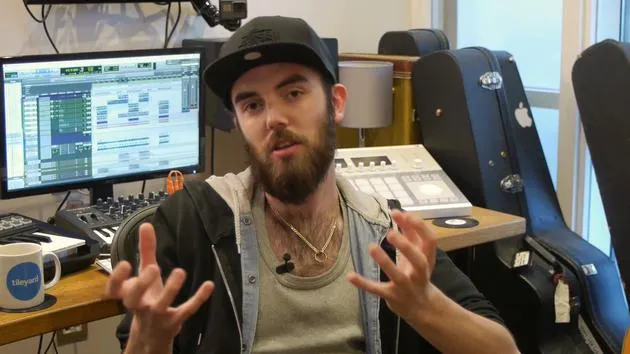
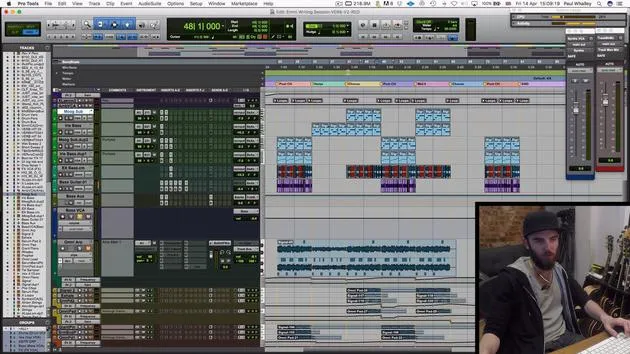
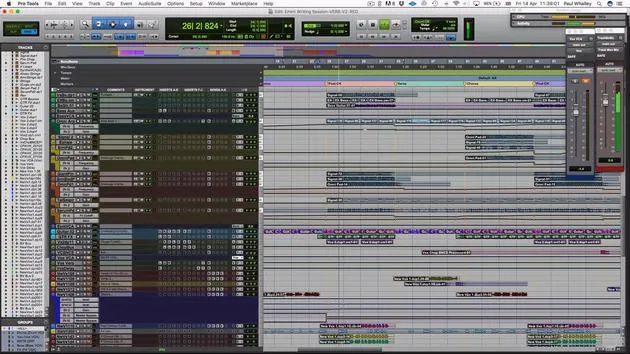
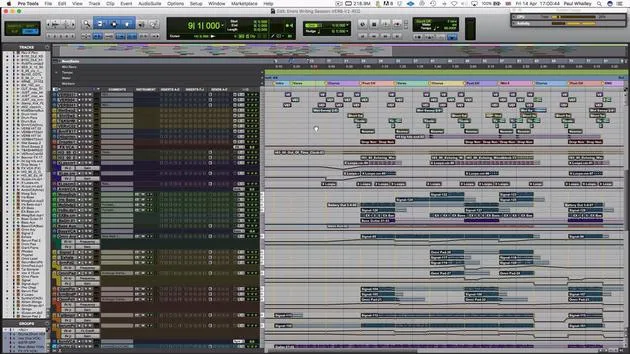
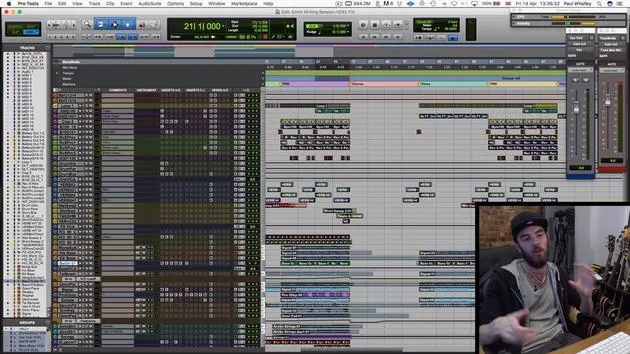
So, guys, we're going to be breaking down the bass parts and what role they play in the song, as well as the different sounds and treatments that I've used here. Similar to the keys, I use different sounds to denote the various sections, but with a much simpler role. You need to sort of just underpin the whole record.
Starting from the Top Down
1. A Good Solid Sub Bass
- Very simple.
- Following the root notes helps underpin it.
- Hopefully, one day these records will be played out in big clubs, and that will really help the sound have some grit.
Instrument Used: Arturia Minimoog
2. The Hoover Sound
Next, we have a very dark kind of sound, known as the Hoover sound.
- I chose this sound based on the vocal synths I was using in the keys part.
- This adds a good color to the verse, helping it underpin really nicely.
3. Another Synth Patch
Next up, I'm going to skip a couple and come to this sound down here. This is a patch I made in another synthesizer, similar to the vocal synth that I demonstrated earlier.
- Made out of my own voice.
- Using a side chain to help it move and bounce a bit.
Moving on to the Post Chorus
What I did here is much like with the synthesizers: I completely changed the palette, running it from the chorus into the post-chorus.
- It's a pretty simple part; it just needs to keep moving.
- I'm using a very similar sub bass here with a side chain on it.
- The vocal synth or bass synth is still running through here, much like the keys parts.
Note: It's one of my parts that runs pretty much throughout the song just to help glue it together.
4. Adding a Bass Guitar Track
Finally, I'm adding a bass guitar track. Here's what I'm doing:
- Noise Gate: To get rid of some of the fret noise.
- Compression: To even it all out a bit and add some level to the whole thing.
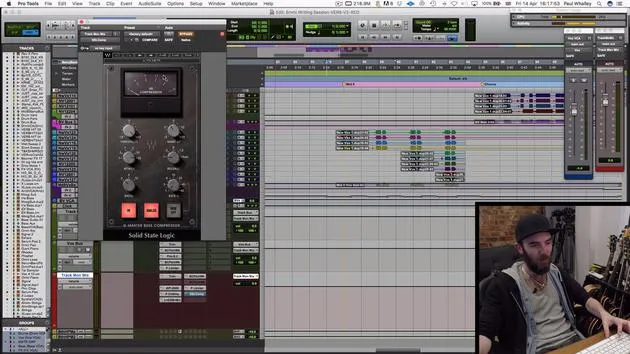
- Bass Guitar Amp Simulator: To make it sound a bit more real, since I recorded this direct input into my sound card.
5. EQ and Additional Processing
Next is a bit of EQ just to:
- Get rid of some of the subby low sounds.
- Add some high end.
Note: Normally, you wouldn't do this to a bass guitar, but because I've already got these synth basses, I want the bass guitar to stick out a bit more.
Additional Processing:
- Using a plugin to get rid of a bit of that extra fret noise.
- Finally, a gain plugin just to boost the level a little bit more.
Summarizing the Bass Workflow
With all these basses, you're noticing they're not going to the master output; they come down to this auxiliary track for the bass.
- This track runs through an equalizer, adding a bit of distortion and color to give it a more special quality.
- Compressor: To get rid of some of the harshness, since a lot of these basses are quite pumped throughout the various sections.
Final Thought: Taking that processing off helps to glue them all together and smooth across the different sections of the song.
It's a pretty simple bass setup for this track. I've done records where I use many more, and some where I use a lot less. But really, refining the sound of your bass and having the weight there is crucial to making a good sounding pop record.
26 lecciones
1h 43m de lecciones en vídeo estructuradas
Funciones de vídeo avanzadas
Ralentiza, repite un pasaje, sigue la partitura
Móvil, tablet y ordenador
Practica donde quieras
Garantía de satisfacción 100%
30 días de garantía de devolución
Conoce a tu gurú
Conoce a tu gurú
Paul Whalley es multiinstrumentista, productor y compositor con un sonido deliberadamente amplio. Pasó años de gira como músico de sesión con artistas como Mumford & Sons y Ellie Goulding. Con formación clásica, tiene un grado universitario en interpretación instrumental y un Máster en composición por la Guildhall School of Music. Desde que pasó de las giras a la producción y la composición ha trabajado con artistas como NAO, Wretch 32 y Nina Nesbitt, y ha tocado en discos que han entrado en el top 40 de todo el mundo, incluido 'Shout Out to My Ex' de Little Mix. Tiene su base en los Tileyard Studios, al norte de Londres, donde escribe y produce para grandes sellos del Reino Unido y desarrolla a nuevos artistas. En MusicGurus, él y Emmi Green descomponen un disco de pop desde cero —cada decisión de arreglo y producción al descubierto— para compositores y productores que quieran escuchar cómo se construyen realmente los éxitos.







