



Resumen - AC/DC Back In Black
Qué incluye el curso
14 lecciones (2h 12m) · 1 gratis
01. Afinación
13:34
02. Primeros pasos
Lección gratis9:58
03. Técnica básica
9:01
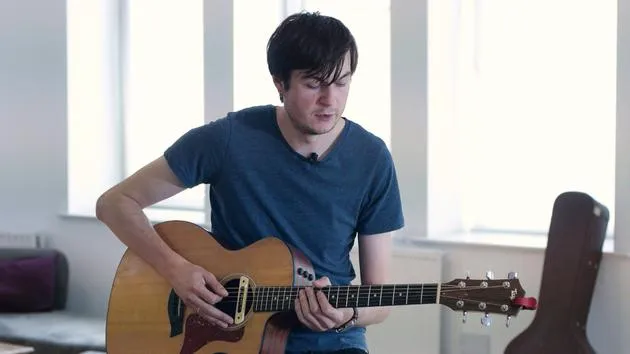
04. Acordes abiertos
6:24
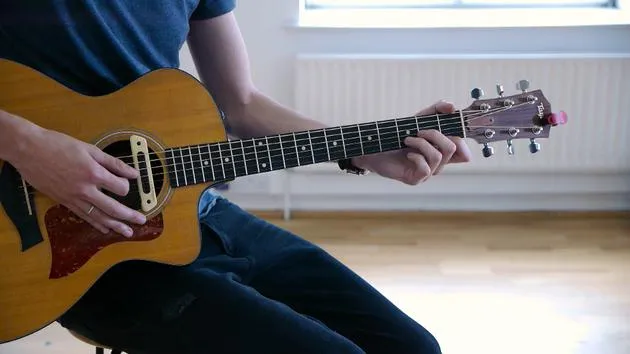
05. Progresiones de acordes
7:57
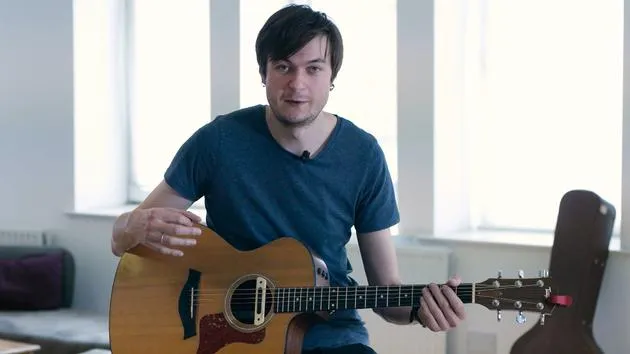
06. El ritmo y la mano derecha
11:56
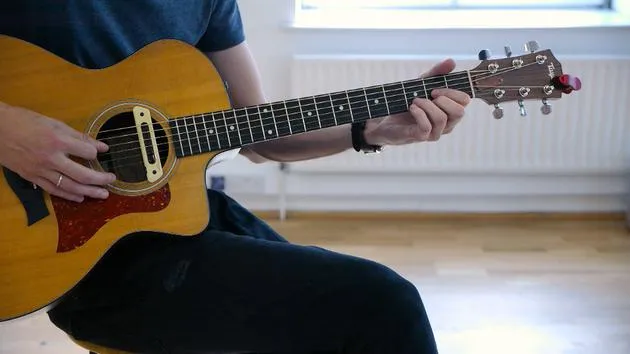
07. REM - Everybody Hurts
9:01
08. Bryan Adams - Run To You
3:23
09. Palm muting
3:16
10. Legato
8:47
11. Michael Jackson - Beat It
5:23
12. Bending
15:36

13. Acordes con cejilla
11:35
14. Resumen - AC/DC Back In Black
Estás aquí16:56
Transcripción de la lección
Final Music Lesson: Mastering "Back in Black"
Hi, guys!
So, it's the last lesson in the course now. I hope you've enjoyed all the techniques we've covered so far. What I want to look at today is a bit of a challenge for you, which will hopefully encompass all the techniques that we've reviewed.
Techniques to Review
- 16th rhythms
- Open chords
- Pull-offs
- Hammer-ons
- String bending
- Slides
- Muting
The song we're going to take a look at is "Back in Black." We're going to cover pretty much all the parts from the song. Let's start by playing the first section. Hopefully you all know what this riff should sound like, and then we'll break it down and learn it.
Main Riff
Here's the main riff of "Back in Black."
I'm sure you recognize that! Now, let's look at how to play this.
Understanding the Riff
First, we'll begin with three open chords. You should be very familiar with E major. Here's how we proceed:
- Play E major and immediately mute it off using your right hand or the little finger on your left hand.
- Transition to the D major chord, executing a down, up, down strum. This counts as 1, 2, and a 3.
- Repeat the same pattern on the A major chord.
This covers some material we looked at earlier in the course.
16th Note Run
Next, we have a 16th note run based on the E blues scale, which we have previously covered. Here's how it goes:
- Start with a pair of pull-offs:
- Fret the third fret on the E string and pull off to open E.
- Do the same on the B string: third fret to open B.
Next, we have a little mini bend on the G string:
- Fret the second fret on the G string.
- Remember, with bending, support the bend by lining up behind it with your first finger for strength, especially close to the nut.
Complete the lick by:
- Bending up and down by half a tone (equivalent to going up to the third fret and back).
- Finishing with a pull-off to open G.
Placement of the Lick
Take your time with that lick! Attack it slowly:
- Pull off first, bend on its own, and then bring them together.
Placement is crucial! It's on quite an unusual point in the bar. If we count: 1, 2 and A, 3, 4 and A 1, 2, 3, E
It falls on the second 16th of beat three:
- 1 E and A, 2 E and A, 3 E and A, 4 E and A
Chord Adaptation
You might have noticed that when I played the chords, I lazily played the A major chord with one finger. This keeps my third finger free and ready for the pull-off lick! You can totally do that!
Moving to the Second Part
Now onto the second part of the lick:
- We repeat those chords and introduce a simple lick.
- Fret the second fret on the A string with your first finger.
- Move to the fourth fret on the E string.
- Back to the second fret on the A string and to open A.
- Return to the second fret on the A string, then go down to the first fret.
- Finish by picking the second fret twice.
Let me play you through that section slowly.
Chorus Section
Now, moving on to the chorus! Let me play it in full.
Here's the chorus section.
It's very heavily chord-based. The opening riff transitions between open chords and syngonic licks, while this section mostly uses power chords.
What's a Power Chord? A power chord consists of two notes: the root and the fifth of the chord. Earlier in the lesson, we dealt with open chords that are triads (three notes).
Chords in the Chorus
We'll start with:
- A power chord, using one finger barring across the middle two strings.
- Move to E power chord by shifting the shape.
- Transition to the B power chord, which is the second fret on the A string and fourth fret on the D string.
For the next bit:
- Remove the first finger and strum the same two strings for an open A and fourth fret on the D string, then go off and on again.
Fret G Chord
Next, we'll fret a G chord:
- Omit the second fret on the A string for a more aggressive sound, creating a G power chord.
Strumming the Chords
Now, strum the G power chord and then move to the D power chord, which is the bottom half of a D major shape.
- Return to the A power chord and add a mini bluesy bend on the bottom string using the second finger on the third fret of the E string.
- Loop it back to the original power chords A, E, and D, finishing with the D major chord.
Rhythm Guitar Part Behind the Solo
We're transitioning to the rhythm guitar part behind the solo:
- We play the first three chords of the song in power chord voicings.
- Start with an E power chord (first finger across the A and D strings) and pick the low E.
- Move to the D power chord and then to the A power chord.
You can choose between all downstrokes or a mix of down and upstrokes.
Palm Muting
Introduce palm muting:
- Bring your palm forward slightly to mute the chord.
Bridge Section
Now, we'll explore the bridge, possibly the coolest riff of the song.
- Start with an open E, then slide from the fifth fret to the fourth fret on the A string.
- Pull off to the second fret on the A string.
- Go back up to the fourth fret on the A string, and then to the third fret on the E string.
Final Repetition
This section is repeated:
- Starting with open A, using the same sliding pattern.
- Loop it round, playing twice on the riff for both E and A before repeating.
Conclusion
So, that covers the end of the track. I hope you've enjoyed this lesson course.
Remember:
- Stay relaxed!
- Break down practice into small chunks.
- Start slow, then speed it up.
I look forward to seeing you again soon. Thank you!
14 lecciones
2h 12m de lecciones en vídeo estructuradas
Funciones de vídeo avanzadas
Ralentiza, repite un pasaje, sigue la partitura
Móvil, tablet y ordenador
Practica donde quieras
Garantía de satisfacción 100%
30 días de garantía de devolución
Conoce a tu gurú
Conoce a tu gurú
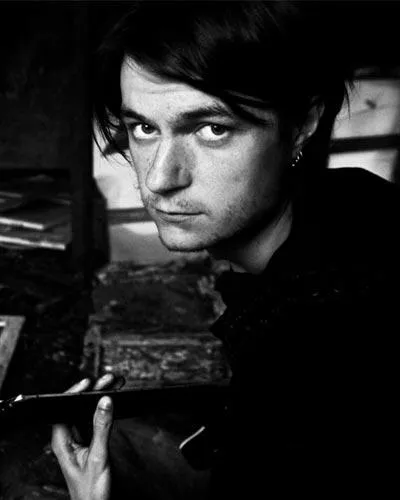
James ha disfrutado de una exitosa carrera como músico a tiempo completo desde que se graduó en la Academy of Contemporary Music en 2007. Desde entonces ha trabajado con artistas y productores de Stereophonics, Ronnie Dunn, Scissor Sisters y muchos más. También compone música para televisión y cine, como el anuncio de televisión 'Music Pieces' de Sony Walkman y el tráiler de la película Albatross.
Se define a sí mismo como una especie de purista, un músico de músicos, y este enfoque de su arte ha despertado el interés de grandes empresas y productores de televisión. A James se le puede escuchar en programas como 'Geordie Shore' e incluso en anuncios de la British Heart Foundation, gracias a su versatilidad natural como artista. Como él mismo dice: "El mejor cumplido, y el más frecuente, que recibo en las sesiones para clientes es que toco lo que es 'correcto' para la música. A menudo, todo se reduce a la sencillez."
"James es de verdad. Un gran intérprete, con un tono demoledor, y no dudaría ni un segundo en recomendarlo para cualquier proyecto. ¡Sigue así, James!" - Joey Sykes (Meredith Brooks / Will Champlin / The Babys)
En Foundations of Rock Guitar Technique, James transmite exactamente esa filosofía, mostrándote cómo desarrollar una técnica de guitarra rock sólida y musical y tocar lo que es 'correcto' para la canción.







