



Técnica básica
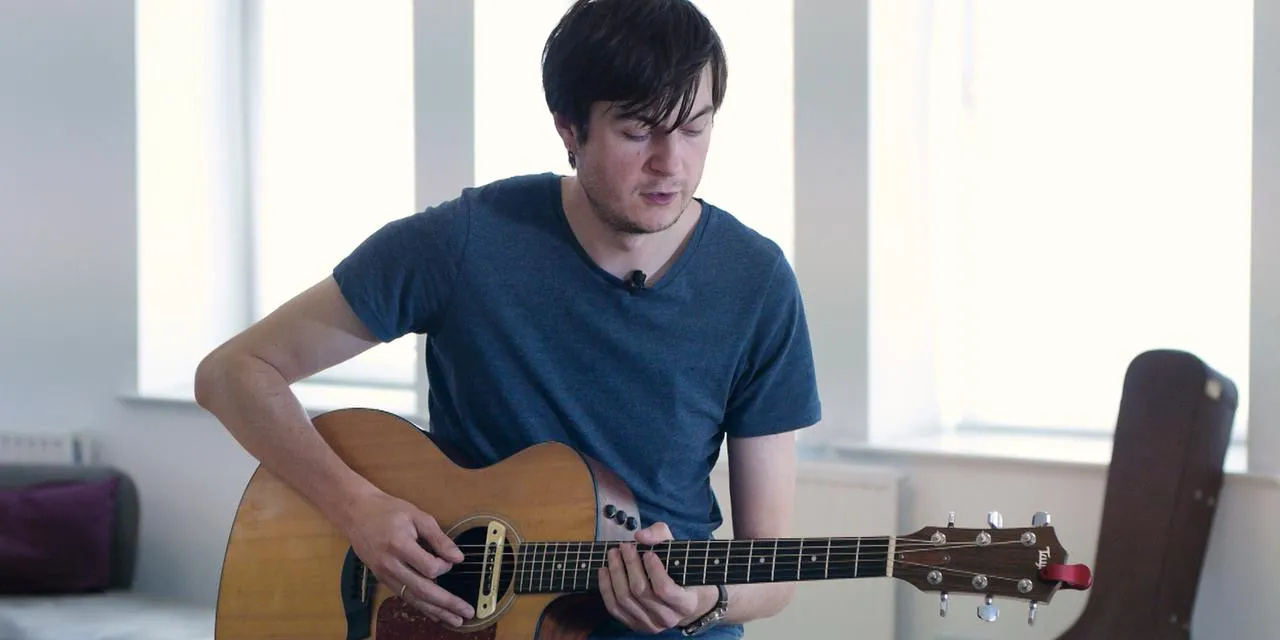
James Barratt repasa los fundamentos de la posición de las manos en la guitarra: la presión de la mano que pisa, colocar la yema justo detrás del traste y una púa precisa con la mano derecha.
Qué incluye el curso
14 lecciones (2h 12m) · 1 gratis
01. Afinación
13:34
02. Primeros pasos
Lección gratis9:58
03. Técnica básica
Estás aquí9:01
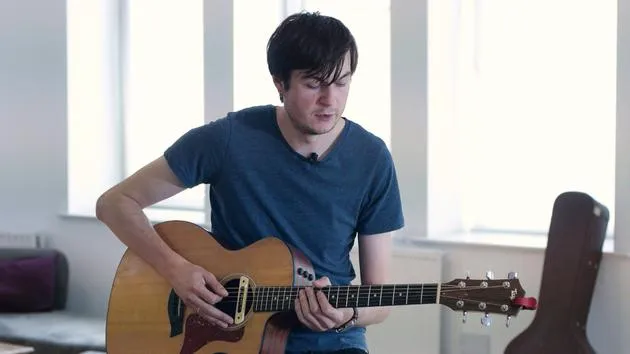
04. Acordes abiertos
6:24
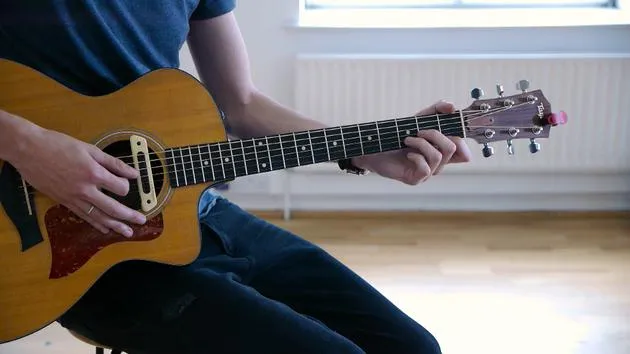
05. Progresiones de acordes
7:57
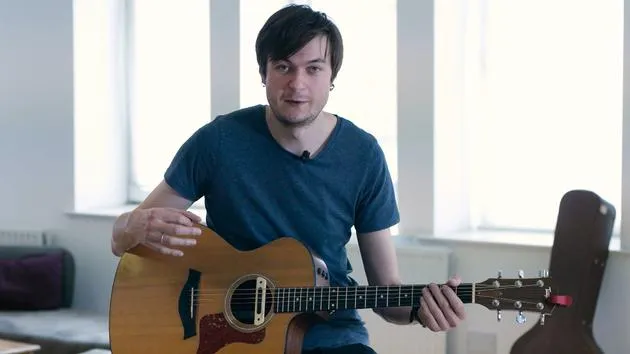
06. El ritmo y la mano derecha
11:56
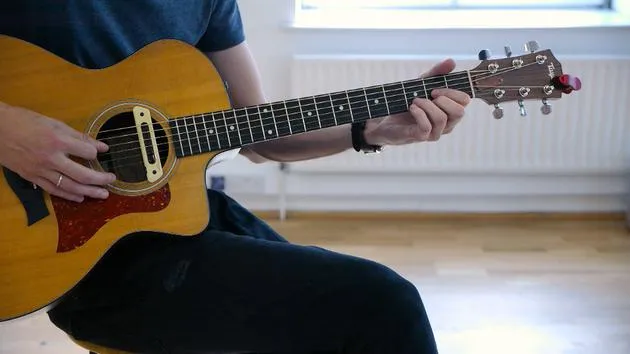
07. REM - Everybody Hurts
9:01
08. Bryan Adams - Run To You
3:23
09. Palm muting
3:16
10. Legato
8:47
11. Michael Jackson - Beat It
5:23
12. Bending
15:36
13. Acordes con cejilla
11:35
14. Resumen - AC/DC Back In Black
16:56
Transcripción de la lección
Guitar Lesson: Hand Positions and Playing Techniques
Hey, guys!
In this lesson, I want to discuss some of the finer points of where we're going to put our hands and how we're going to use our fingers to play the guitar comfortably. Hopefully, this will get you on the path to learning quickly with minimal bad habits.
Left Hand Positioning
We've already talked about labeling our fingers on the left hand:
- Thumb
- First Finger
- Second Finger
- Third Finger
- Fourth Finger
Finding the Best Place on the Fret
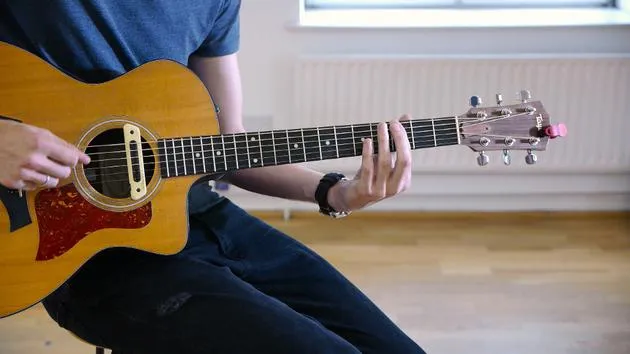
First, let's focus on finger positioning on the fret. For instance, on the third fret, there's a relatively large area compared to the size of my fingertip.
- When asked to play the third fret on the bottom E string, you could technically place your finger anywhere within the 2-centimeter space.
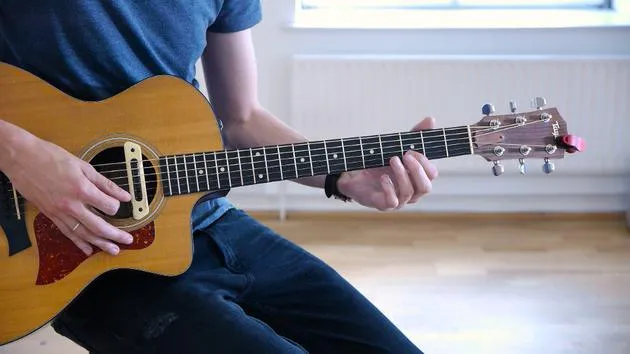
- Optimal Position: Right up against the metal of the third fret, not on top of it, but just on the other side. This position gives a nice clean tone.
If you place your finger too close to the back of the fret (closer to the second fret), you might hear buzzes and require much more pressure to achieve tone and sustain.
- Dull Sound: Playing on top of the metal results in a dull sound, which we want to avoid.
Applying Pressure
Now, let's discuss the amount of pressure needed to make the guitar "sing."
When you're first learning, it can be tempting to apply a lot of pressure with your left hand. However, that's often unnecessary.
- Start with the Third Fret on the Bottom E String:
- Rest your finger on the string without pressing down into the fretboard.
- Gradually apply minimal pressure until you hear a clear note.
You don't need to dig in hard; even with minimal pressure, you can achieve a clean tone. As you push harder, the pitch will change.
- Keep in mind that relaxation is key, and excessive pressure is detrimental. It can slow you down and hurt your fingers.
E Minor Pentatonic Scale Exercise
Let's take a look at the E minor pentatonic scale, a common scale in rock and blues. This will also help synchronize our left and right hands.
The Fingering
- Open String: Start with an open E.
- Second Finger: Fret the third fret on the E string.
- Move to the A String: Open A, then use your first finger for the second fret.
- Repeat for Remaining Strings: When you reach the B string, return to open and then fret the third finger on the third fret.
Practice Instructions
- Start slow to maintain control over what you're doing.
- Use your fingertips to ensure clean sounds.
Right Hand Technique
For your right hand, it's helpful to start with all downstrokes initially.
- Position: Anchor your wrist to the bridge of the guitar. This lets your right hand pick out any string easily.
Practice the Scale
- Play the scale with all downstrokes:
- Open E...
- (Continue with your picking pattern)
Right Hand Exercise: E Minor 7 Chord
Now, let's shift focus to the right hand while fretting an E minor 7 chord with your left hand.
Chord Position
- Use your first finger to fret the second fret on the A string.
- The left hand will perform a simple task so we can focus on the right hand.
Alternate Picking Pattern
- We'll do a downstroke followed by an upstroke: Down, Down, Up, Down, Up, Down, Up.
Picking Pattern
- Play the E string.
- Skip to the D string.
- Back to the A string.
- Skip over to the G string, and so on.
This exercise creates a cool cascading sound and is excellent for developing your right hand's accuracy.
Conclusion
You can apply this picking pattern to any chord. Once you've practiced a few open chords, this becomes a great exercise to enhance your playing skills!
If you get started on this now, we'll move on to the next lesson shortly. Happy playing!
14 lecciones
2h 12m de lecciones en vídeo estructuradas
Funciones de vídeo avanzadas
Ralentiza, repite un pasaje, sigue la partitura
Móvil, tablet y ordenador
Practica donde quieras
Garantía de satisfacción 100%
30 días de garantía de devolución
Conoce a tu gurú

Conoce a tu gurú
James ha disfrutado de una exitosa carrera como músico a tiempo completo desde que se graduó en la Academy of Contemporary Music en 2007. Desde entonces ha trabajado con artistas y productores de Stereophonics, Ronnie Dunn, Scissor Sisters y muchos más. También compone música para televisión y cine, como el anuncio de televisión 'Music Pieces' de Sony Walkman y el tráiler de la película Albatross.
Se define a sí mismo como una especie de purista, un músico de músicos, y este enfoque de su arte ha despertado el interés de grandes empresas y productores de televisión. A James se le puede escuchar en programas como 'Geordie Shore' e incluso en anuncios de la British Heart Foundation, gracias a su versatilidad natural como artista. Como él mismo dice: "El mejor cumplido, y el más frecuente, que recibo en las sesiones para clientes es que toco lo que es 'correcto' para la música. A menudo, todo se reduce a la sencillez."
"James es de verdad. Un gran intérprete, con un tono demoledor, y no dudaría ni un segundo en recomendarlo para cualquier proyecto. ¡Sigue así, James!" - Joey Sykes (Meredith Brooks / Will Champlin / The Babys)
En Foundations of Rock Guitar Technique, James transmite exactamente esa filosofía, mostrándote cómo desarrollar una técnica de guitarra rock sólida y musical y tocar lo que es 'correcto' para la canción.







