



Primeros pasos
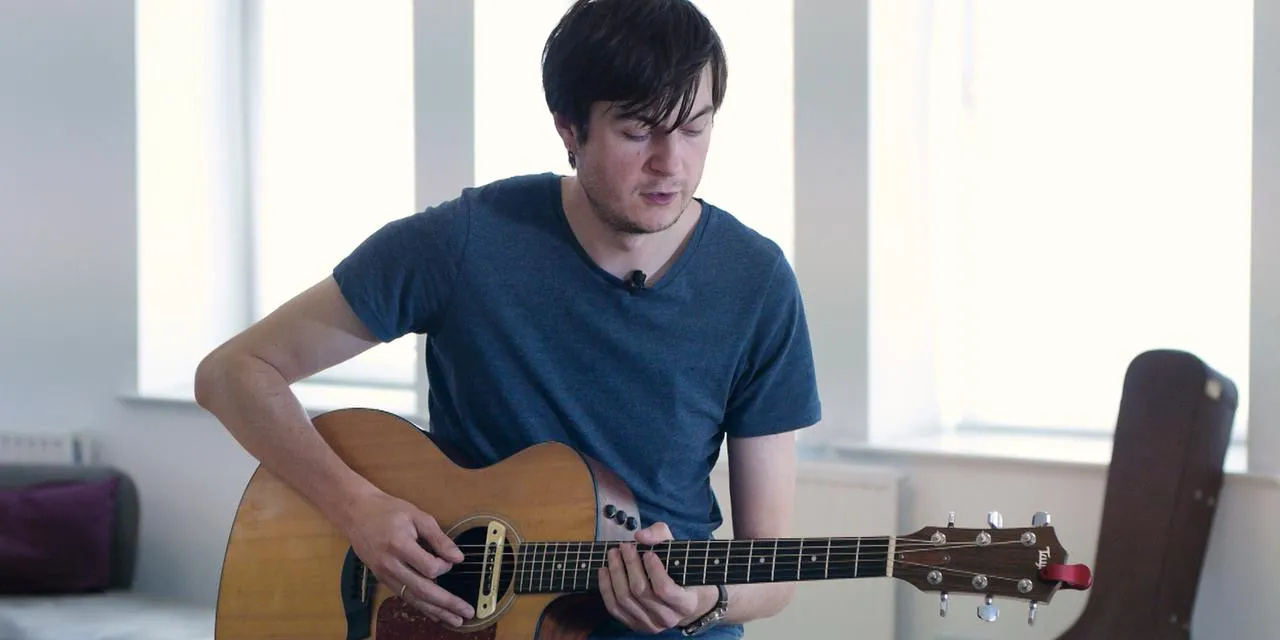
James Barratt cubre lo básico para principiantes: las partes de la guitarra, cómo sostenerla cómodamente, la posición de la mano izquierda y cómo sujetar la púa.
Qué incluye el curso
14 lecciones (2h 12m) · 1 gratis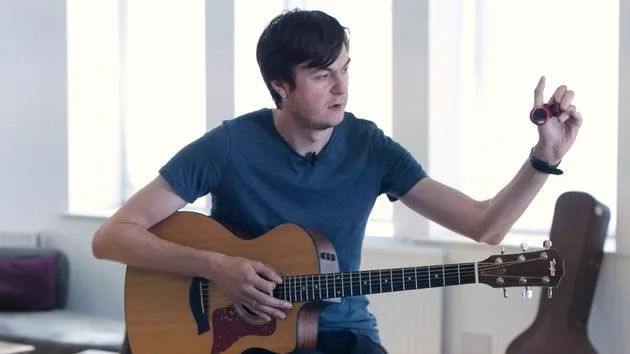
01. Afinación
13:34
02. Primeros pasos
Estás aquí9:58
03. Técnica básica
9:01
04. Acordes abiertos
6:24
05. Progresiones de acordes
7:57
06. El ritmo y la mano derecha
11:56
07. REM - Everybody Hurts
9:01
08. Bryan Adams - Run To You
3:23
09. Palm muting
3:16
10. Legato
8:47
11. Michael Jackson - Beat It
5:23
12. Bending
15:36
13. Acordes con cejilla
11:35
14. Resumen - AC/DC Back In Black
16:56
Transcripción de la lección
Guitar Parts and Proper Holding Technique
Introduction
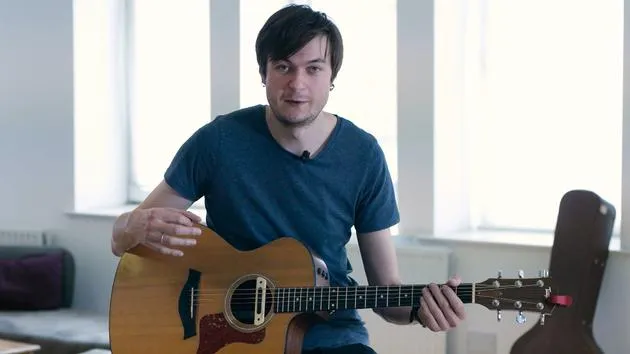
Hi, guys! Today's lesson is going to be about the parts of the guitar and how to correctly and comfortably hold it. Understanding the individual components of the guitar is essential, and many people struggle with positioning.
Parts of the Guitar
Let's go through the individual parts of the guitar:
-
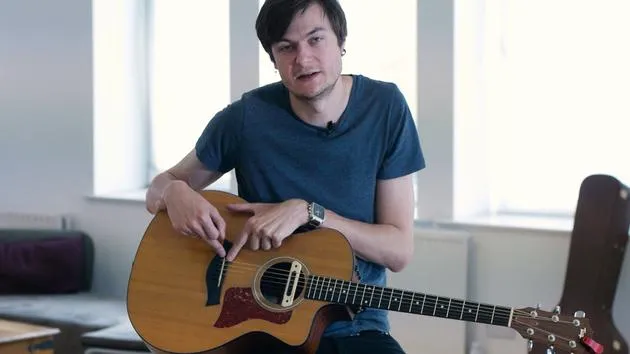
Body: This general area, whether you have an acoustic or an electric guitar, is known as the body.
-
Scratch Plate: This little part here is the scratch plate. You may or may not have one of these.
-
Bridge: The bridge is a very good place for our right hand to reside. We'll discuss this later.
-
Bridge Pins: On an acoustic guitar, we have pins known as bridge pins, which keep the strings in place.
-
Strings: The guitar obviously has strings.
-
Pickup: On electric guitars, you may have one or more pickups.
-
Volume and Tone Controls: If you have an electric guitar, you may also have some volume and tone controls for your individual pickups.
-
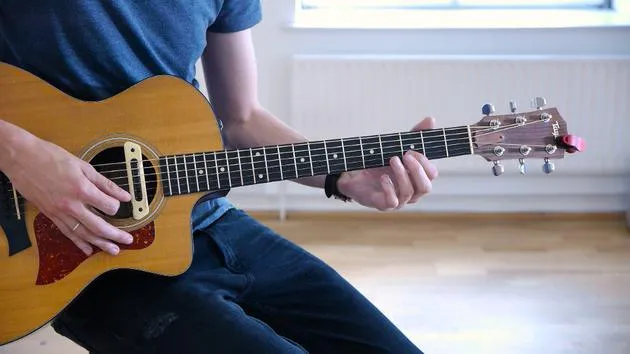
Fretboard: The long area along here is the fretboard, with the metal bars known as the frets.
-
Neck: The back of the fretboard is called the neck.
-
Headstock: The entire area here is known as the headstock.
-
Tuning Pegs: As mentioned in the previous lesson, we have the tuning pegs to tune the guitar.
How to Hold the Guitar
Positioning the Guitar
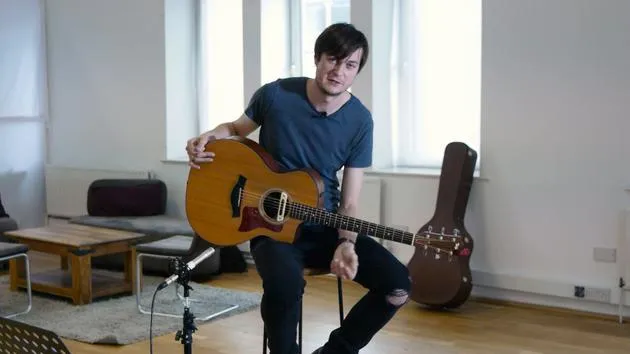
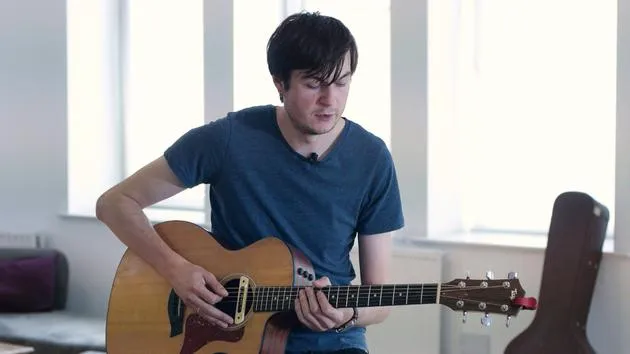
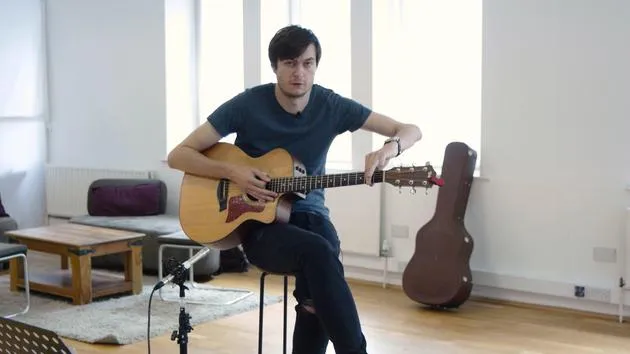
You can see that the shape of the underside of the guitar fits comfortably over one of your legs. You can experiment with which leg you place the guitar on, there's no right or wrong way; it's personal preference.
-
Right Leg: I prefer to have it on my right leg, which is generally popular among right-handed players.
-
Left Leg: Many classical players prefer their guitar on the left leg.
Guitar Angle
If you're a right-handed player, ensure the neck of the guitar is parallel to the floor or slightly angled upward.
- Avoid pointing the guitar down towards the floor, as this limits the reach of your left hand and can harm your posture.
Right Hand Position
-
The right shoulder and arm should sit over the shoulder of the guitar.
-
A great position for your right hand, for 99% of your playing, is on the bridge. We will explore specific points on this later.
Left Hand Position
-
Avoid resting your left hand on your leg as it pulls the guitar down.
-
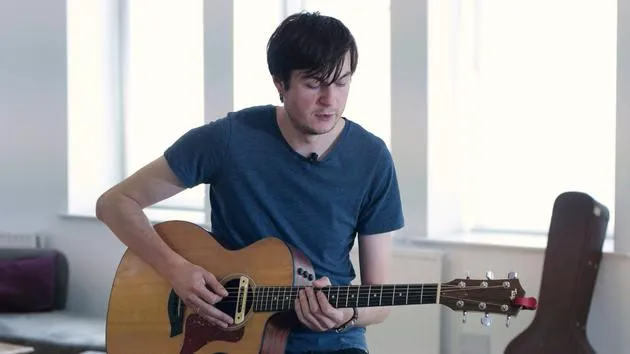
Keep your left hand, your fretting hand, off your leg and ensure your elbow is relaxed at your side. Many learners tend to pull their elbow too close, which restricts hand movement.
-
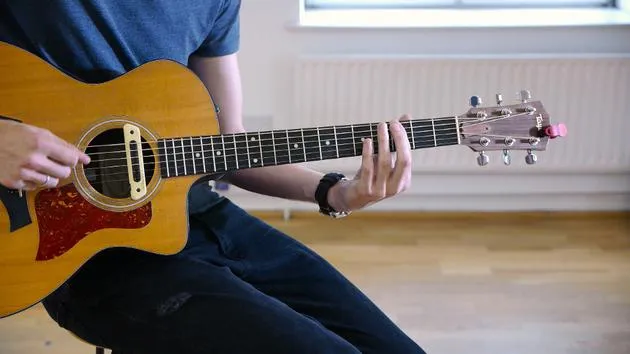
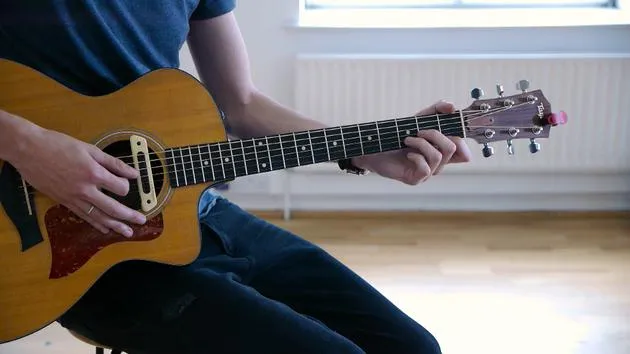
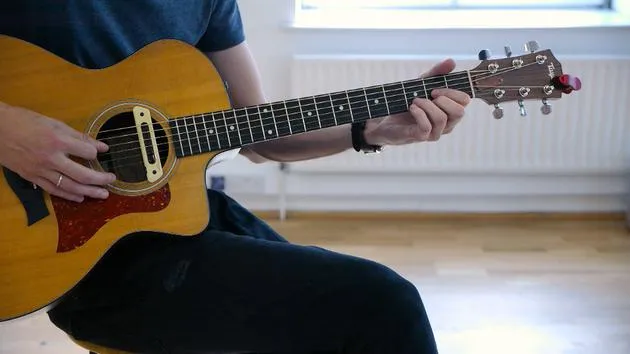
Thumb Position: Your thumb should be fairly straight on the back of the neck, as if attempting to leave a thumbprint in the middle or upper part.
-
Maintain a gap under your fretting hand to avoid restricting movement.
Finger Positioning
For your left hand, we label the fingers as follows:
-
1: Index
-
2: Middle
-
3: Ring
-
4: Little
-
The thumb is simply known as T.
For your right hand (for fingerstyle playing):
-
P: Thumb
-
I: Index
-
M: Middle
-
A: Ring
-
C: Little
So, we abbreviate this as P, I, M, A, C (pimac).
Using a Pick
If you're using a plectrum, hold it with your left hand.
-
Grip: Place your thumb at the back of the pick, so the tip points towards the bottom of your thumb, and grip it with your first finger, curling it slightly.
-
You don't need to hold it too tightly; just enough to avoid dropping it. Adjust how much tip is shown based on the application, more for strumming, less for accuracy.
Choosing a Pick
When choosing a pick, consider these factors:
-
Variety: Go to a store and grab a variety of picks, as they come in different shapes, sizes, and gauges (thickness).
-
Gauge: Thicker picks have less give, while thinner picks are more flexible. Players often settle on a pick that works for the majority of their playing.
-
Experimentation: Start with medium gauge picks; try out a few different types and see which ones you like the best.
Conclusion
When starting out on guitar, it's crucial to have a comfortable grip, posture, and understanding of the instrument. Keep experimenting with different picks and hand positions to find what works best for you! Happy playing!
14 lecciones
2h 12m de lecciones en vídeo estructuradas
Funciones de vídeo avanzadas
Ralentiza, repite un pasaje, sigue la partitura
Móvil, tablet y ordenador
Practica donde quieras
Garantía de satisfacción 100%
30 días de garantía de devolución
Conoce a tu gurú
Conoce a tu gurú
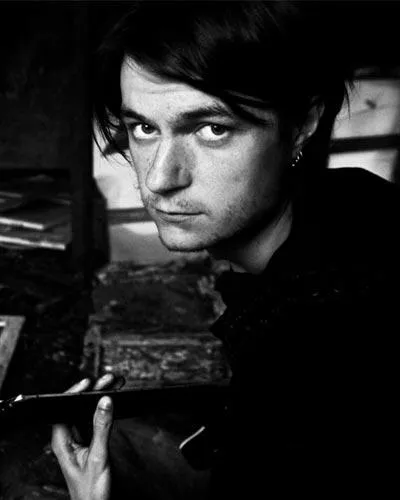
James ha disfrutado de una exitosa carrera como músico a tiempo completo desde que se graduó en la Academy of Contemporary Music en 2007. Desde entonces ha trabajado con artistas y productores de Stereophonics, Ronnie Dunn, Scissor Sisters y muchos más. También compone música para televisión y cine, como el anuncio de televisión 'Music Pieces' de Sony Walkman y el tráiler de la película Albatross.
Se define a sí mismo como una especie de purista, un músico de músicos, y este enfoque de su arte ha despertado el interés de grandes empresas y productores de televisión. A James se le puede escuchar en programas como 'Geordie Shore' e incluso en anuncios de la British Heart Foundation, gracias a su versatilidad natural como artista. Como él mismo dice: "El mejor cumplido, y el más frecuente, que recibo en las sesiones para clientes es que toco lo que es 'correcto' para la música. A menudo, todo se reduce a la sencillez."
"James es de verdad. Un gran intérprete, con un tono demoledor, y no dudaría ni un segundo en recomendarlo para cualquier proyecto. ¡Sigue así, James!" - Joey Sykes (Meredith Brooks / Will Champlin / The Babys)
En Foundations of Rock Guitar Technique, James transmite exactamente esa filosofía, mostrándote cómo desarrollar una técnica de guitarra rock sólida y musical y tocar lo que es 'correcto' para la canción.







