



Palm muting
Qué incluye el curso
14 lecciones (2h 12m) · 1 gratis
01. Afinación
13:34
02. Primeros pasos
Lección gratis9:58
03. Técnica básica
9:01
04. Acordes abiertos
6:24
05. Progresiones de acordes
7:57
06. El ritmo y la mano derecha
11:56
07. REM - Everybody Hurts
9:01
08. Bryan Adams - Run To You
3:23
09. Palm muting
Estás aquí3:16
10. Legato
8:47
11. Michael Jackson - Beat It
5:23
12. Bending
15:36
13. Acordes con cejilla
11:35
14. Resumen - AC/DC Back In Black
16:56
Transcripción de la lección
Music Lesson: Exploring Palm Muting Technique
Introduction
Okay, so I hope you're feeling a bit more confident with the basic techniques of the right and left hands now. We've covered:
- Chords
- Right and left hand positioning
- Picking patterns
- Rhythms
- All sorts of things
Focus of the Lesson
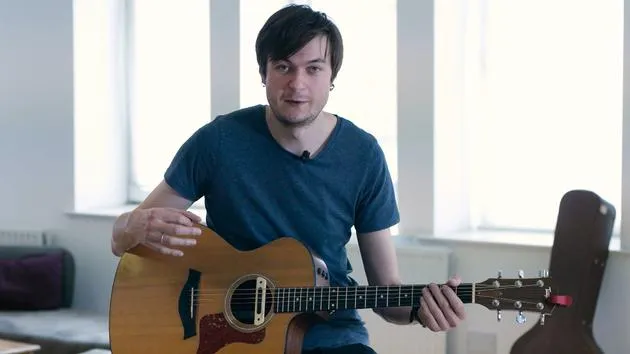
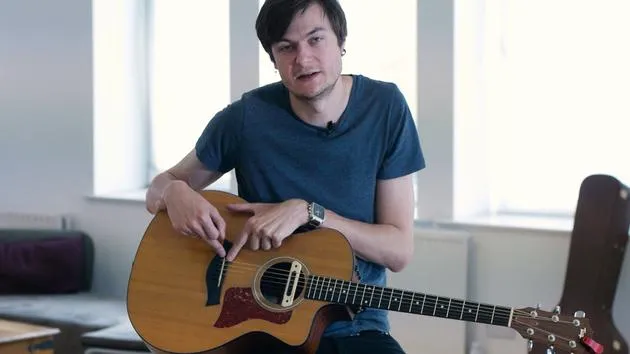
In this lesson, we're going to take a look at some more fun techniques you can get from the guitar. We're going to start with a right hand technique called palm muting (abbreviated to PM in tab).
Importance of Right Hand Position
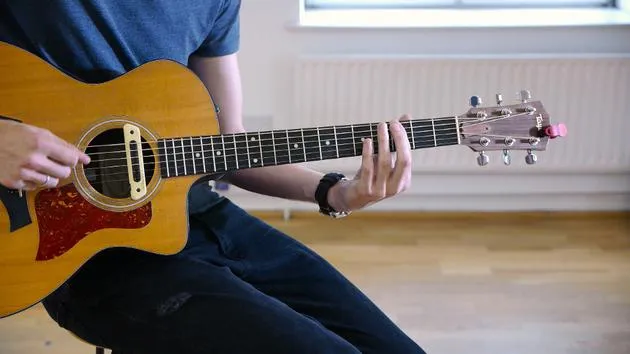
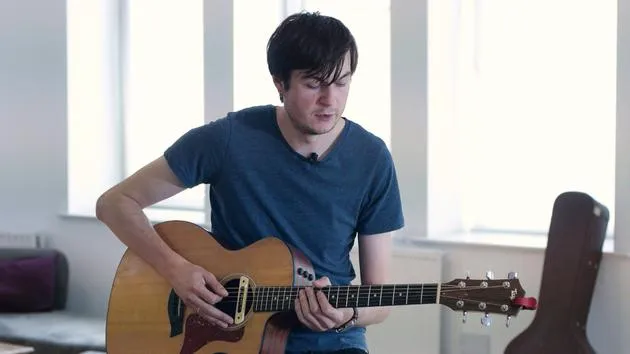
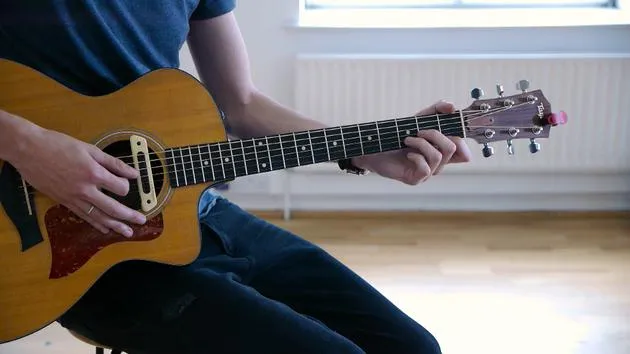
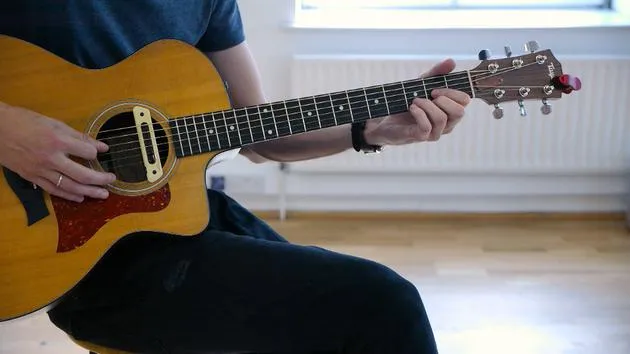
This technique is another benefit of getting your right hand position exactly right on the bridge. It enables you to come in and out of palm muting really easily.
Exercise: Practicing Palm Muting
Now, I'm going to show you an exercise to practice palm muting. We will focus on:
- The bottom E string (the thick E string)
- Alternate picking in eighth notes
Steps to Follow
-
Begin with open E as normal (no muting):
- Count: 1, 2, 3, and 4.
-
Adjust the position of your right hand:
- Slowly move the back of your palm to rest on the string. This provides a cool muting sound that you've likely heard before.
- As you move your palm back, you will notice that the sound transitions from muted to unmuted.
-
Observe the muting:
- Keep moving your palm toward the headstock for less muting until it reaches the point where it's not muted at all.
- Moving forward onto the strings again causes the muting to get heavier.
- Be cautious, as moving too far forward will result in excessive muting where the pitch of the string is lost.
Key Points
- Palm Placement: The effective muting area is tiny, probably about a centimeter.
- Minimal Positioning: You don't want to bring your palm onto the string any more than that to maintain definition when fretting different notes.
Dynamic Control and Practice
- Palm muting can help control dynamics and is a great-sounding technique for various styles.
- Practice the following:
- Begin unmuted.
- Slowly bring your hand forward onto the string to achieve muting.
- If you lift your hand up, you should feel your palm touching the string right near the bridge.
Moving Across Strings
- When practicing, remember:
- You may need to flatten your palm or move it down the bridge for the top strings.
- Listen to how much muting you want.
Conclusion
This is a great technique to master. If you solidify your right hand technique from the start in a good position, it will be easy to dip in and out of palm muting. You can switch between muted and unmuted sounds within a riff, and it'll sound really, really cool!
14 lecciones
2h 12m de lecciones en vídeo estructuradas
Funciones de vídeo avanzadas
Ralentiza, repite un pasaje, sigue la partitura
Móvil, tablet y ordenador
Practica donde quieras
Garantía de satisfacción 100%
30 días de garantía de devolución
Conoce a tu gurú
Conoce a tu gurú
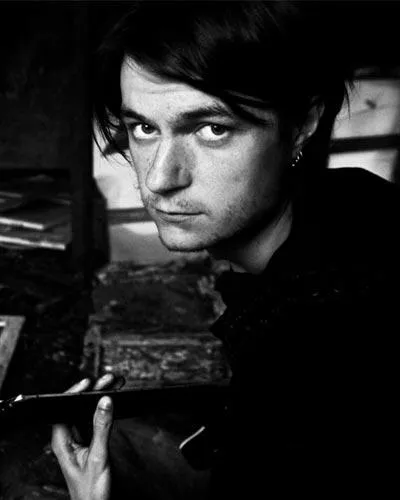
James ha disfrutado de una exitosa carrera como músico a tiempo completo desde que se graduó en la Academy of Contemporary Music en 2007. Desde entonces ha trabajado con artistas y productores de Stereophonics, Ronnie Dunn, Scissor Sisters y muchos más. También compone música para televisión y cine, como el anuncio de televisión 'Music Pieces' de Sony Walkman y el tráiler de la película Albatross.
Se define a sí mismo como una especie de purista, un músico de músicos, y este enfoque de su arte ha despertado el interés de grandes empresas y productores de televisión. A James se le puede escuchar en programas como 'Geordie Shore' e incluso en anuncios de la British Heart Foundation, gracias a su versatilidad natural como artista. Como él mismo dice: "El mejor cumplido, y el más frecuente, que recibo en las sesiones para clientes es que toco lo que es 'correcto' para la música. A menudo, todo se reduce a la sencillez."
"James es de verdad. Un gran intérprete, con un tono demoledor, y no dudaría ni un segundo en recomendarlo para cualquier proyecto. ¡Sigue así, James!" - Joey Sykes (Meredith Brooks / Will Champlin / The Babys)
En Foundations of Rock Guitar Technique, James transmite exactamente esa filosofía, mostrándote cómo desarrollar una técnica de guitarra rock sólida y musical y tocar lo que es 'correcto' para la canción.







