



Fills sencillos
Con
Max Sedgley
Qué incluye el curso
7 lecciones (1h 6m) · 1 gratis
Transcripción de la lección
Back to Basics Drumming Course: Lesson Three
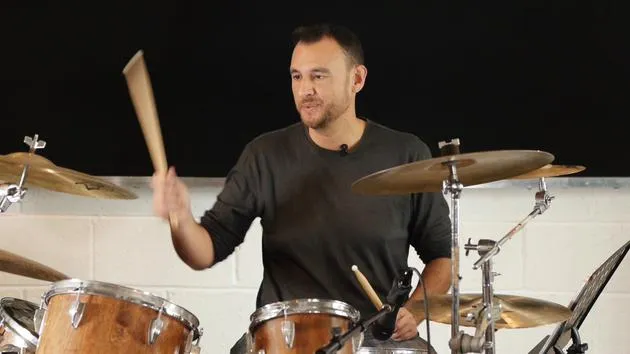
Hi there! Max Sedgley here as part of the MusicGurus.com Back to Basics drumming course. Today is Lesson Three, and we're going to deal with really simple fills, as they're called.
What is a Fill?
A fill is something you'll do while grooving along on a beat. After a certain period of time, the music, or you, will feel the need to put something extra in to lead onto a chorus or back into a verse. We call that a fill because you're filling in the beat that you're playing.
Basic Rudiment: Single Stroke Roll
Today, we're focusing on some simple fills that involve one of the basic rudiments of playing the drums.
- Rudiment Overview: All drumming and percussion playing involves a set of rudiments. There are about 46 to 48 rudiments, but the most basic one is called the single stroke roll.
Single Stroke Roll Technique
-
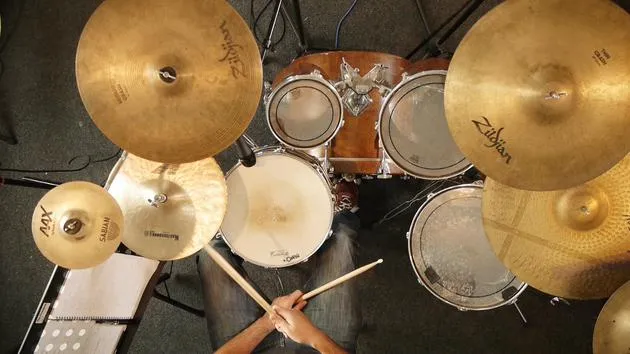
To perform a single stroke roll, you hit the drums with alternate hands:
- Right hand
- Left hand
- Right hand
- Left hand
- Right hand
- Left hand
-
Practice Tips:
- Start off very slowly to get a feel for it.
- The more you practice, the faster you'll be able to play it.
- Ensure it sounds as even as possible.
Creating Simple Fills
Once you've mastered the single stroke roll, you can start doing simple fills around the drum kit.
Round the World Fill
The most basic fill is called the "Round the World Fill", where you:
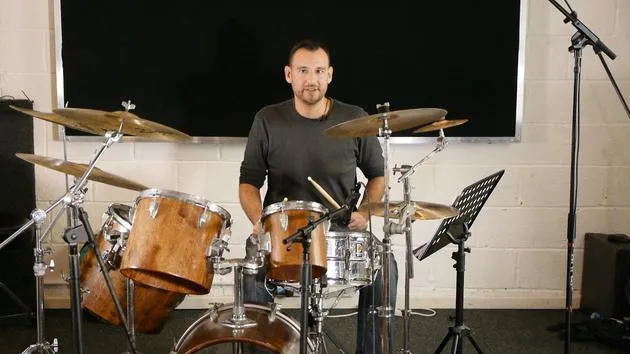
- Hit the snare drum and all the toms.
- Finish with the kick drum and a cymbal to return to your beat.
For example:
- Take the beat you learned in Lesson One or Two.
- Perform two hits on each tom (moving around the kit).
- Finish on the kick along with the cymbal.
Important Note: Most of the time when you hit the cymbals, you will also hit a kick with it. While this isn't 100% true as you advance, generally speaking, you're likely to hit a cymbal with a kick drum 99 times out of 100.
Key Principles
-
Always hit the kick at the end of a fill, which corresponds to the first beat of the groove or the next bar.
-
The basic principles of fills remain consistent:
- You can either split it up or do twice as many hits on each drum.
- Keep all the beats as even as possible.
-
Timing: Moving your hands around can alter the timing of your beat slightly. It's crucial to practice keeping all your timing locked.
Developing Muscle Memory
As you practice, you'll develop muscle memory and start doing it automatically.
Another Fill to Try
Let's try another fill where you keep the single stroke roll on the snare drum and then also move it to the hi-hat.
- Here's how it sounds:
- Open and Closed Hi-Hat
- When you lift your foot off the hi-hat pedal, it creates the open hat sound:
- Closed hi-hat = foot down
- Open hi-hat = foot up
- When you lift your foot off the hi-hat pedal, it creates the open hat sound:
- Open and Closed Hi-Hat
Practice Tip:
- Start by practicing just opening and closing the hi-hat.
- Use the same beat as in Lesson One, but lift your foot for the last hi-hat hit, then put it down again on the next beat of the next bar.
- Afterward, you can incorporate one of the fills we've practiced.
Happy drumming!
7 lecciones
1h 6m de lecciones en vídeo estructuradas
Funciones de vídeo avanzadas
Ralentiza, repite un pasaje, sigue la partitura
Móvil, tablet y ordenador
Practica donde quieras
Garantía de satisfacción 100%
30 días de garantía de devolución
Conoce a tu gurú
Conoce a tu gurú
Max Sedgley es un productor, batería y DJ británico con una titulación en música clásica. Sus composiciones han aparecido en numerosos programas de televisión y anuncios, incluida la serie Six Feet Under, y fue el batería del productor de drum & bass Roni Size. También graba bajo el nombre de Cadien.
En sus cursos enseña batería desde cero -el manejo de las baquetas, los grooves esenciales y el patrón de rock de ocho notas- así como los icónicos breaks de batería de los años 60 y 70 que se han sampleado en incontables discos modernos.







