



Mover la caja y las ghost notes
Lesson time: (8min 19sec)
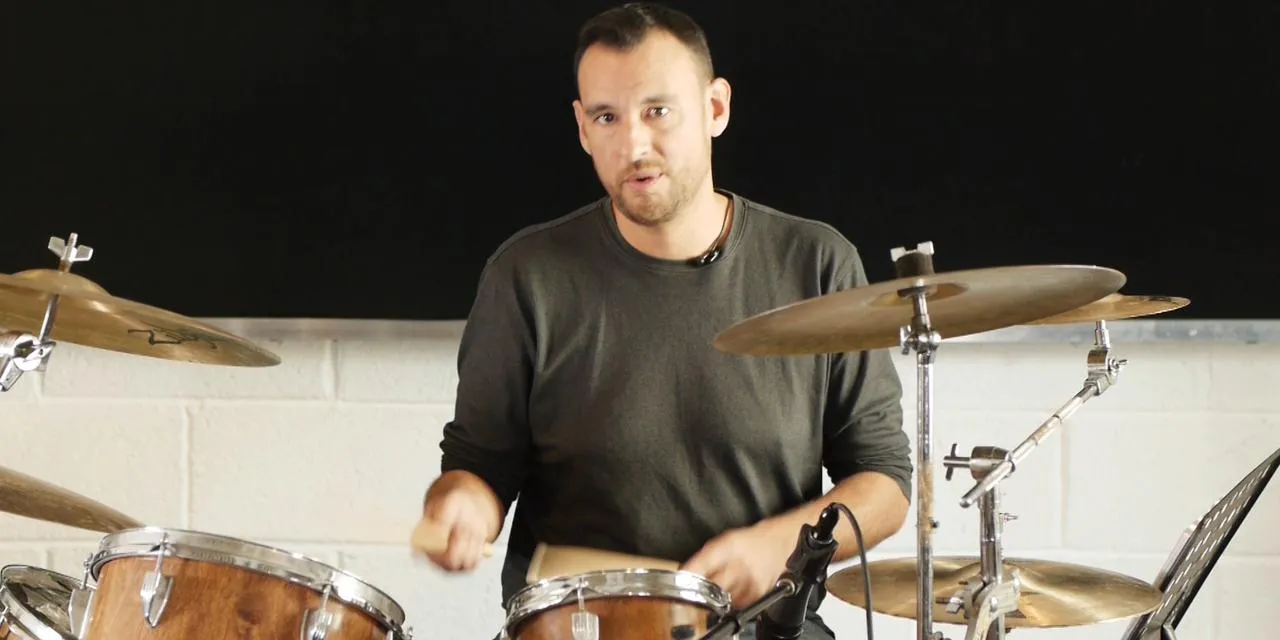
Max Sedgley muestra cómo mover la caja a nuevos lugares del compás y añadir ghost notes suaves entre los backbeats para enriquecer el groove.
Course preview
This lesson is part of the course Batería: vuelta a lo básico
Watch a preview of the full course below.
Lesson transcript:
Drumming Lesson #5: Ghost Notes and Snare Positioning
Hi there, I'm Max Sedgeley, and I'm here as part of the music gurus.com back to basics drumming lessons. Today is drumming lesson number five of the beginners course. We're going to focus on:
- Moving the snare around
- Ghost notes on the snare drum
Understanding Ghost Notes
Ghost notes are essentially little hits that are a lower volume than the main backbeat. In our previous lessons, we learned that the snare is typically played on the two and four backbeats. Now, we'll add ghost notes between those beats to enrich the sound and fill out the groove. This technique is prevalent in various music genres.
Example of Ghost Notes
Here's a quick example using a beat from lesson two. You'll play the same beat, but now you'll incorporate ghost notes, which sound like this:
- Your left hand mimics the snare while your right hand plays the hi-hat.
- The left hand fills in gaps between the existing beats.
Practice Tips
When practicing, focus on:
- Even spacing in the timing of the notes.
- Playing ghost notes at a lower volume than the main backbeat.
Varying Your Technique
You can also vary the position on the drum:
- Backbeat: Usually in the middle or about an inch or two from the edge.
- Ghost notes: Play closer to the edge for a different sound or softer in the same spot.
Try playing right on the edge if it feels right for you, but remember to keep your main beats (2 and 4) consistent.
Volume Dynamics
- Start with a loud hi-hat and a quiet snare.
- Practice swapping the volume levels between each hand.
Remember the Basics
The ghost note is called a "ghost" because it's the shadow of the normal backbeat. Typically, you'll have:
- Quiet on the snare
- Louder on the hi-hat
Experiment with placing ghost notes in various spots, and you'll discover where they fit best in your style.
Finding the Right Balance
Keep in mind that:
- Less is more: A few well-placed ghost notes can be more effective than overusing them.
- Your style and the genre of music will influence how and when to use ghost notes.
Practice Integration
It's common to place a ghost note at the end of a bar, leading into the next bar, like so:
- Count: 1, 2, 3, 4. 1, 2, 3, 4, E.
Start by practicing the hi-hat eighths alone, hitting the snare on different beats. Once you add in the kick drum, the rhythm will start to gel.
Advanced Techniques
You can even play a ghost note simultaneously with other notes, which will develop as your style and playing evolve.
Final Thoughts
Experiment, practice, and have fun with these techniques!
About the instructor
Max Sedgley es un productor, batería y DJ británico con una titulación en música clásica. Sus composiciones han aparecido en numerosos programas de televisión y anuncios, incluida la serie Six Feet Under, y fue el batería del productor de drum & bass Roni Size. También graba bajo el nombre de Cadien.En sus cursos enseña batería desde cero -el manejo de las baquetas, los grooves esenciales y el patrón de rock de ocho notas- así como los icónicos breaks de batería de los años 60 y 70 que se han sampleado en incontables discos modernos. read more