



Maj7-Arpeggien in deinem Moll-Blues

Mit
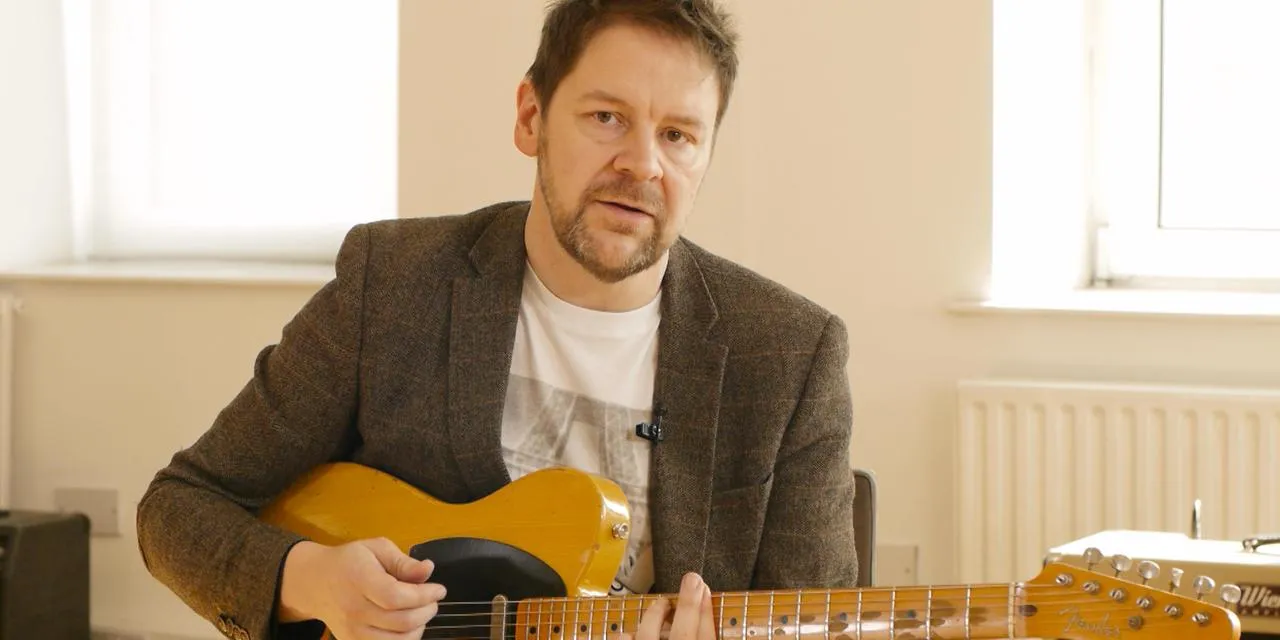
Ron SayerRon Sayer zeigt, wie man ein Maj7-Arpeggio von der Terz der Tonart über einen Moll-Blues spielt – in a-Moll bedeutet das ein Cmaj7-Arpeggio – für einen frischen, unerwarteten Klang.
Das steckt im Kurs
12 Lektionen (1h 27m) · 2 gratis
01. Willkommens-Jam zum Kurs
Gratis-Lektion2:21
02. Arpeggien in deinem Blues einsetzen
Gratis-Lektion8:23
03. Halbton-/Ganzton-Tonleitern in deinem Blues
8:49
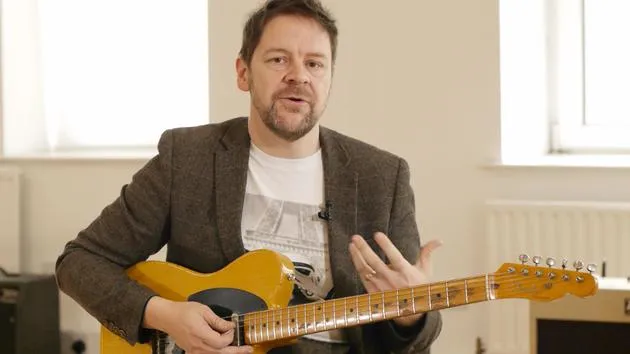
04. Verminderte Septakkord-Arpeggien in deinem Blues
10:14
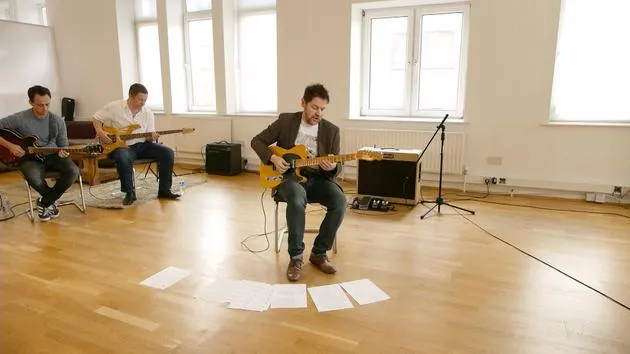
05. Weitere verminderte Septakkord-Arpeggien
10:32
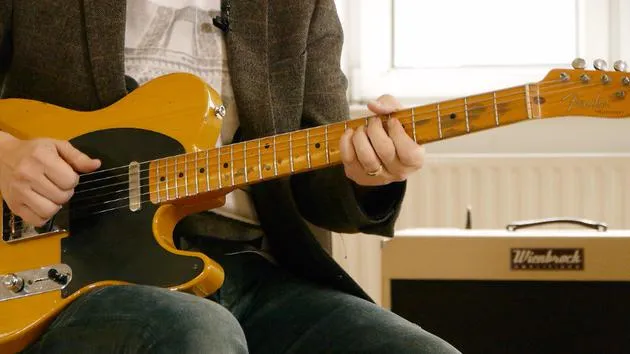
06. Von Non- zu Sext-Akkorden im Blues gleiten
8:16
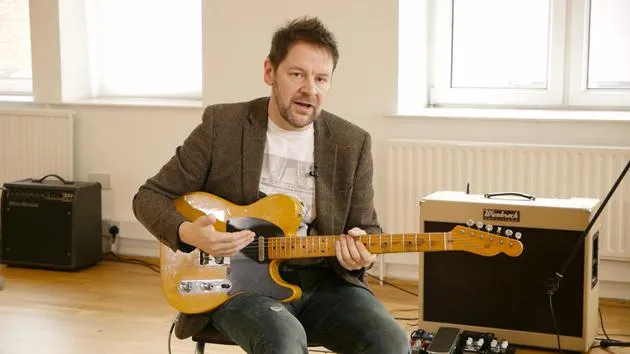
07. Quartal Harmony Blues Scale
4:46
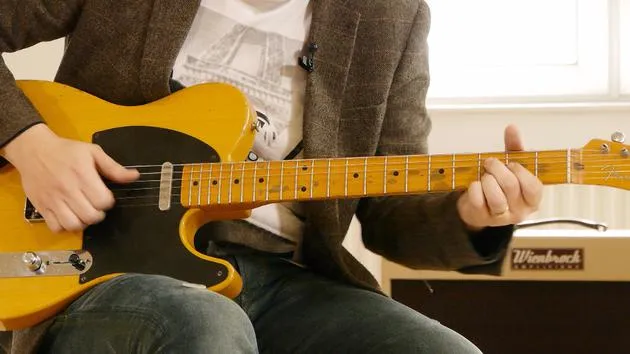
08. Blues-Tonleiter mit Nonakkorden
3:24
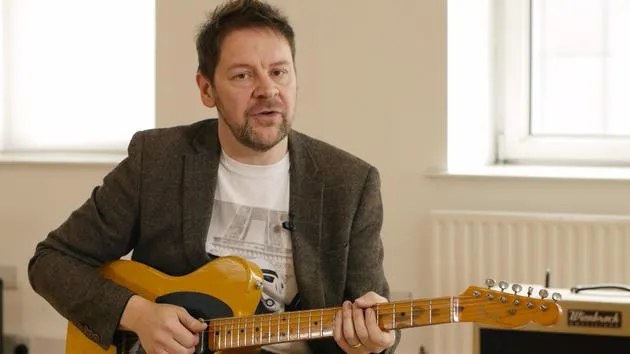
09. Moll-Septakkorde & Quartakkorde in deinem Blues
4:36
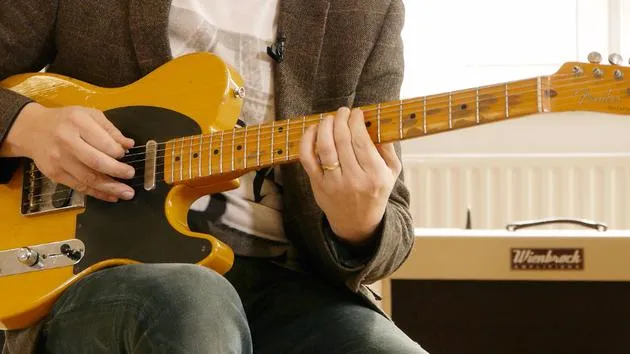
10. Maj7-Arpeggien in deinem Moll-Blues
Du bist hier12:48
11. Alterierte Skalen in deinem Moll-Blues
9:56
12. BONUS-LEKTION: Santana - Black Magic Woman
3:16
Transkript der Lektion
Spicing Up Your Blues Playing: Minor Blues Lesson
Hello there! Here's another lesson on how to throw in some weird stuff in your blues playing to make it a bit more spicy and interesting.
Introduction to Minor Blues
So, what I want to look at now is minor blues. We haven't covered minor blues yet, and I think we should.
The Major Seventh Arpeggio
Now, I want you to think about using a major seventh arpeggio over your minor blues. It sounds weird, but what you're going to do is use a major seventh arpeggio from the third note in the key.
- If you are in A minor, we will do a major seventh arpeggio from C.
- This includes notes that you wouldn't normally throw in.
This course is really about helping you add notes to your soloing that you may not have normally considered if you were just used to the pentatonic scale. Thinking in arpeggios rather than just scales can be a great way to incorporate some unique notes into your playing.
The A Minor Major Seventh Arpeggio
Here's the scale to start with:
- A Minor:
- Third note: 3rd fret on the A string
- Fifth: 7th fret on the A string
- Seventh: 5th fret on the D string
- Fourth on the G: 4th fret on the G string
- Fifth on the G: 5th fret on the G string
- Fifth on the B: 5th fret on the B string
- Third on the E: 3rd fret on the E string
- Seventh on the E: 7th fret on the E string
Second Position Arpeggio
Now, let's go to a different position:
- Start on the E string at the 8th fret:
- 8th fret on the E
- 7th fret on the A
- 10th fret on the A
- 9th fret on the D
- 10th fret on the D
- 9th fret on the G
- 8th fret on the B
- 7th fret on the E
- 8th fret on the E
Incorporating Arpeggios into Your Playing
Practice those two arpeggios and try to incorporate them into your playing.
- The goal is to not make them sound like arpeggios.
- Sprinkle in little bits of the arpeggio when you're playing.
I'll give you a demonstration now.
Demonstration
Let's do an A minor blues. Stay on the A for now, and I'll show you how it works.
1, 2, 3...
This gives you an idea of what you can do with that particular scale.
Applying the Concepts to Different Keys
Next, I'll show you these concepts in different keys. You can use this technique throughout your minor blues.
- If your minor blues goes from A minor to D minor and then E minor, you can use this idea over all three chords.
- Just change the position of the arpeggio to match the chord you are playing over.
Chord Transitions:
- A minor: Use major seventh from C (minor third)
- D minor: Use major seventh from F
- E minor: Use major seventh from G
Important Note
Remember, this only works if you're playing over the IV and V chords (D and E). Make sure you can play the major seventh arpeggio in C over those chords.
Example Licks
First Example Lick
Here's a couple of example licks to use over the minor blues while utilizing that major seventh arpeggio:
- Based on the Arpeggio (not using every note):
- Hammer-on and pull-off on the G string:
- Go 4, 5, 4 (G)
- Then down to the 7th fret on the D:
- Back up: 4, 5 on the G
- Move to: 5 on the B
- Finish with: 3 on the E, 7th on the E.
- Hammer-on and pull-off on the G string:
Let's hear that with some music. Stay on the A, and I'll throw it in:
1, 2, 3, 4...
Second Example Lick
The next example will move up to a different arpeggio shape:
- Play 10th, 9th, 8th, and 7th frets for a nice sweep.
- Lift the first finger to the second on the E string; you're going from 7 to 8.
- Go down to the 9th fret on the D.
- Finish with a lick on the 7th fret on the D.
Let's put that to some music as well:
1, 2, 3...
Conclusion
There you go! Those are a couple of example licks you can throw in. Try making some of your own using those shapes as inspiration! Happy playing!
12 Lektionen
1 Std. 27 Min. strukturierte Videolektionen
Erweiterte Videofunktionen
Verlangsamen, Passagen loopen, mitlesen
Handy, Tablet & Desktop
Üben, wo du willst
100 % Zufriedenheitsgarantie
30 Tage Geld-zurück-Garantie
Lern deinen Guru kennen
Lern deinen Guru kennen
Ron Sayer ist ein Gitarrist für Gitarristen auf der britischen Blues-Szene und Mentor von Spielern wie Oli Brown und Sol Philcox. Er wurde viermal für die British Blues Awards nominiert - für das Album 'Better Side', die Single 'Don't Make Me Stay' und seine Mitwirkung als Co-Autor bei Oli Browns 'Here I Am' - und hat den Preis als Guitarist of the Year gewonnen. In seinen Kursen schlüsselt er das Phrasing, den Ton und das Feeling hinter dem elektrischen Blues-Leadspiel auf.







