



A Song For You, Ray Charles (Lektion)

Das steckt im Kurs
29 Lektionen (2h 46m) · 1 gratis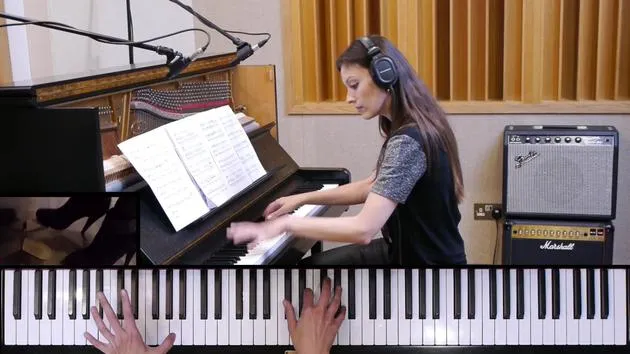
01. Hard to Handle, The Black Crowes (Performance)
3:10
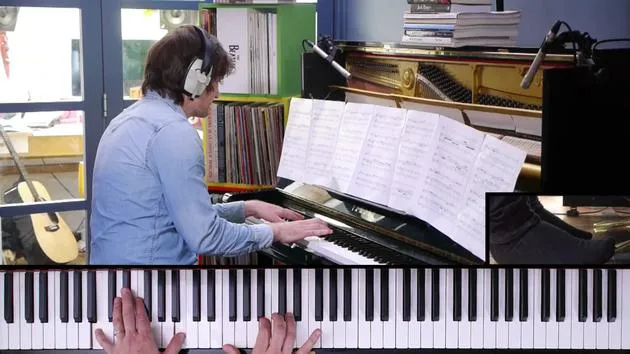
02. A Song For You, Ray Charles (Performance)
Gratis-Lektion4:30
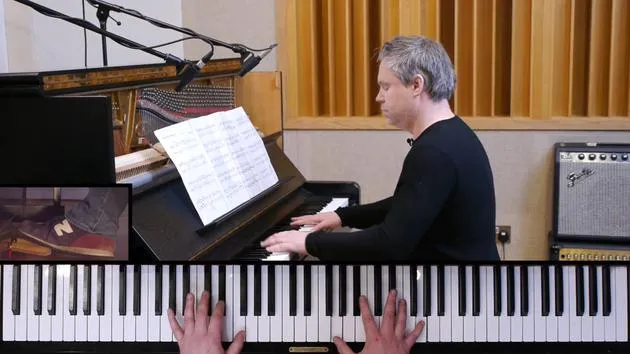
03. Theme from Schindler's List, John Williams (Interpretation)
4:00
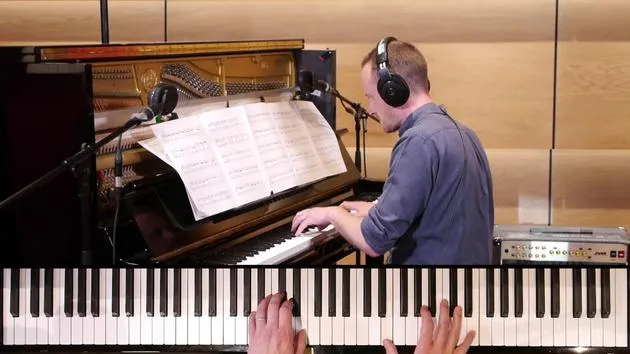
04. Natchez Trace, Glen Partridge (Interpretation)
2:56
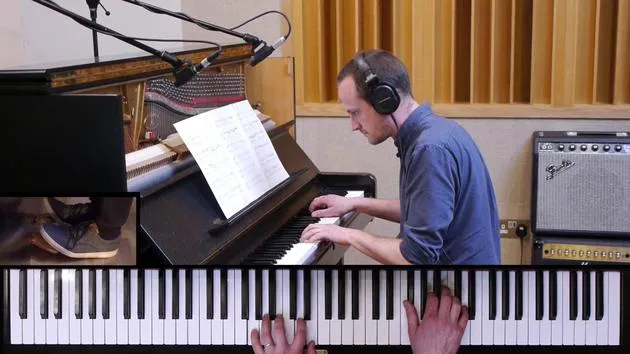
05. Soma, Simon Troup (Interpretation)
2:45
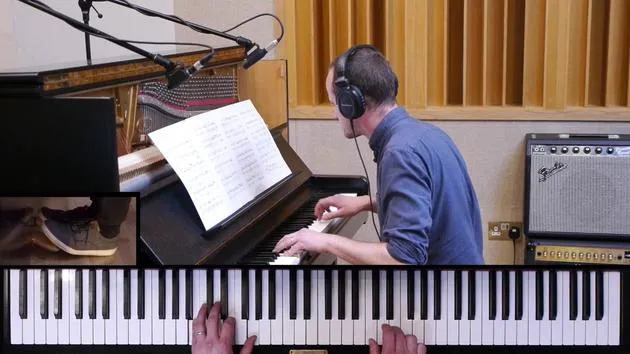
06. Times Square, Kit Morgan (Interpretation)
3:11
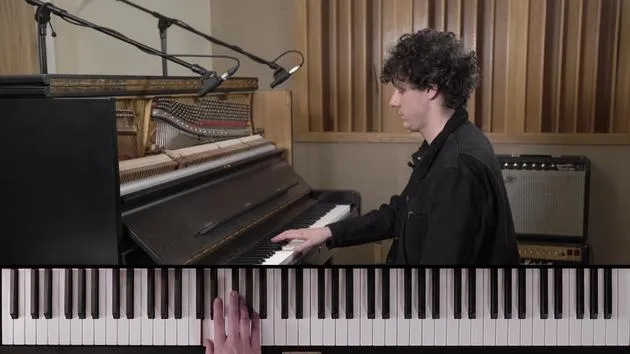
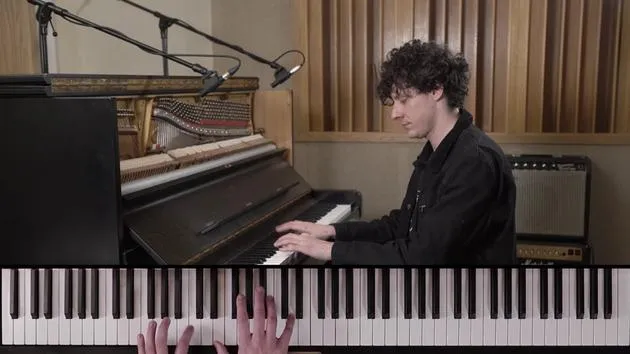
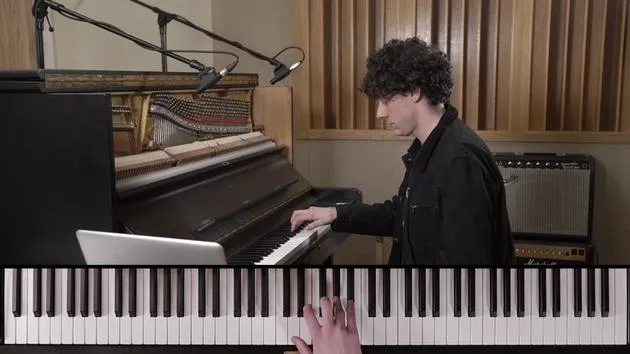
Transkript der Lektion
Music Lesson: Analyzing Ray Charles' Interpretation of Leon Russell's Classic
Introduction
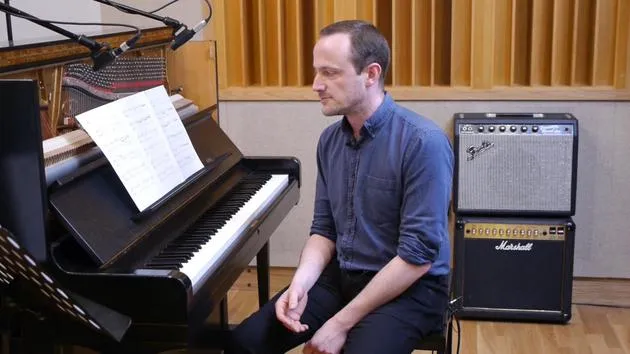
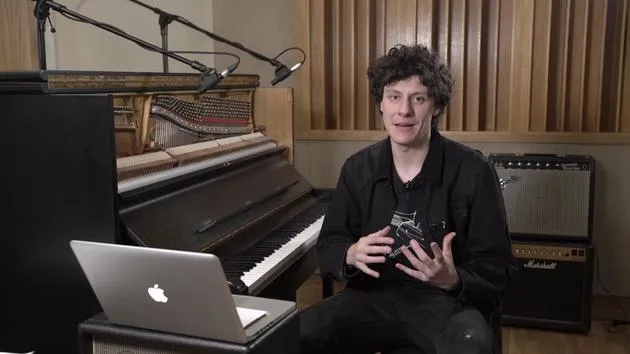
Hi, how you doing? I'm Paddy, and today we're going to look at a song for you, a great recording by Ray Charles of the classic Leon Russell song. Before we go anywhere, I urge you to listen to the recording that we're going to be examining.
The piano part brought to Rock School is essentially a transcription of what Ray Charles played, including some cool improvisation towards the end. The piano introduction is taken from Leon Russell's work as well. If you're into good songs, piano playing, and singing, check out Leon Russell too. He has written some fantastic songs!
Ray Charles is certainly one of my favorite musicians. He's an incredible piano player and singer, very soulful, a real deal. Now, let's look at this piece. It's all seven pages of it!
Analysis of the Piece
Chromatic Passage
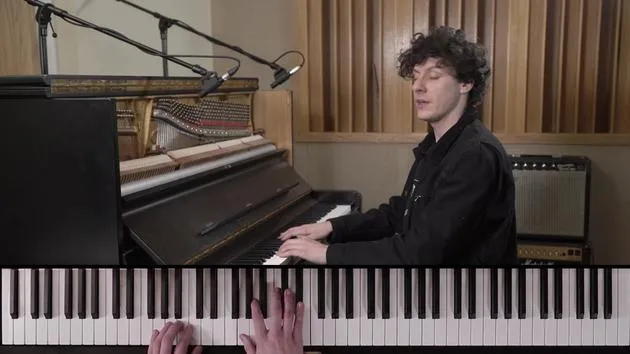
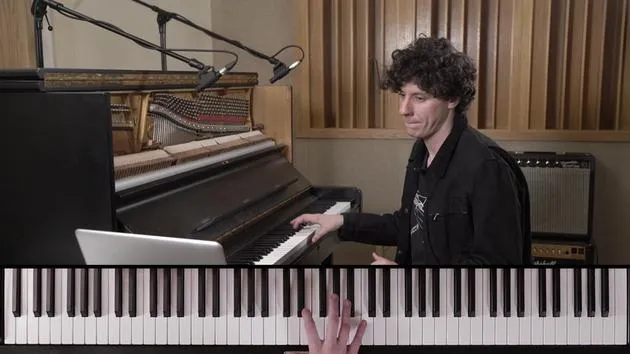
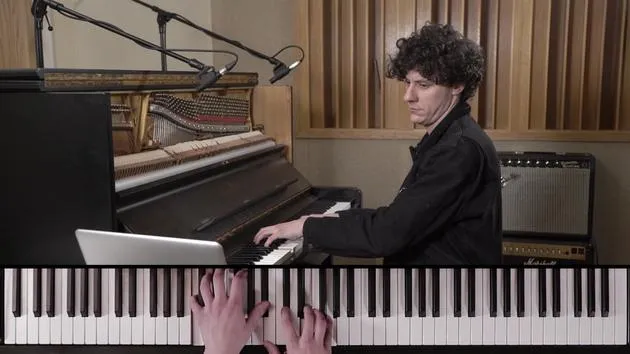
Starting at the beginning, we have a chromatic passage that essentially goes down in thirds, but they're broken up.
- Finger Options: You can choose how to finger it as you'd like, as there's no fingering written in these Rock School charts.
- Technique: There's nothing particularly legato about what Ray is doing, so swapping fingers is fine.
Time Aspect
The tricky aspect here is the timing.
- We have a one-bar counting of clicks before locking into that time.
- It's easy to rush; therefore, as the click goes, "3, 4," make sure you're feeling the tempo.
- Feel free to move a bit to really internalize the tempo and think about subdividing that time into 16th notes (semiquavers).
Transition to Sixth Intervals
Once we get down, we change from thirds into sixths. In the original Ray Charles and Leon Russell recording, the tempo actually slows down when it gets to the sixth; however, in this arrangement, the tempo stays constant.
- Use of Pedal: You could use a little bit of pedal in the sixths, but be mindful that it can blur the sound as you get further down.
- Fingering: You should avoid jumping around too much. Try to find a fingering position that keeps your hand more stable.
Internalizing the Tempo
This whole section is about keeping time, especially in the opening where you're alone, accompanied only by a hi-hat on the two and four.
- It's beneficial to think in terms of eighth notes instead of just quarter notes.
- Practicing at slower tempos is vital, as it's one of the more challenging aspects of playing.
Ray's Piano Solo (Bar 39)
At bar 39, we come to Ray's piano solo, which includes some pretty hip stuff. Listen carefully to Ray's phrasing!
- Starting Chord: It starts with a dramatic E flat seven chord in third inversion, with the seventh in the bass.
- Technique: Make sure you have strength in the fourth finger; it's crucial for playing these bluesy runs.
Blues Scale
The section starting at bar 43 is deeply rooted in the blues scale in F. You can do a lot of improvisation using this scale!
- Ray has incorporated the blues scale effectively, alternating between major and minor chords, like the A flat chord over D flat harmony.
Rocking Motion and Dynamics
You'll notice the rocking motion continues until a break in bars 29 to 30, followed by a crescendo leading into the fortissimo section.
- Emphasis: Emphasize the strong beats more than the weaker ones to create a sense of swing and rhythm.
- Pedal Use: Keep your pedal usage subtle, allowing for a clean sound that mixes nicely with the band.
Conclusion
At the end, we transition into a nice outro with some different chords, including gospel voicings that Ray was known for.
- Final Chords: A flat over E flat leads to a B flat chord at the end. You don't have to play it too loudly, just aim for a nice-sounding chord.
Make sure the final sounds are clean and not affected by previous chords. As the band fades out, you can let go of the pedal with them.
And there you have it! A beautiful recording of an amazing song by the legendary Ray Charles. I hope you enjoyed this lesson as much as I did.
29 Lektionen
2 Std. 46 Min. strukturierte Videolektionen
Erweiterte Videofunktionen
Verlangsamen, Passagen loopen, mitlesen
Handy, Tablet & Desktop
Üben, wo du willst
100 % Zufriedenheitsgarantie
30 Tage Geld-zurück-Garantie







