



Arpeggien - Grade 7
Ein Durchgang durch die Arpeggien von Grade 7, einschließlich der kniffligeren Tonarten mit sechs Kreuzen und Bes sowie der mixolydischen Septakkord-Arpeggien.

Das steckt im Kurs
29 Lektionen (2h 46m) · 1 gratis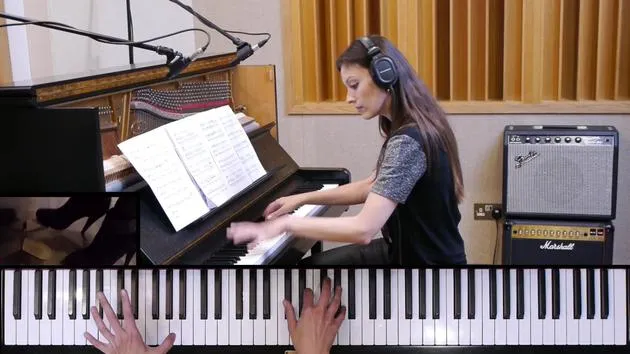
01. Hard to Handle, The Black Crowes (Performance)
3:10
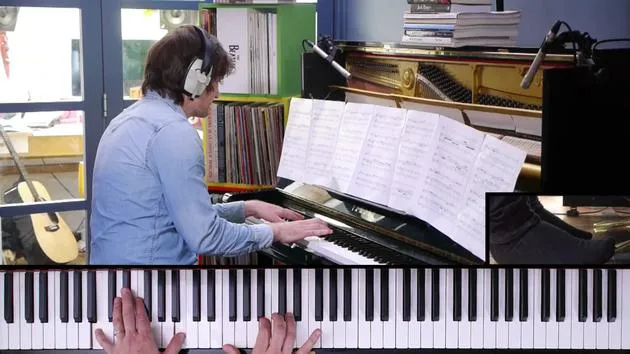
02. A Song For You, Ray Charles (Performance)
Gratis-Lektion4:30
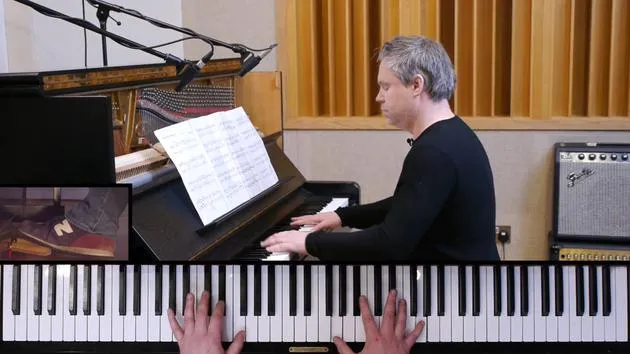
03. Theme from Schindler's List, John Williams (Interpretation)
4:00
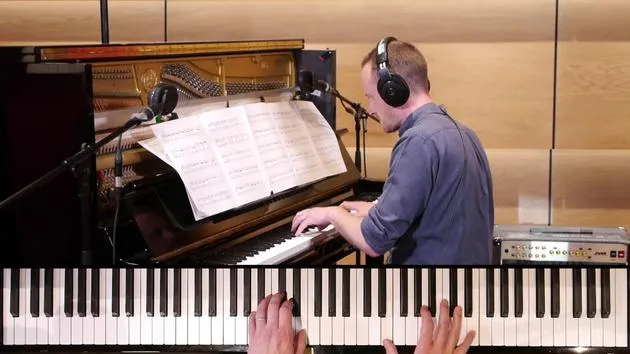
04. Natchez Trace, Glen Partridge (Interpretation)
2:56
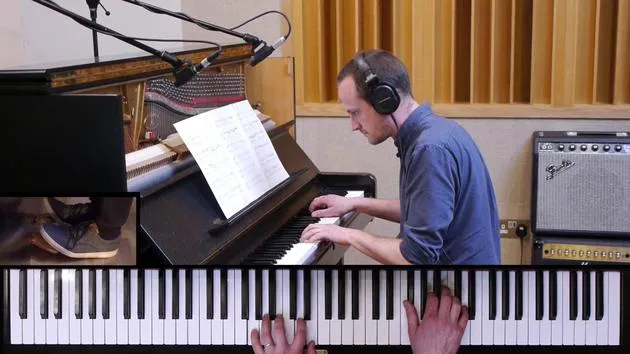
05. Soma, Simon Troup (Interpretation)
2:45
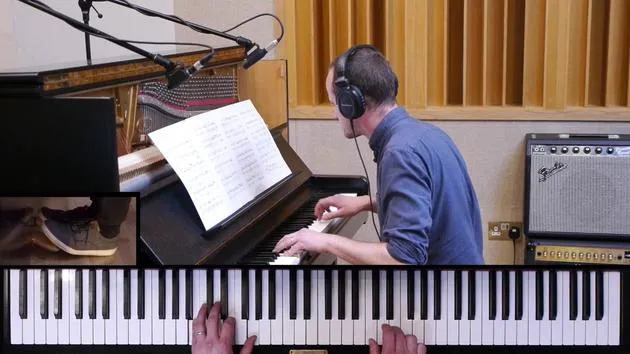
06. Times Square, Kit Morgan (Interpretation)
3:11


Transkript der Lektion
Music Lesson: Arpeggios
Now we move on to our arpeggios. Most of the arpeggios here are fairly standard, but again, they have slightly tricky keys.
- Key Signatures: We're talking six flats and six sharps here, but these are all things we've played before.
- C sharp Major: Remember, C sharp major is D flat. That's come in earlier grades if you've done them. If not, it's slightly less intimidating to look at with fewer flats.
Seventh Arpeggios
On the page, there are a handful of seventh arpeggios from V6, 7, and 8, including:
- D diminished arpeggio
- B flat diminished arpeggio
- G7 arpeggio
- F7 arpeggio
- D7 arpeggio
These seventh chords are what we call Mixolydian, which is the fifth mode of the scale.
- If you're in the key of C, that means you're starting on C.
- Same scale, same notes, just starting in a different place.
B Flat Diminished Arpeggio
We have something slightly tricky written here with the double flat. Now, don't be put off by this.
- A double flat just means that you play the note that's a tone lower than what's written.
- For example, A becomes G; thus, a double flat is G.
This fits in with a diminished shape, which is a fairly standard sound.
"Don't be put off by the enharmonicity of the note."
It's written that way because that's the correct theory, but in reality, when you're playing it on the piano, you can think of it as a G, and it won't do anyone any harm.
Fingerings
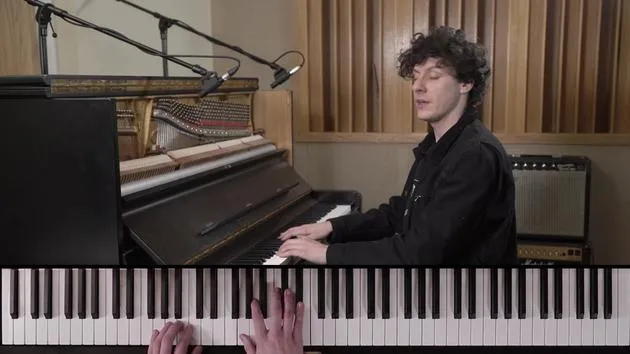
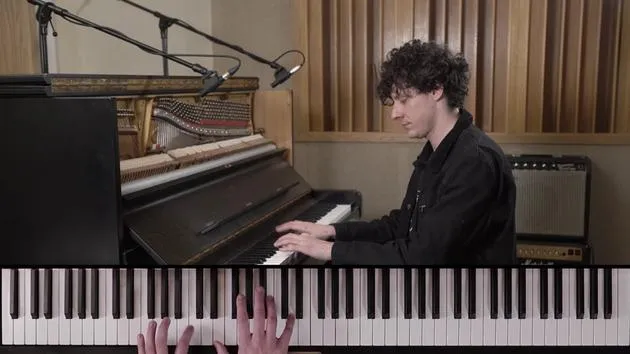
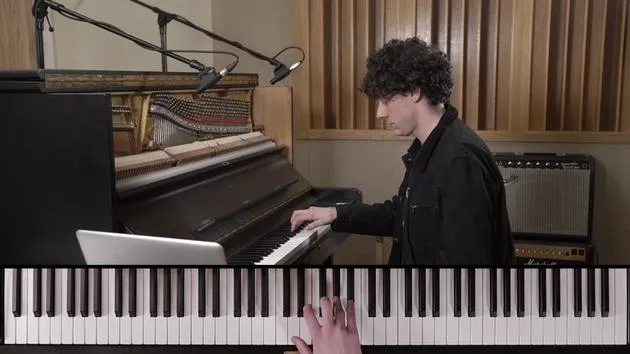
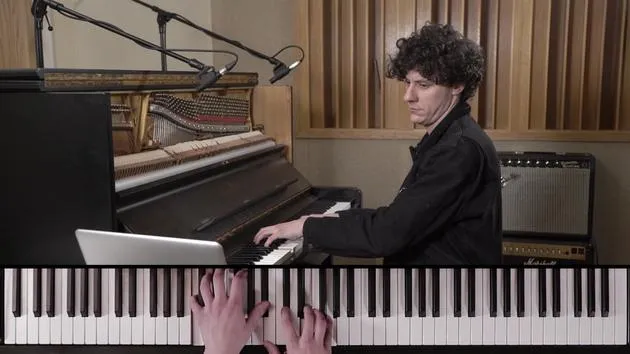
These diminished arpeggios can be quite tricky to finger. I have a slightly different fingering than the one used on the technical exercises written down here.
- However, whichever way you decide to finger it, just make sure that you have enough fingers left over, because running out of fingers is the fastest way to make a mistake.
- Take it easy, take it nice and slow. It's all good, no worries.
Additional Arpeggios
The other arpeggios we're dealing with here, the G7, F7, and D7, are the Mixolydian ones.
- These can be quite tricky simply because of the speed we're using.
- Our fourth finger has to come on the third in the left hand and the seventh in the right hand.
At fast tempos, the fourth finger, which is generally the weakest finger of piano players, can be quite stretched.
Right Hand Positioning
For example, regarding D7 arpeggio: if you start the right hand at D above middle C and go up four octaves, you're going to run out of room at the top of the piano.
"No worries, just let everyone know to start an octave lower and it will be fine."
B Flat 7 Arpeggio
There are two more arpeggios on the next page. One is the B flat 7 arpeggio, which again is a Mixolydian sound.
- When we're using these arpeggios, bear in mind the ones on the previous page before the Mixolydians.
- The difference is that with this one, the fingering is slightly different; in the right hand, we use the second finger to start rather than the first finger.
Other than that, it's fairly similar and straightforward.
C9 5 Arpeggio
The most difficult looking arpeggio here is the C9 5. This is very similar to other arpeggios we've covered in previous grades, like the altered one and the Locrian one.
- Even though it's very short compared to the four-octave ones, it's an interesting sound.
- Remember, this is a natural nine here, not a sharp nine; the sharp nine would be the altered sound.
This is a natural nine. In other words, this could be called an augmented arpeggio.
- It starts on the root, goes to the third, the sharp five, the seven, and then nine, and then down.
Stretching
Now, although this may not be as tricky as the four octaves of the Mixolydian ones (for example, the B flat 7 and the D7), it requires a big stretch of the hands.
- You're going to either use the fingering written here, which in the right hand would be 2-1-2-3-5, or if you have slightly bigger hands, you can do this all in one go.
- The challenging aspect here is the stretch between the B flat and the D in the right hand at the top, which is the seventh and the ninth.
"It can be quite tricky to work out, but with practice, it will get better."
29 Lektionen
2 Std. 46 Min. strukturierte Videolektionen
Erweiterte Videofunktionen
Verlangsamen, Passagen loopen, mitlesen
Handy, Tablet & Desktop
Üben, wo du willst
100 % Zufriedenheitsgarantie
30 Tage Geld-zurück-Garantie







