



Dein Solo komponieren
James Barratt bespricht, worauf du achten solltest, wenn du ein authentisch klingendes Solo entwickelst.

Das steckt im Kurs
42 Lektionen (3h 27m) · 1 gratis
Transkript der Lektion
Approaching Composition: A Checklist for Your First Solo
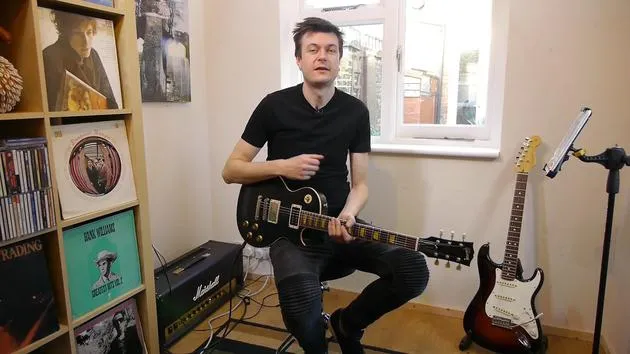
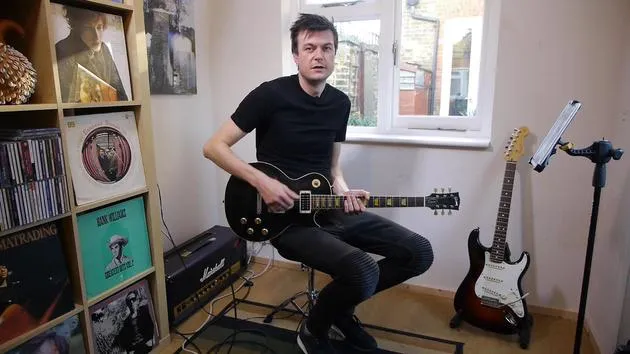
Okay, so I'd just like to talk to you a little bit about ways to approach composing a solo for the first time. Think of this as a checklist of things to bear in mind, things to consider, and things to experiment with that can help you come up with a really authentic-sounding stylistic solo.
1. Listen to the Space
First of all, the most important thing is to sit back, put the guitar down, and listen to the space that you have to fill with your solo.
- What's going on in there?
- What's the drummer doing?
- What rhythms are involved?
- What are the chord changes?
It's really important to get a good sense of the vibe. If you've gotten to this point within a song already, you're likely familiar with many of the chords you're going to be playing over and the key of the song. But if you're unsure, knowing the key and what scales you might want to use is essential.
2. Structure Your Solo
Next, consider how you'd like your solo to be structured:
- How much time do you have?
- 4 bars?
- 16 bars?
- 32 bars?
This will dictate how aggressively you can start. It's very easy to fall into the trap of going all out with your flashiest licks, only to realize you have 30 more bars to fill. We want the solo to build from a starting point to a big finish.
Consider the Flow
- Where will you start, and where will you end?
- If your last chord is down low, think about how you want to transition, do you want a shock or a smooth transition?
Knowing where you need to be at the end of your solo is crucial for a professional-sounding transition.
3. Know Your Chords
Understanding the chords you're playing over is essential.
- You should be able to stop at any point within your solo and identify the chord beneath you, such as:
- C minor 9
- D7
This level of understanding helps you target unusual extensions or solid notes to begin and end your phrases.
Accentuate Extensions
When you get into extensions like ninths and elevenths, make sure to accent those notes. For example, in a C minor 9, you might want to highlight the D note that aligns with it. While it may not always be feasible in an improvisational context, it's something to consider when composing.
4. Embrace Space
It's really nice to be aware of the need not to fill all the space.
- Your favorite solos often feature an element of space; they are not just relentless walls of notes.
- Especially in genres like funk, soul, or classic rock, space and the definition between phrases are essential.
Reuse Ideas
You don't need to have new ideas all the time. A great practice is to reuse rhythmic or melodic phrases featured elsewhere in the song.
- Vary them a bit for freshness, but hinting at previous themes can make your solo feel like it truly belongs to the piece.
Repetition is powerful; it's why we remember choruses easily. Incorporating this element into your solos can leave listeners humming your melodies.
5. Example in Practice
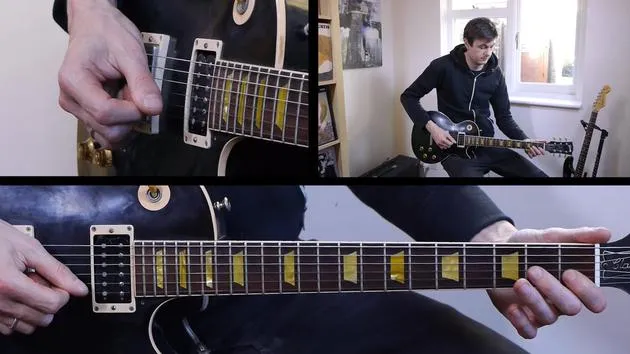
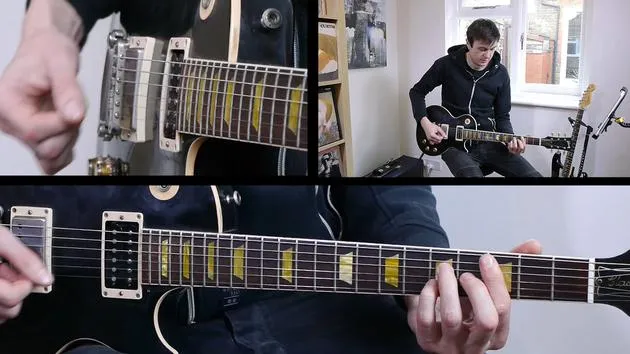
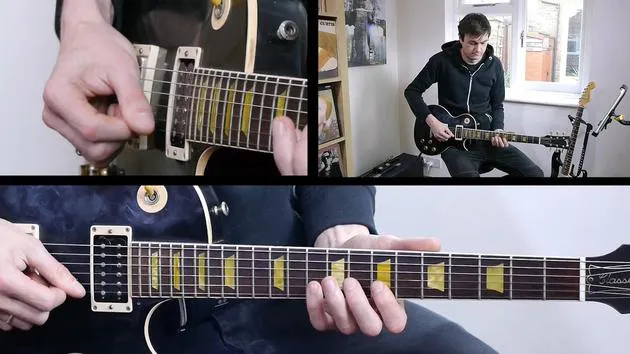
An example of this can be found in the "Mind the Gap" solo that I did for the Grade 8 performance.
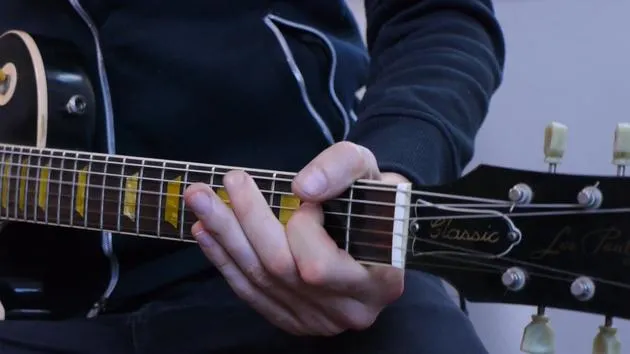
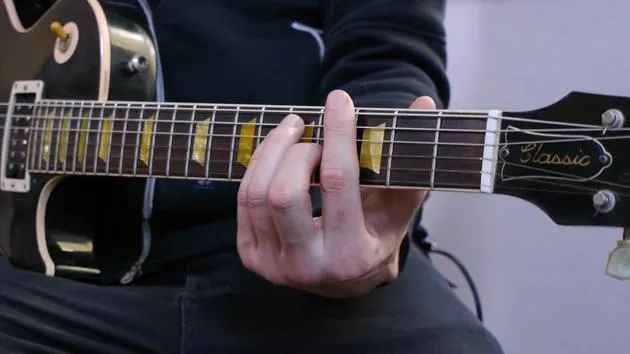
- At bar 5 of my solo, I outlined a G minor 9 chord followed by a C minor 9.
- Approaching it compositionally, I made a feature of the G minor 9's ninth interval.
The phrase was simple but effectively outlined all the notes in the G minor 9 chord. Then, I took the same rhythm and adapted it for the C minor 9 chord.
Effective Transitions
Even without the chords behind, the listener can imagine what they are due to the chord tones and similar rhythms. This technique reduces the pressure on you as a writer or improviser.
You don't have to fill the entire 16 bars with new ideas; you can recycle themes from earlier in the song.
Conclusion
I hope this checklist is useful for you as you embark on composing your own solos. Good luck!
42 Lektionen
3 Std. 27 Min. strukturierte Videolektionen
Erweiterte Videofunktionen
Verlangsamen, Passagen loopen, mitlesen
Handy, Tablet & Desktop
Üben, wo du willst
100 % Zufriedenheitsgarantie
30 Tage Geld-zurück-Garantie







