



Rhythmusgitarre und Verzierungen
James Barratt zeigt, wie du Rhythmusparts interessanter gestaltest, indem du einzelne Noten und Arpeggien in dein Akkordschlagen einbaust.

Das steckt im Kurs
42 Lektionen (3h 27m) · 1 gratis
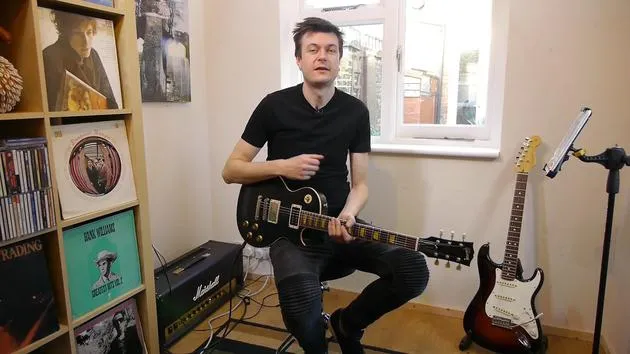
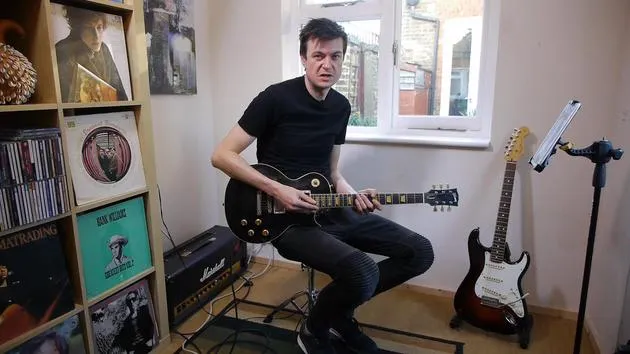
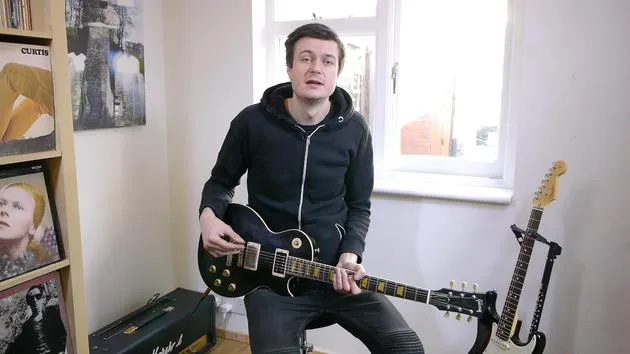
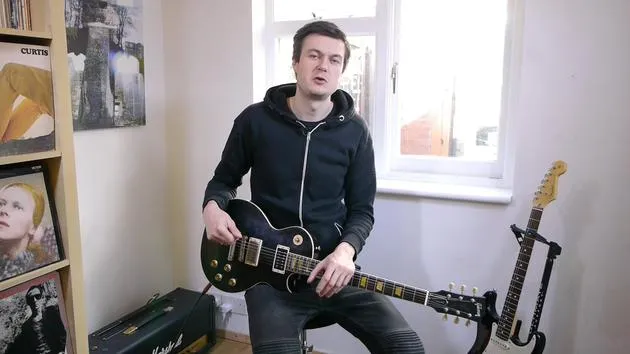
Transkript der Lektion
Moving Beyond Strum Patterns
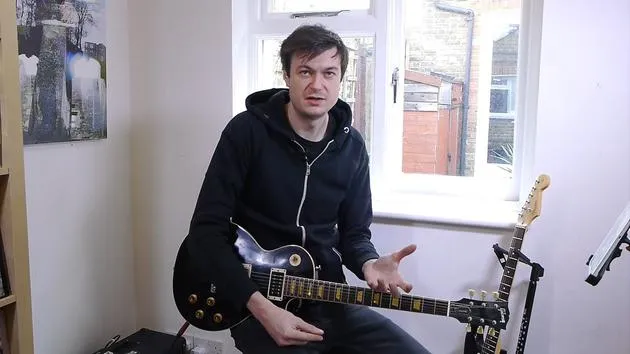
Okay, so moving on from strum patterns, let's take things up a notch and think about how we can make these even more interesting.
Varying Your Strumming Technique
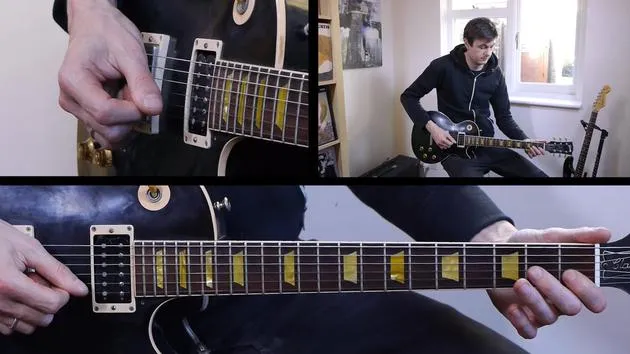
One way to easily do this without adding any new notes to the chords is to vary whether you're strumming the strings and essentially playing a chord by mixing in single notes within the chord, kind of like arpeggios within the chord.
Simple Example on G
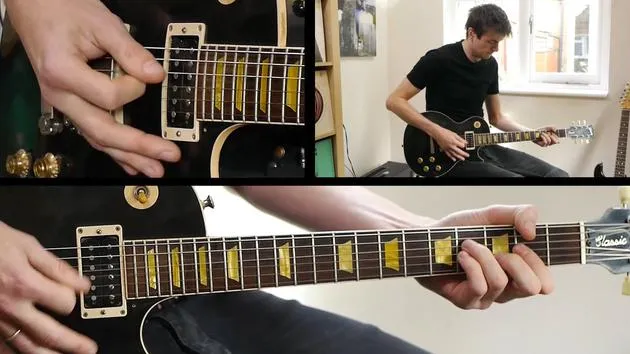
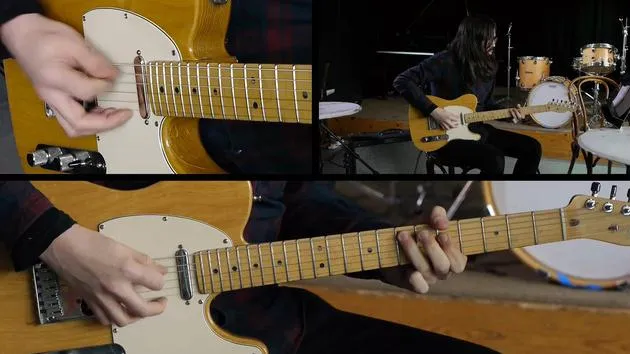
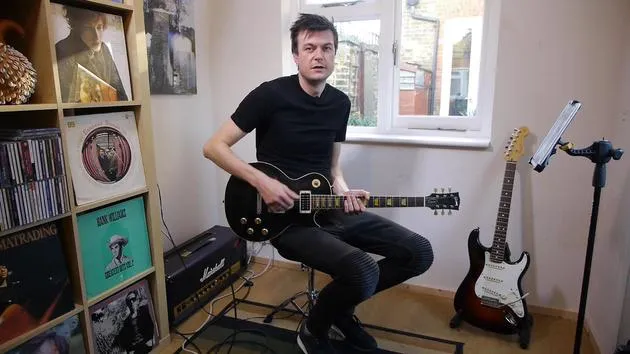
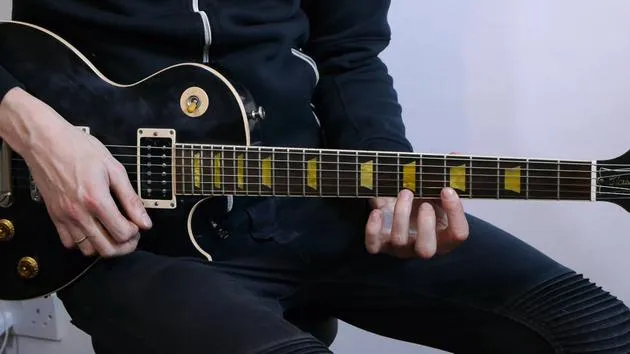
So, I'm going to show you a really simple example on G now. We can apply this to 16th note bass patterns, 8th patterns, whatever we like.
Let's try this out:
1, 2, 3, 4.
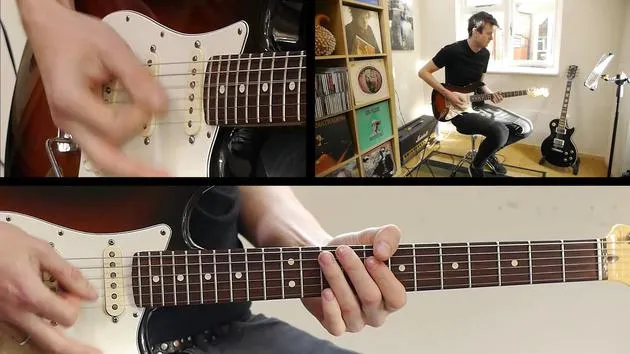
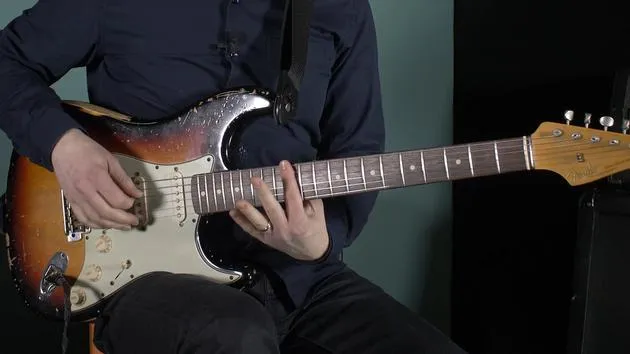
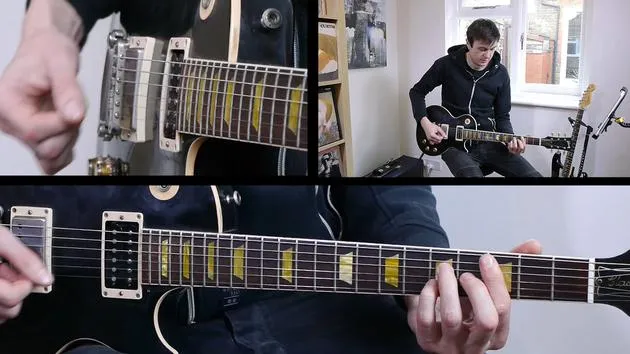
What I'm doing there is rhythmically an 8th note pattern. I'm combining single notes of my chord with chord accents and then a little arpeggio on the top.
You can reverse the order we did that in; there's no problem there.
You can hear the dynamic achieved by doing this. You get a really musical rhythm guitar part with some nice movement in it. It's not just blasting away in a chord, though there's nothing wrong with that.
Applying to Chord Changes
Now, we have this nice bit of movement in our rhythm guitar part that we can take and apply to some chord changes.
Let's check that out:
2, 3, 4.
Just taking that exact carbon copy strum pattern and applying it to some different chords sounds really musical.
Observations on Strumming Patterns
You may have noticed something important: even though it is an eighth note pattern, when we were just strumming chords before, we were doing that as down, up, down, up, down, up, down, up.
My strum pattern has completely changed now.
This is because what's dictating the strum pattern is really the direction of the notes in the sequence. This will change depending on the order of notes you choose, and there's not really a right or wrong in this sense.
Strong Downstrokes
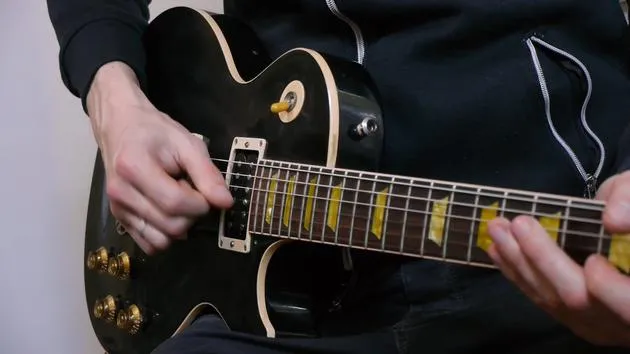
I would say to still aim for beat one to always be a nice, strong downstroke. Other than that, for example, I got three upstrokes in a row because that's the direction of my picking hand travel, and I want to go back towards this bass note again for my beat one.
So, I'm doing two full strums on the chord, then a bass note on its own. This is another really simple thing you can do, followed by my little arpeggio on the top, which consists of three upstrokes. This takes me back towards where I want to be on the bottom string.
Taking It One Step Further: C Major
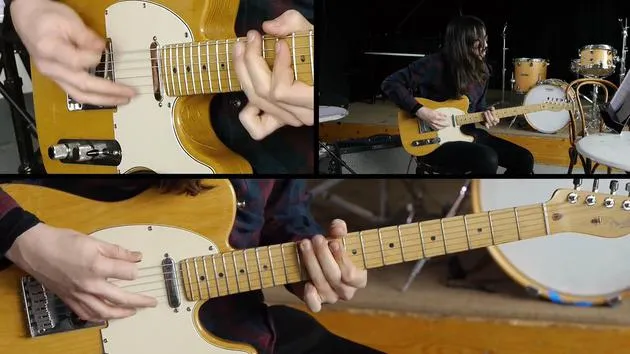
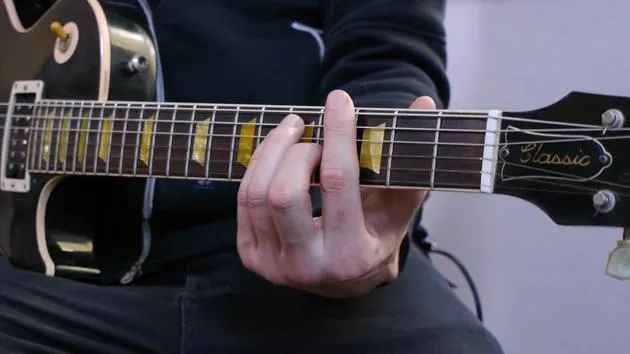
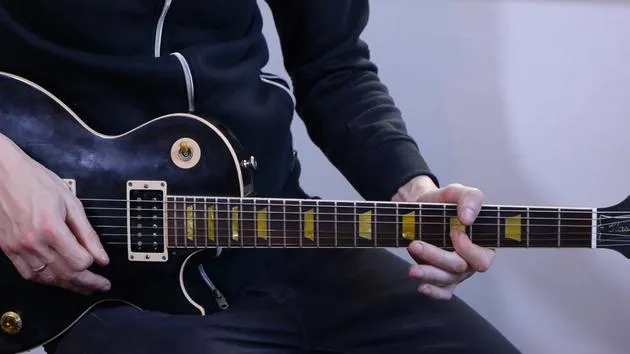
Let's take this one step further and demonstrate on a C chord, C major.
This is another simple embellishment you can do to a chord.
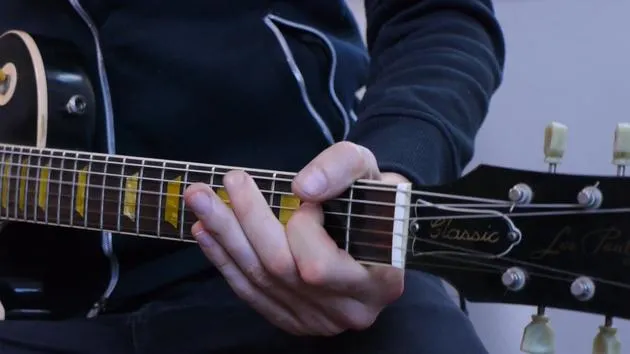
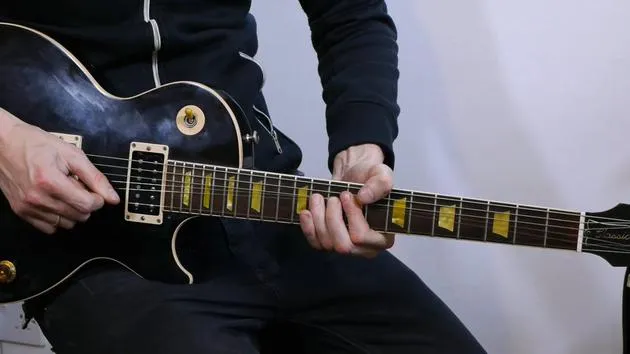
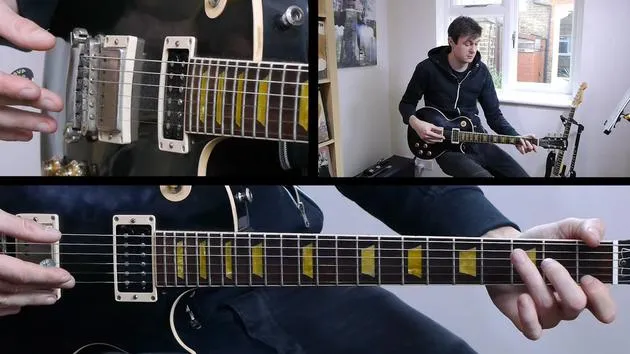
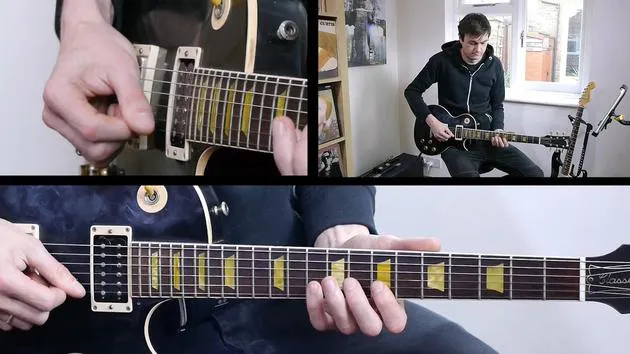
- We're going to take our second finger off the C major chord.
- This gives us a suspended second chord.
- As soon as we strum it, we'll hammer on.
This gives us a nice bit of movement within this chord change. So instead of just straight, we're going to get this:
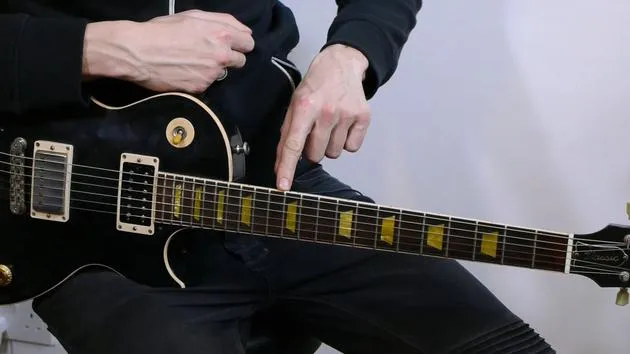
You can do this with tons of chords. For example, you could try this on a minor chord, it doesn't have to be a specific note in the chord. We could do it again on the A minor chord and do it in the middle of the chord.
Adding Life to Chord Progressions
This is a simple way of injecting some movement into what might be a simple strum pattern or chord progression. You've just given it this little bit of life. You could incorporate this within the arpeggio technique we talked about a moment ago.
Let's take it to A minor.
Again, this is a relatively simple way of taking that chord progression and making it sound more musical.
About Picking Patterns
Because of the arpeggios featured in the last example, my picking pattern changed based on the direction of the arpeggio I was going in. This is something to keep in mind.
If you're going to throw in little bits of single notes, you don't have to stick with down, up, down, up for the chord-based 8th note patterns we did at the very beginning.
You can vary these up to whatever feels comfortable. There will be lots of ways you could pick those.
Practice and Feedback
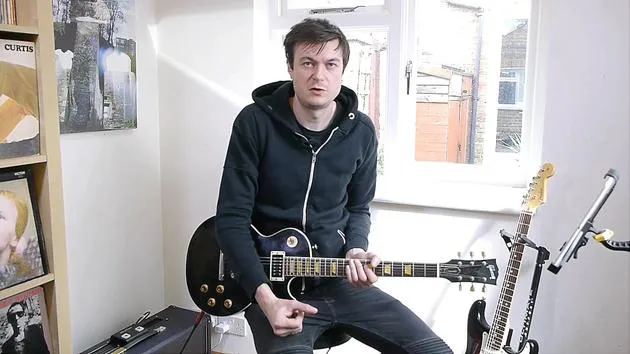
So why not try these with the examples on the PDF? Just try those couple of ideas out.
Again, if you'd like to video those, send them in for some feedback. It would be great to see what you're up to!
42 Lektionen
3 Std. 27 Min. strukturierte Videolektionen
Erweiterte Videofunktionen
Verlangsamen, Passagen loopen, mitlesen
Handy, Tablet & Desktop
Üben, wo du willst
100 % Zufriedenheitsgarantie
30 Tage Geld-zurück-Garantie







