



Leitfaden zur Gitarre

Lesson time: (6min 52sec)
Course preview
This lesson is part of the course Gitarren-Methode: Rock & Pop
Watch a preview of the full course below.
Lesson transcript:
Understanding Your First Guitar
So you've just bought your first guitar! Before we dive into learning pieces and how to play, let's familiarize ourselves with the different parts of the instrument.
Connecting Your Guitar
If you have an electric guitar like this, you probably have an amplifier (amp) as well. To connect your guitar to the amp, you'll be using a jack lead. Here's how:
- Plug the jack lead into the input jack located at the bottom of your guitar or on the body of certain models.
- Connect the other end to your amp where it says "input."
Now you should be able to hear sound coming through the amp nicely and clearly.
The Main Areas of a Guitar
Every guitar consists of three main areas:
- Body
- Neck
- Head
This is true for both acoustic and electric guitars.
The Body
-
Sound Production: The body is where the main sound comes from.
- On an acoustic guitar, the body is thicker and has a sound hole, which projects the volume of the instrument.
- Electric guitars lack this feature, which is why we use an amplifier to transfer sound through the cable.
-
Scratch Plate:
- Not all electric guitars have a scratch plate, but yours probably does.
- The scratch plate protects your guitar from wear caused by playing with a pick over time.
-
Volume and Tone Knobs:
-
Volume Knob: Controls the output signal to the amplifier.
- When rolled all the way off, no sound comes through.
- As you raise the volume, you hear the classic guitar sound.
-
Tone Knob:
- Adjusts the amount of high-end in your sound.
- If you play a chord and adjust the tone, you'll notice a significant difference:
- Lowering the tone can give a darker, "underwater" sound.
- Raising it brings back clarity.
-
Pickup Selector
-
Pickups:
- These are magnetic devices that capture the sound of the strings and send the signal through the guitar and to the amp.
-
Functionality:
- The pickup selector acts similarly to a tone knob.
- Different pickups provide distinct sounds:
- Neck Pickup: Often bassier, as it's closer to the neck.
- Bridge Pickup: Treblier and often harsher, as it's closer to the bridge.
The Bridge
- This is where the strings are mounted to the body of the guitar.
The Strings
-
The Source of Sound: The strings are what produce sound. Without them, the guitar is just a piece of wood.
-
Configuration:
- Six strings:
- The lowest (thickest) is closest to the head.
- The thinnest (highest) is closest to the floor.
- As you pluck down the strings, the pitch increases.
- Six strings:
The Neck and Frets
- The neck is where you find all the pitches on the frets.
What is a Fret?
-
A fret is the metal strip running vertically down the neck that gives us the ability to change pitch when we press down on the strings.
-
Playing Technique:
- Push down just behind the metal fret on the wooden gap to get the clearest note.
- Avoid touching the metal strip, as it causes the note to sound rattly.
Getting the Note Right
-
Pressure:
- Ensure you apply enough pressure for a clean note.
- Too soft will result in a muted sound, while too hard can change the pitch or cause discomfort.
-
Practice:
- Move up and down the neck and experiment with different strings, as some may require more pressure than others.
The Nut
- This part keeps the spacing of the strings accurate as they run through.
The Head and Tuning Pegs
-
Tuning Pegs:
- This is where the strings go through, helping keep your guitar in tune.
-
Importance of Tuning:
- Playing with other musicians or backing tracks is difficult if your guitar is out of tune.
-
Example:
- If the lowest string is out of tune, it can make everything else sound bad.
- Simply turn the pegs to find the correct note.
Conclusion
That's all about the different parts of the guitar!
Action Step: Pause this video, examine your guitar, and try to label the parts. Rewind to check if you got them right!
Next up, we'll cover how to sit with your guitar, how to hold a pick, and eventually how to play some notes.
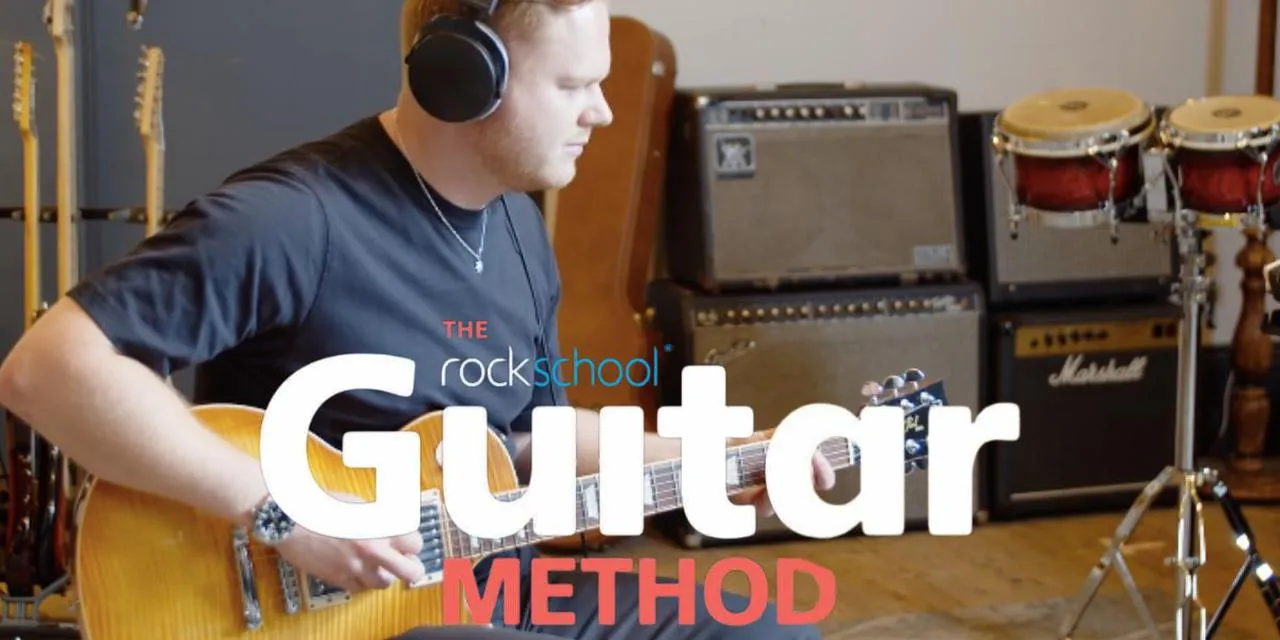
About the instructor
Tommy Webb ist ein in London ansässiger Gitarrist, der einen BA(Hons)-Abschluss in Gitarre an der Academy of Contemporary Music in Guildford absolvierte, wo er bei Sandy Beales (One Direction, Wheatus) und Nicolas Meier (Jeff Beck) studierte. Sein eigenes Spiel bewegt sich frei zwischen Rock, Pop, Indie, Hip-Hop, Country und Metal – genau dem Terrain, das seine Gitarrenmethoden abdecken. Tommy hat landesweit mit einer großen Bandbreite an Künstlern und Bands gearbeitet, darunter Jarki Monno und Indira May, und teilte sich Bühnen und Sessions mit den Gitarristen Paul Murray (Jess Glynne, Zak Abel) und Adam Chetwood (Paolo Nutini, Mark Ronson) sowie den Schlagzeugern Alex Woodward (Black Honey), Luke Robinson und “Bambi Music” (N-Dubz, Lethal Bizzle, Wretch 32, Tinie Tempah). Auf der Bühne trat er im Jazz Cafe als Vorband der Soulsängerin Jocelyn Brown auf, dazu in Clubs und auf Festivals wie Ronnie Scott's, Troy Bar, The Watford Colosseum, Camden Assembly, Kensington Roof Gardens, Notting Hill Arts Club, Meraki Festival und Sundown Festival. Auf Platte und im Radio hat Tommy Live-Sessions für BBC Three Counties Introducing, Vibe FM und Pulse 88 eingespielt, mit Tracks, die auf BBC Radio 1 und Radio 2 liefen. Aufgenommen hat er in Studios wie South Lanes Brighton, Hempstead Road und Titan Studios mit Produzenten wie Steph Carter (Gallows, Lyoness) und TMS / Froe Barnes (Lewis Capaldi, Dua Lipa). In seinen Gitarrenmethoden gibt Tommy all dieses Wissen eines aktiven Musikers an dich weiter – er lehrt die Techniken, Sounds und das Feeling hinter echten Stilen, von Rock und Pop über Indie, Hip-Hop und Country bis Metal –, damit du die Musik spielen kannst, die du wirklich liebst. read more