



Traditionelles Soloing mit Call and Response
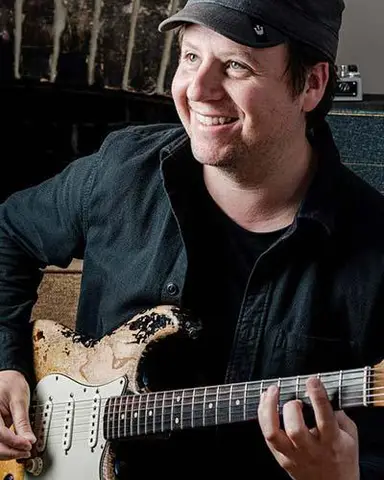
Lesson time: (2min 24sec)
Course preview
This lesson is part of the course Spiele authentische Texas-Blues-Gitarre
Watch a preview of the full course below.
Lesson transcript:
Soloing in the Traditional 12 Bar Blues
Okay. So I thought it'd be good to just talk about soloing and how to solo in a traditional way over a 12 bar blues like we were playing earlier with a kind of clean sound.
Key Concepts
One thing I'm kind of thinking of with this sort of thing, when playing a more traditional style, is what you're trying to say and having some references.
Perspective
I'm going to be thinking from a B.B. King perspective in my head. So, I'll be focusing on the key of E and staying in this position while rolling off a bit of the tone on the guitar.
The Call and Response Technique
BB was a master of the call and response sort of way of playing.
- He very much would sing a line and then play something.
- He'd pick up on what's going on and not play too much,
just being very aware of what you're saying.
Analogy of Conversation
I always think of it like a conversation:
- One person says, "Hi, how you doing?"
- The other one responds, "Yeah, I'm good, thanks! How are you?"
Just having that in your head, leaving a minute, leaving space, letting it build, is crucial.
Practicing the Basics
We'll just go a couple of times around, and I'm going to stay in this position here because there's so much you can get out of just these sort of four or five notes.
Exercise
- It's good to not bite off more than you can chew.
- It's always better to play a couple of simple things really well, without any hesitation,
and know exactly what you're going to play, rather than trying to play something really complicated.
You can always add to something simple, but it's much harder to take away from something complex.
The Sensation of Soloing
Sometimes, with a solo, you think, "I've got to fit everything in straight away." But a really good starting point is to:
- Reference a couple of melodies and stay in that area for a while.
- You don't have to be all up and down the neck.
The Old Blues Philosophy
A lot of the old blues stuff is intended to be less is more; it's more meaningful and soulful when there's space.
So, just pay attention to what you're not playing as well and just step back.
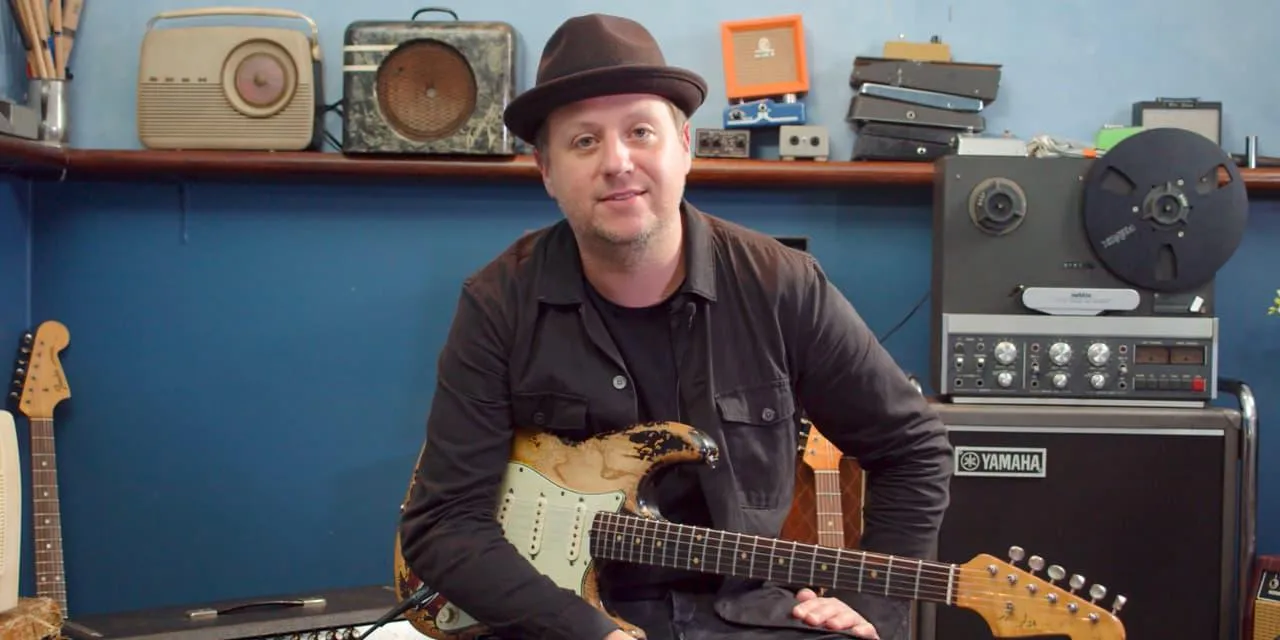
About the instructor
Scott McKeon hat sein ganzes Leben seinem Handwerk als Gitarrist gewidmet. Ursprünglich von der Liebe seines Vaters zu Blues, Soul und Rock inspiriert, griff er im Alter von vier Jahren zur Gitarre und erwarb sich den Ruf, einer der gefragtesten Gitarristen des Vereinigten Königreichs zu sein, sowohl im Studio als auch live. 2014 erhielt Scott den Anruf, in der Band von Sir Tom Jones zu spielen, an der Seite von Robbie McIntosh und Pink-Floyd-Schlagzeuger Gary Wallis. Das an Blues, Rock 'n' Roll und Gospel orientierte Programm erlaubt es Scott, auf seine frühen Einflüsse zurückzugreifen und um die Welt zu reisen. Zu den bisherigen Auftritten zählen fünf Europatourneen, drei Tourneen durch die USA und Südamerika sowie Tourneen durch Australien und den Fernen Osten, dazu Fernsehauftritte wie Later... with Jools Holland und TFI Friday sowie ein Auftritt beim New Orleans Jazz Festival 2019. Scotts drittes Album, 'New Morning', ist eine erdige, rohe, gitarrengeführte Platte, die seine Bandbreite und sein Können als Gitarrist zeigt. Das Album wurde live im Studio von RAK in London aufgenommen und fängt die Energie und Spontaneität der Sessions ein. Produziert wurde es von Paul Stacey (Black Crowes/Oasis), und mit dabei sind Jeremy Stacey (Sheryl Crow/Tal Wilkenfeld) am Schlagzeug, Rocco Palladino (Tom Misch/D'Angelo) am Bass und Gavin Conder (Rufus Black/The Kondoors) als Sänger auf mehreren Tracks. Scott hat außerdem ein Signature-Fuzz-Pedal und Signature-Pickups, die seiner '62er Strat nachempfunden sind. In seinem Kurs teilt Scott den Ton, die Phrasierung und das Feel hinter authentischer Texas-Blues-Gitarre und zeigt dir, wie du dich in den Stil hineinbeißt und jede Note zum Singen bringst. read more