



Bonus: Stevie Ray / Lonnie Mack
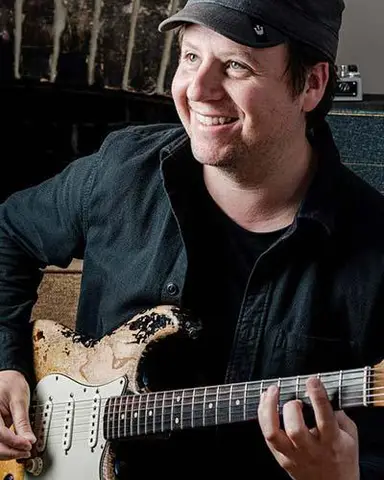
Lesson time: (3min 49sec)
Scott zeigt dir einen klassischen Lick im Stil von Stevie Ray / Lonnie Mack
Course preview
This lesson is part of the course Spiele authentische Texas-Blues-Gitarre
Watch a preview of the full course below.
Lesson transcript:
Introduction to Stevie Ray Vaughan's Style
So I grew up being a big Stevie Ray Vaughan fan. I first heard Stevie Ray Vaughan when a friend of my dad showed us a video of him when I was like 10. I just thought he was the best thing, like, ever.
Influence of Lonnie Mack
A lot of Stevie's stuff is kind of based on his technique. He uses a lot of hammer-ons and open E sort of stuff. I think that style comes from another Texas guy called Lonnie Mack, who, in the 50s and early 60s, had a song called "Wham."
- It was all that bit, like what Stevie went on to do with "Scuttle Buttin'."
- All that open E stuff's really cool.
Breaking Down a Simple Lick
Here's a simple lick:
If I break that down, it's like:
-
First Part: (Insert the tab or notation here)
It ends with a real big accent, which I love.
-
Second Half:
Stevie would do a lot of that kind of playing. You could go on all day if you wanted. Once you've got it down, you can kind of get faster with it.
The Illusion of Speed
It's a bit of an illusion, that one, because it sounds really fast, but it's not. You have all those open strings, and you can hammer-on and pull-off. It's quite snappy to play.
- Key Point: It's much easier to play that sort of stuff with the open strings when you're in the E position than when you have to fret all the other notes.
Adding Dynamics
One thing on that second half, the second part of the lick:
-
After it goes, you just kind of scrape upwards, again accenting it:
"Ding. A ding, ding, ding."
It's got its own sort of timbre to it.
- The dynamics really go up and down.
Conclusion
And again, if you play that with drive, you've got to have fun with it. Anything in that?
About the instructor
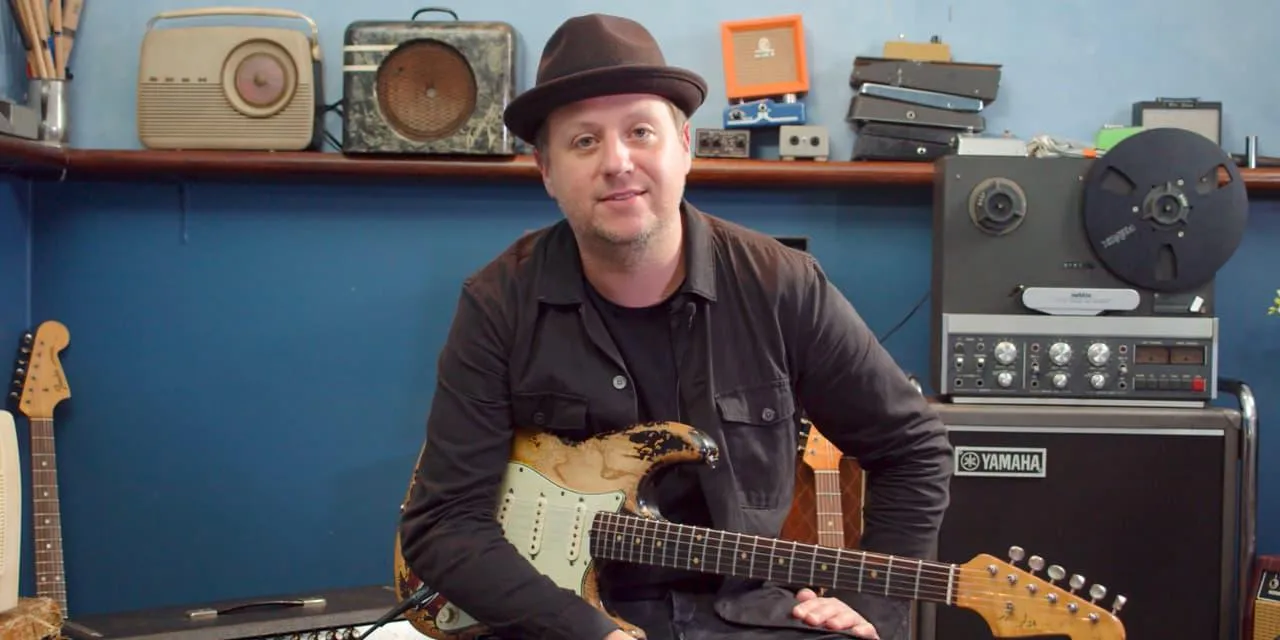
Scott McKeon hat sein ganzes Leben seinem Handwerk als Gitarrist gewidmet. Ursprünglich von der Liebe seines Vaters zu Blues, Soul und Rock inspiriert, griff er im Alter von vier Jahren zur Gitarre und erwarb sich den Ruf, einer der gefragtesten Gitarristen des Vereinigten Königreichs zu sein, sowohl im Studio als auch live. 2014 erhielt Scott den Anruf, in der Band von Sir Tom Jones zu spielen, an der Seite von Robbie McIntosh und Pink-Floyd-Schlagzeuger Gary Wallis. Das an Blues, Rock 'n' Roll und Gospel orientierte Programm erlaubt es Scott, auf seine frühen Einflüsse zurückzugreifen und um die Welt zu reisen. Zu den bisherigen Auftritten zählen fünf Europatourneen, drei Tourneen durch die USA und Südamerika sowie Tourneen durch Australien und den Fernen Osten, dazu Fernsehauftritte wie Later... with Jools Holland und TFI Friday sowie ein Auftritt beim New Orleans Jazz Festival 2019. Scotts drittes Album, 'New Morning', ist eine erdige, rohe, gitarrengeführte Platte, die seine Bandbreite und sein Können als Gitarrist zeigt. Das Album wurde live im Studio von RAK in London aufgenommen und fängt die Energie und Spontaneität der Sessions ein. Produziert wurde es von Paul Stacey (Black Crowes/Oasis), und mit dabei sind Jeremy Stacey (Sheryl Crow/Tal Wilkenfeld) am Schlagzeug, Rocco Palladino (Tom Misch/D'Angelo) am Bass und Gavin Conder (Rufus Black/The Kondoors) als Sänger auf mehreren Tracks. Scott hat außerdem ein Signature-Fuzz-Pedal und Signature-Pickups, die seiner '62er Strat nachempfunden sind. In seinem Kurs teilt Scott den Ton, die Phrasierung und das Feel hinter authentischer Texas-Blues-Gitarre und zeigt dir, wie du dich in den Stil hineinbeißt und jede Note zum Singen bringst. read more