



Struktur und Tempo

Lesson time: (2min 38sec)
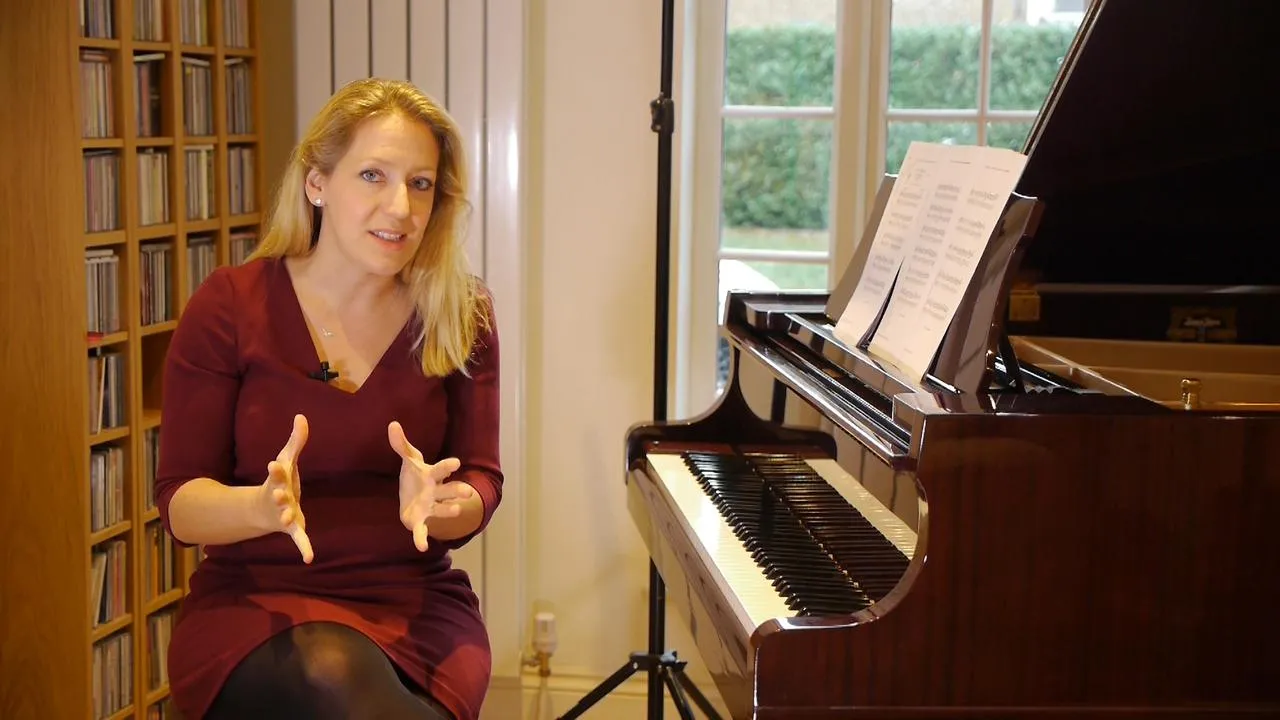
Annabel Thwaite ordnet Für Elise in den Kontext der Klassik ein und erklärt, wie das einheitliche Tempo dieses Stils die Art prägen sollte, wie du das Stück angehst.
Course preview
This lesson is part of the course Lerne klassische Lieblingsstücke am Klavier
Watch a preview of the full course below.
Lesson transcript:
Understanding Classical Idioms through Furules
Furules is a great piece for understanding classical idiom, specifically in the classical era. We are focusing on 18th-century music, which encompasses composers such as:
- Mozart
- Haydn
- Beethoven
- Schubert
The Importance of Beethoven
Beethoven is particularly important because he was present during the development of the piano.
- His early sonatas used only a limited range of the keyboard.
- As the piano evolved, he began using the instrument in a much more emphatic and developed fashion.
Characteristics of 18th Century Classical Music
In terms of classical features, we look at several key elements:
-
Melody and Accompaniment:
- There is often a beautiful melody in the right hand, though it may sometimes appear in the left hand.
- An accompaniment supports this beautiful line.
-
Dynamics:
- The dynamics are contrastive, with clear distinctions between soft (pp or piano) and loud (forte) passages.
- The dynamics often feel very black and white, rather than involving excessive swells.
-
Rhythmic Precision:
- Rhythmic accuracy is vital.
-
Unified Tempo:
- This is one of the most important aspects.
- It's essential to negotiate a suitable tempo that encompasses the difficult sections, particularly the second page and the triplets at the bottom of the third page.
Navigating Tempo
If we accelerate too quickly at the beginning, we may struggle with bar 33.
- Remember, 4 demisemiquavers equal 1 quaver.
- In a 3/8 meter (3 quavers per bar), we want to match up our counts.
Suggested Practice Approach
I suggest starting at:
- Bar 33:
- Think about how fast and relaxed you can play those demisemiquavers.
- Consider counting: "1, 2, 3."
Alternatively, you could begin at:
- Bar 79:
- Count: "1, 2, 3."
Once you feel comfortable, you may decide to increase the tempo slightly or play a bit slower, it's up to you!
About the instructor
Annabel Thwaite gilt als eine der vielseitigsten und charismatischsten Pianistinnen Großbritanniens und genießt eine facettenreiche Laufbahn als Solistin, Kammermusikerin, Aufnahmekünstlerin, Pädagogin und Prüferin. Sie hat alle bedeutenden Begleitpreise gewonnen, darunter die renommierten Kathleen Ferrier, Gold Medal und Richard Tauber Piano Prizes. Sie hat mit namhaften Künstlern wie Roberto Alagna, Bryn Terfel, David Kempster und "Only Men Aloud!" zusammengearbeitet. Annabel hat für Universal records mit dem "Scottish Tenor" aufgenommen, dessen Album für einen Classical Brit Award nominiert war und regelmäßig auf Classic FM gespielt wird. Zweimal war sie Begleiterin beim Festival of Welsh Male choirs; ihre Auftritte in der Royal Albert Hall wurden von Sain aufgezeichnet und auf S4C ausgestrahlt. Sie ist außerdem Session-Pianistin für Filme und hat in den Abbey Road Studios die Musik zum Film "Awake", zur BBC-Jane-Austen-Serie "Emma", zu "The Secret Diaries of Miss Anne Lister" aufgenommen und ist zuletzt sowohl bei Blue Peter als auch bei "The Rob Brydon Show" aufgetreten. "...zweifellos unterstützt von den offensichtlich brillanten Klavierbegleitungen von Annabel Thwaite... überaus genussvoll." In ihren MusicGurus-Kursen – Learn Christmas Classics on Piano, Learn Classical Favourites on Piano und Growing Chamber Groups and Small Ensembles – teilt Annabel die Musikalität, die hinter dieser vielseitigen Laufbahn steht. Du lernst, geliebte Weihnachts- und klassische Stücke am Klavier zum Leben zu erwecken, deinen Anschlag und deine Phrasierung zu entwickeln und – gestützt auf ihre preisgekrönte Erfahrung als Begleiterin – zu entdecken, wie man beim gemeinsamen Musizieren mit anderen Musikern in Kammergruppen und kleinen Ensembles zuhört, führt und zusammenspielt. read more