



Fingersatz
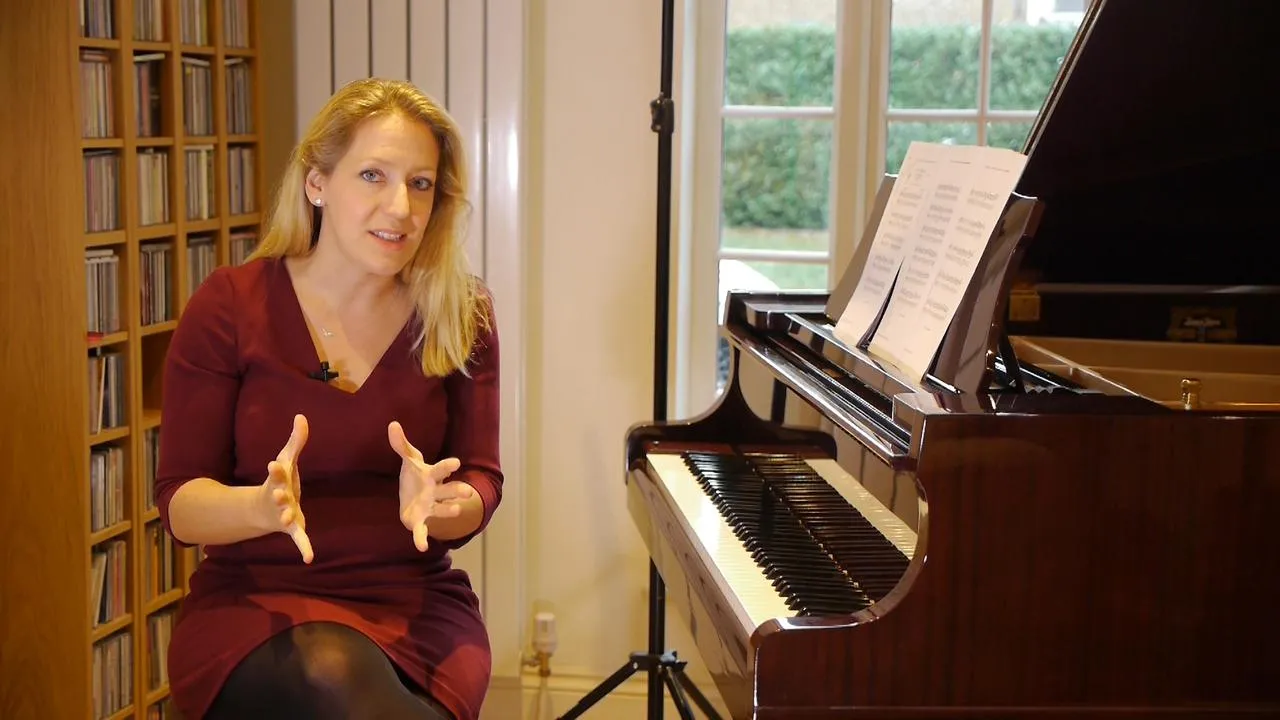
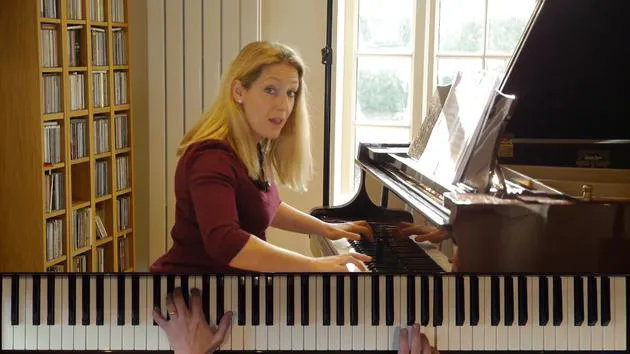
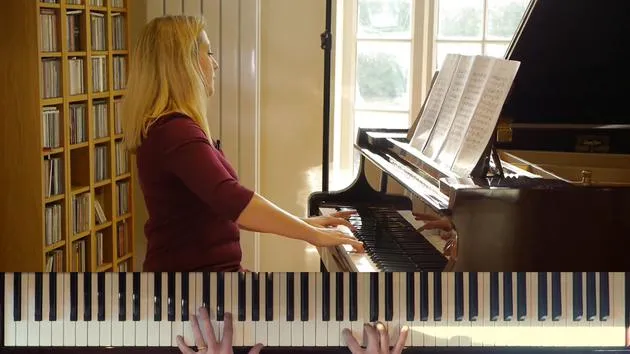
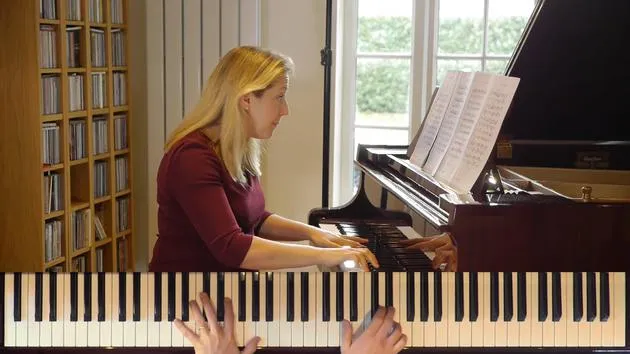
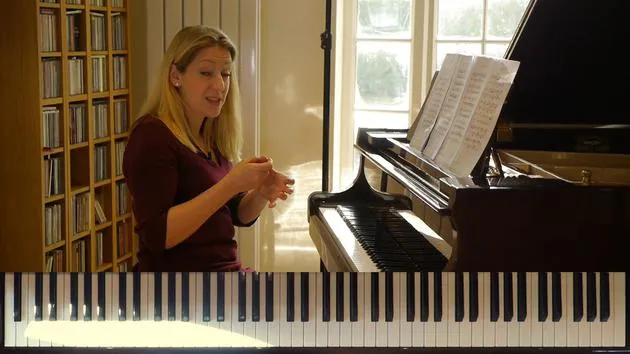
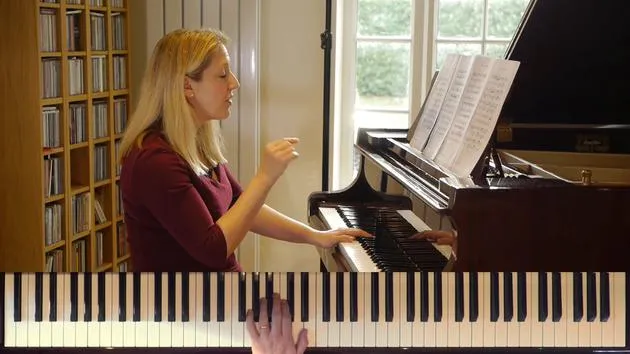
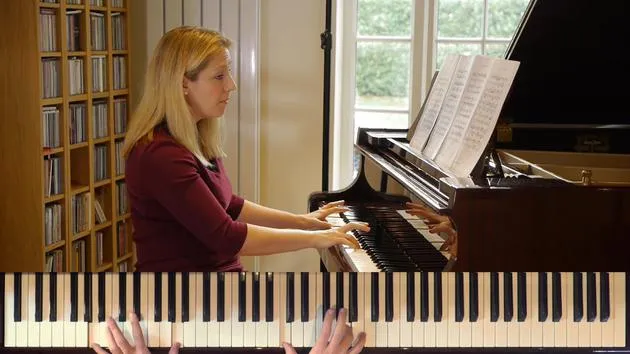
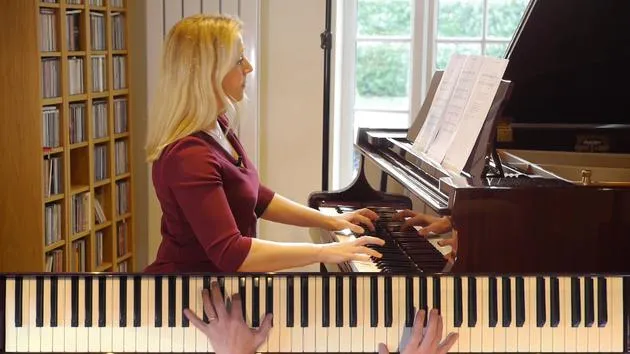
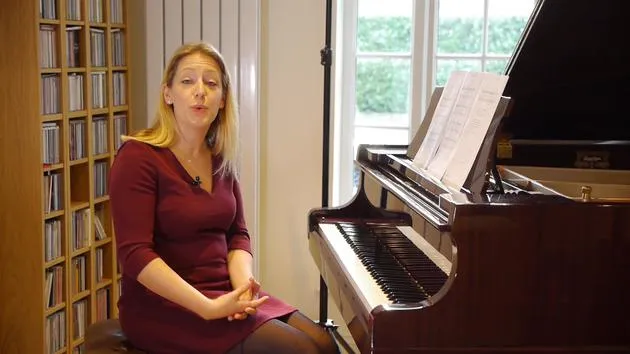
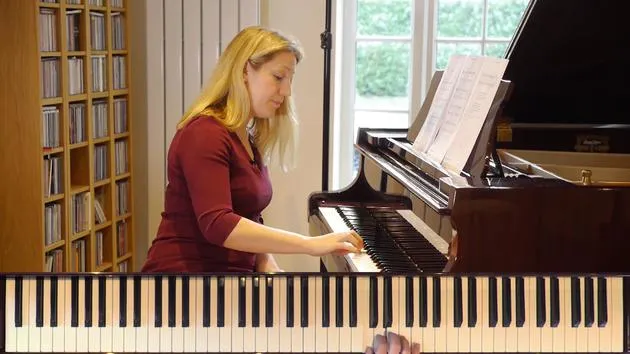
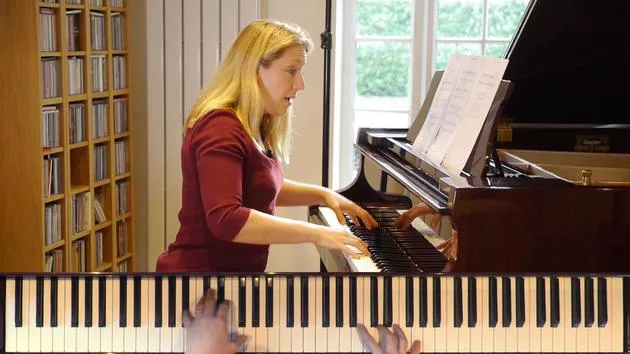
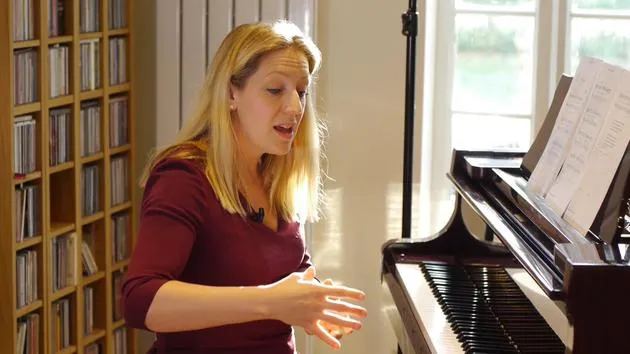
Annabel Thwaite erklärt, wie sie den Fingersatz wählt: mit dem Ziel einer möglichst natürlichen Handhaltung und gleichmäßiger Gruppierungen, etwa drei, dann vier, dann fünf über eine G-Dur-Tonleiter.
Das steckt im Kurs
21 Lektionen (0h 57m) · 1 gratis
Transkript der Lektion
Understanding Fingering for Pianists
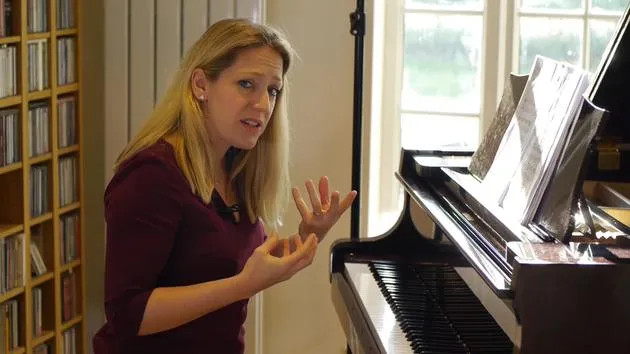
Let's talk briefly about fingering. As a pianist, I love to write on my score, and I often use fingering as a signpost of when my brain needs to sort of engage more about this turn or that turn. Thus, I use it with phrasing.
Purpose of Fingering
The reason we use fingering is to achieve the maximum effect with minimal effort. We are very lucky as pianists because we're quite symmetrical:
- Two thumbs
- Second finger
- Third finger
- Fourth finger
- Fifth finger
Natural Hand Position
We should be very free. There's a variety of schools of playing, but the most notable one emphasizes achieving the most natural hand position.
Example: C Major Chord
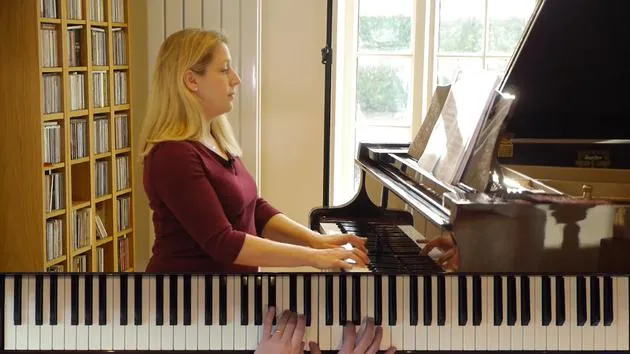
For example, a C major chord allows the fingers to fall naturally, and the hand rests comfortably on the chord.
Frederic Chopin's Favorite
Frederic Chopin's favorite scale was actually B major in the right hand. Look at the natural kind of hand placement:
- You have this bridge
- A relaxed elbow
- Fingers falling naturally over the sharps
Fingering Passages
When fingering a passage, try to find the most natural way for the hand to move.
Example: G Major Scale
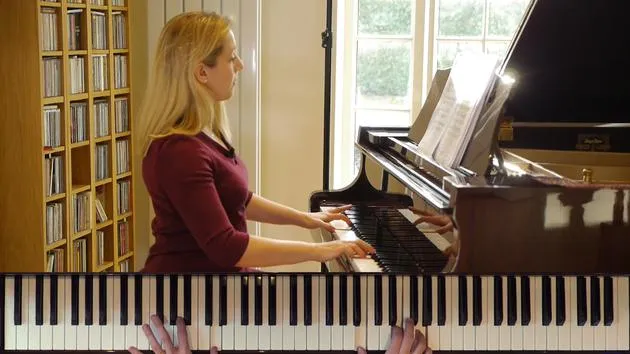
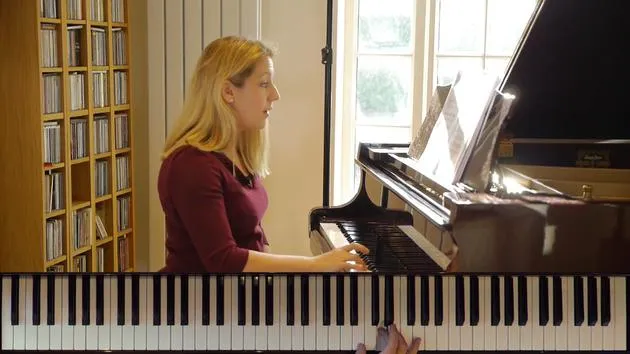
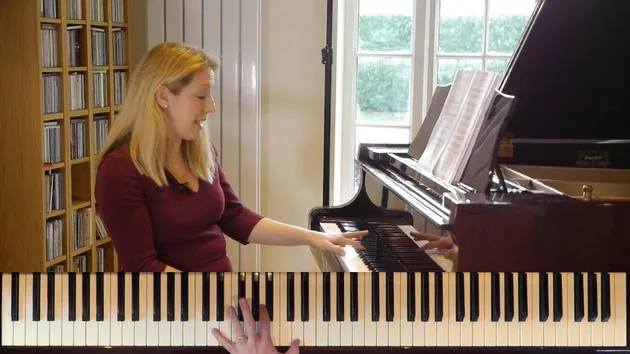
Let's take a G major scale. We want to transition from this position to another as evenly as possible.
- We could group four and three, but that would be odd since we'd end on a four, which is quite a weak finger at the top of the scale.
- The most natural approach is to do a group of three, then a group of four, and end with a five.
If working with another octave, note that the thumb has the flexibility to go underneath and move easily without creating any bumps.
Patterns for Scalier Passages
If you have a big scalic passage, aim for a simple pattern. For instance:
- Group of five
- Group of three
- Group of four
Avoid complicated sequences like 2, 2, 3, 4, 1, 3, 2. The fingering should be something your brain can easily grasp.
Fingering Arpeggios
For arpeggios, my hand loves the pattern 1, 2, 3, 5. I have quite small hands, so I avoid stretching too much between the fourth and fifth fingers, as it wouldn't be comfortable.
Comfort Check
When fingering, consider:
- How does it look?
- Does it feel comfortable?
The Cheater's Guide to Fingering
We all have our nemesis in fingering. For example, I tend to avoid using 5 and 4 or sometimes even 4 and 3 to utilize my stronger fingers.
- If you were trilling on 3 and 4, it might be easier for you to trill on 2 and 3, or even 1 and 3.
- Use your strengths to your advantage.
Committing to Your Fingering
Finally, once you've settled on fingering, stick to it, really stick to it.
- Practice and practice it.
- If it's still not working after about two weeks or after the 20th time, revisit it.
- However, avoid constantly changing between fingerings.
Stick with one, see if it works, practice it, solidify it, and then move on.
Comparison to Dance Routine
It's like learning a dance routine. You must learn the moves before you embark on improvisation.
21 Lektionen
0 Std. 57 Min. strukturierte Videolektionen
Erweiterte Videofunktionen
Verlangsamen, Passagen loopen, mitlesen
Handy, Tablet & Desktop
Üben, wo du willst
100 % Zufriedenheitsgarantie
30 Tage Geld-zurück-Garantie
Lern deinen Guru kennen

Lern deinen Guru kennen
Annabel Thwaite gilt als eine der vielseitigsten und charismatischsten Pianistinnen Großbritanniens und genießt eine facettenreiche Laufbahn als Solistin, Kammermusikerin, Aufnahmekünstlerin, Pädagogin und Prüferin. Sie hat alle bedeutenden Begleitpreise gewonnen, darunter die renommierten Kathleen Ferrier, Gold Medal und Richard Tauber Piano Prizes. Sie hat mit namhaften Künstlern wie Roberto Alagna, Bryn Terfel, David Kempster und "Only Men Aloud!" zusammengearbeitet.
Annabel hat für Universal records mit dem "Scottish Tenor" aufgenommen, dessen Album für einen Classical Brit Award nominiert war und regelmäßig auf Classic FM gespielt wird. Zweimal war sie Begleiterin beim Festival of Welsh Male choirs; ihre Auftritte in der Royal Albert Hall wurden von Sain aufgezeichnet und auf S4C ausgestrahlt. Sie ist außerdem Session-Pianistin für Filme und hat in den Abbey Road Studios die Musik zum Film "Awake", zur BBC-Jane-Austen-Serie "Emma", zu "The Secret Diaries of Miss Anne Lister" aufgenommen und ist zuletzt sowohl bei Blue Peter als auch bei "The Rob Brydon Show" aufgetreten.
"...zweifellos unterstützt von den offensichtlich brillanten Klavierbegleitungen von Annabel Thwaite... überaus genussvoll."
In ihren MusicGurus-Kursen – Learn Christmas Classics on Piano, Learn Classical Favourites on Piano und Growing Chamber Groups and Small Ensembles – teilt Annabel die Musikalität, die hinter dieser vielseitigen Laufbahn steht. Du lernst, geliebte Weihnachts- und klassische Stücke am Klavier zum Leben zu erwecken, deinen Anschlag und deine Phrasierung zu entwickeln und – gestützt auf ihre preisgekrönte Erfahrung als Begleiterin – zu entdecken, wie man beim gemeinsamen Musizieren mit anderen Musikern in Kammergruppen und kleinen Ensembles zuhört, führt und zusammenspielt.







