



Stimmung: Tempo & Dynamik

Lesson time: (2min 16sec)
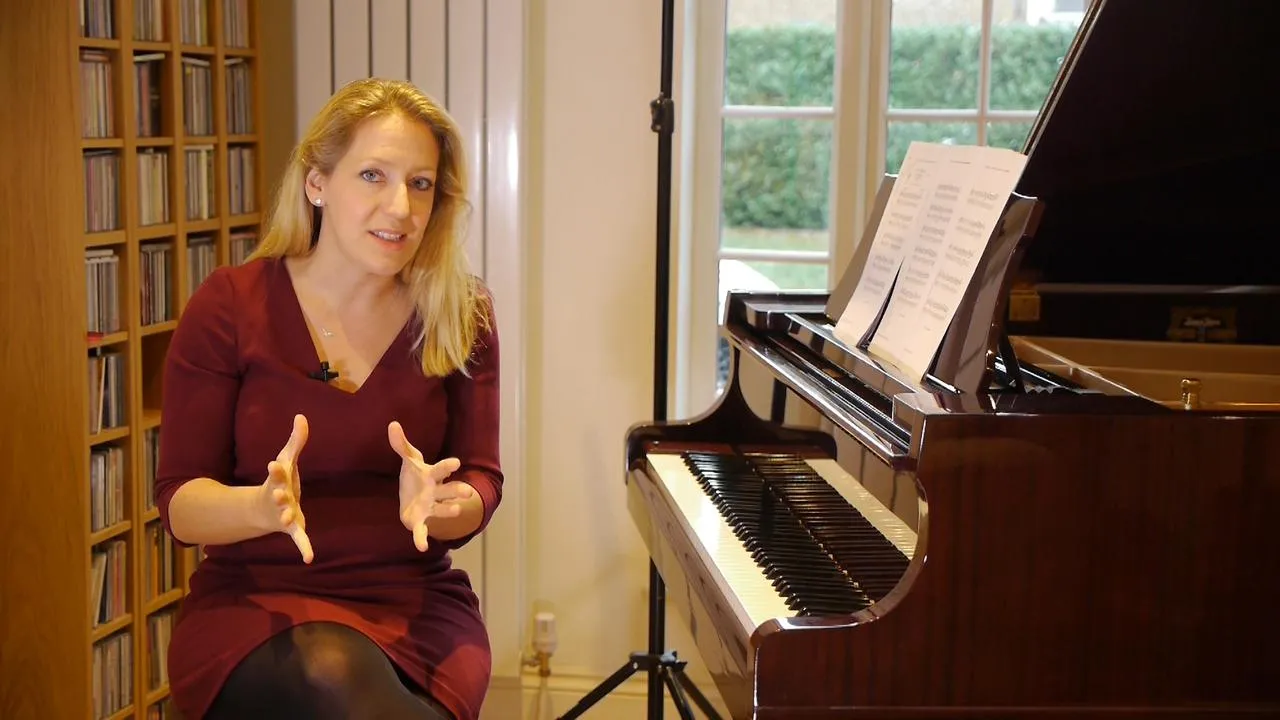
Annabel Thwaite zeigt, wie Tempo und Dynamik die Stimmung von Bachs Air auf der G-Saite formen, und findet ein fließendes Tempo knapp unter Schrittgeschwindigkeit.
Course preview
This lesson is part of the course Lerne klassische Lieblingsstücke am Klavier
Watch a preview of the full course below.
Lesson transcript:
Tempo and Musical Direction
Let's start with tempo. If this piece was being played in an orchestra, it would probably be a bit slower because you can sustain the sound much more than on a piano.
The Nature of the Piano
- The piano is a percussive instrument, and the sound eventually dies away.
- We want to create a feeling that has direction, sustaining the harmony.
Flowing Bass Line
- The flowing bass line should be:
- Not a walking pace, but just a little bit slower than a walking pace.
- The editor suggests a tempo of crotchet equals 30, which is really slow.
- Focus on the left hand:
- The bass part can have more movement.
- Aim for an almost undulating left-hand accompaniment.
Schenkerian Analysis
- In many of Bach's works, you can reduce this:
- There was a very famous person, Schenker, Schenkerian analysis reduces the whole piece to its harmonic structure.
- For example, in the first two bars, we can see:
- Descending octaves in D major, which then rises slightly.
Musical Direction
- We want to maintain that musical direction always in the back of our mind.
- The tempo should flow, with each note of the left hand leading to the next note:
- It's like footsteps walking; you never really stop on each one.
- The only places you stop are at the second time bar and at the very end, as the left hand is always continuous.
Dynamics Awareness
- Because we are playing on a modern piano, we should be a little aware of dynamics, though just very stylistically:
- We don't want any great fortissimos here; it would sound horrible.
- The playing should always be very sweet.
- Aim for a little more warmth with a piano quality that edges towards mezzo-piano (MP) and then fades away.
About the instructor
Annabel Thwaite gilt als eine der vielseitigsten und charismatischsten Pianistinnen Großbritanniens und genießt eine facettenreiche Laufbahn als Solistin, Kammermusikerin, Aufnahmekünstlerin, Pädagogin und Prüferin. Sie hat alle bedeutenden Begleitpreise gewonnen, darunter die renommierten Kathleen Ferrier, Gold Medal und Richard Tauber Piano Prizes. Sie hat mit namhaften Künstlern wie Roberto Alagna, Bryn Terfel, David Kempster und "Only Men Aloud!" zusammengearbeitet. Annabel hat für Universal records mit dem "Scottish Tenor" aufgenommen, dessen Album für einen Classical Brit Award nominiert war und regelmäßig auf Classic FM gespielt wird. Zweimal war sie Begleiterin beim Festival of Welsh Male choirs; ihre Auftritte in der Royal Albert Hall wurden von Sain aufgezeichnet und auf S4C ausgestrahlt. Sie ist außerdem Session-Pianistin für Filme und hat in den Abbey Road Studios die Musik zum Film "Awake", zur BBC-Jane-Austen-Serie "Emma", zu "The Secret Diaries of Miss Anne Lister" aufgenommen und ist zuletzt sowohl bei Blue Peter als auch bei "The Rob Brydon Show" aufgetreten. "...zweifellos unterstützt von den offensichtlich brillanten Klavierbegleitungen von Annabel Thwaite... überaus genussvoll." In ihren MusicGurus-Kursen – Learn Christmas Classics on Piano, Learn Classical Favourites on Piano und Growing Chamber Groups and Small Ensembles – teilt Annabel die Musikalität, die hinter dieser vielseitigen Laufbahn steht. Du lernst, geliebte Weihnachts- und klassische Stücke am Klavier zum Leben zu erwecken, deinen Anschlag und deine Phrasierung zu entwickeln und – gestützt auf ihre preisgekrönte Erfahrung als Begleiterin – zu entdecken, wie man beim gemeinsamen Musizieren mit anderen Musikern in Kammergruppen und kleinen Ensembles zuhört, führt und zusammenspielt. read more