



Melodie-Durchgang

Mit
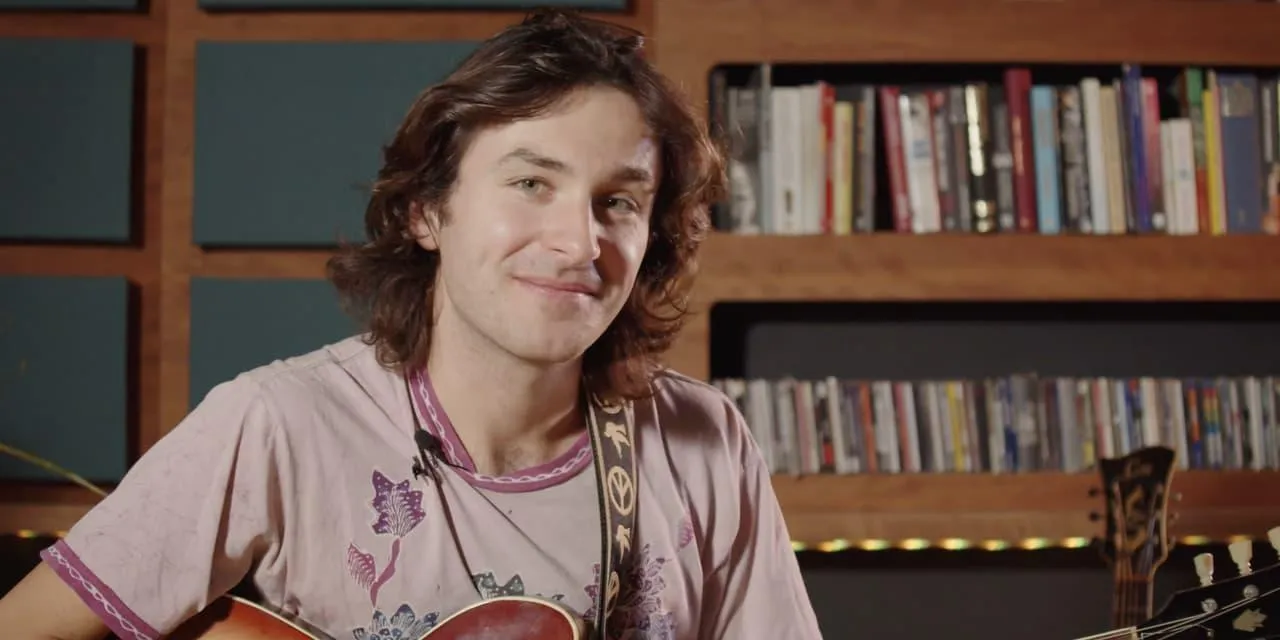
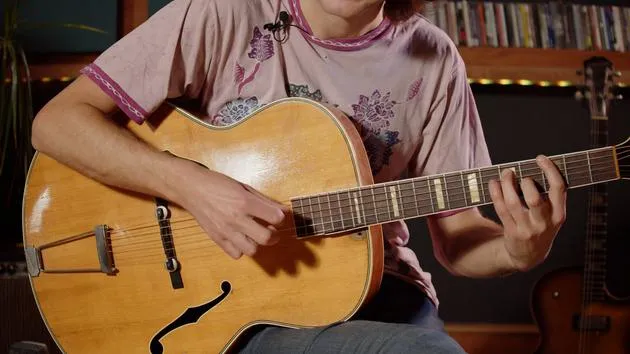
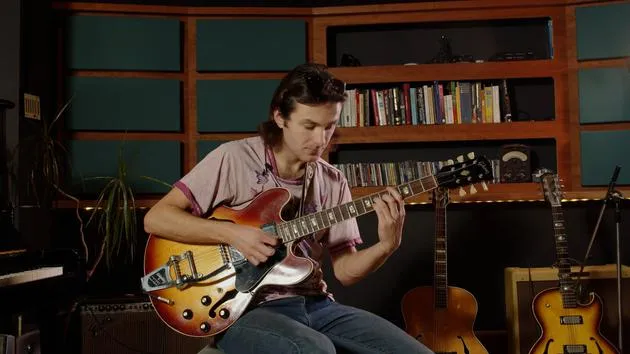
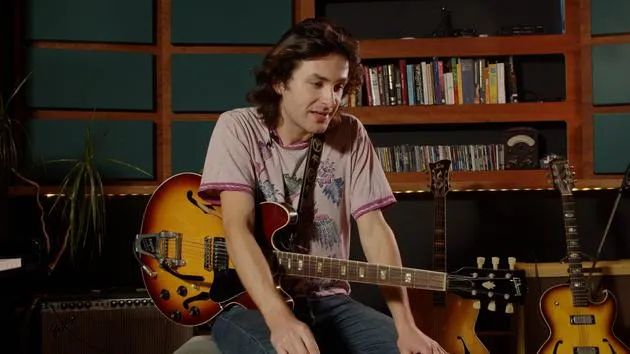
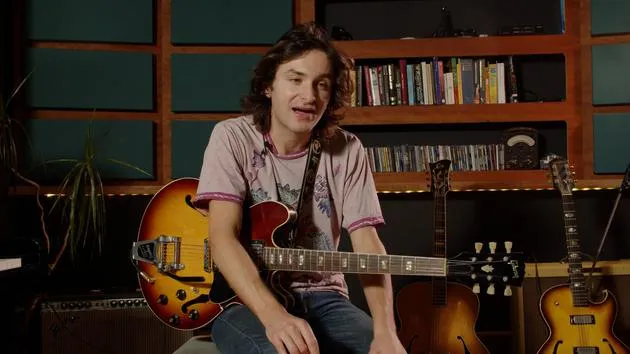
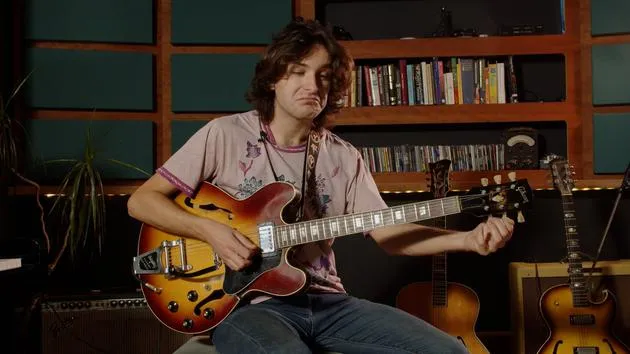
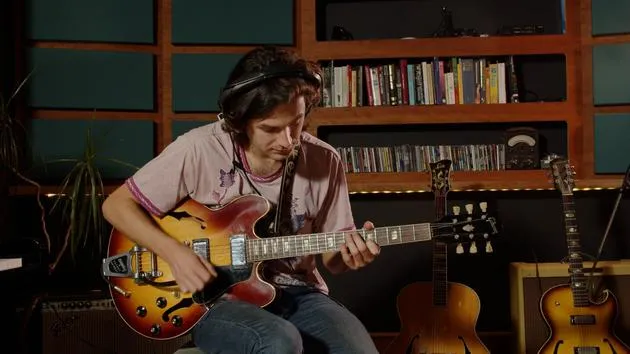
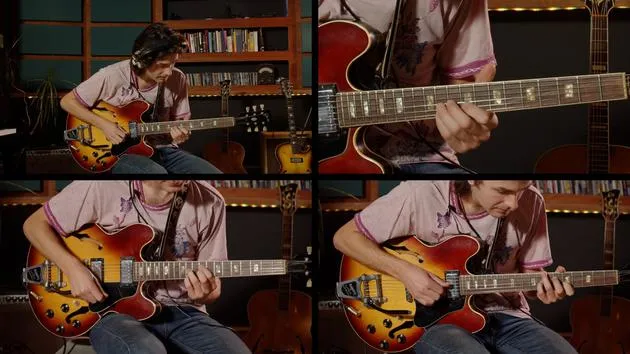
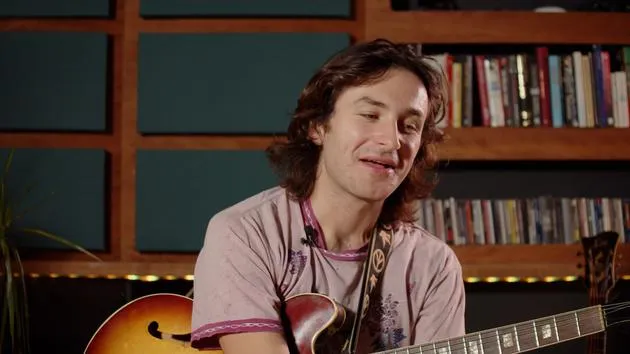
Rob LuftRob Luft geht die Melodie von 'Clouds' durch, seinem von Django Reinhardt inspirierten Stück, und zeigt, wie er Djangos berühmte Phrase mit künstlichen Flageoletts in natürliche Töne umgearbeitet hat.
Das steckt im Kurs
28 Lektionen (2h 7m) · 1 gratis
01. Warum Django Reinhardt studieren?
3:45
02. Akkorde und Harmonie - Teil A
11:06
03. Akkorde und Harmonie - Teil B
2:21
04. Techniken der rechten Hand - Europäisch vs. Amerikanisch
5:04
05. So erzeugst du das Swing-Feel
1:51
06. Melodie-Durchgang
Du bist hier9:10
07. Solieren - Arpeggien und Enclosures
Gratis-Lektion10:40
08. Solieren - Die harmonisch-Moll-Bebop-Tonleiter
8:27
09. Solieren - Einsatz von Pentatoniken
9:45
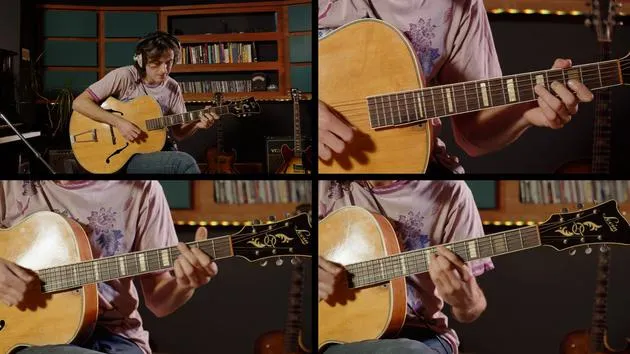
10. Clouds - Performance (Splitscreen mit Begleitung)
3:48
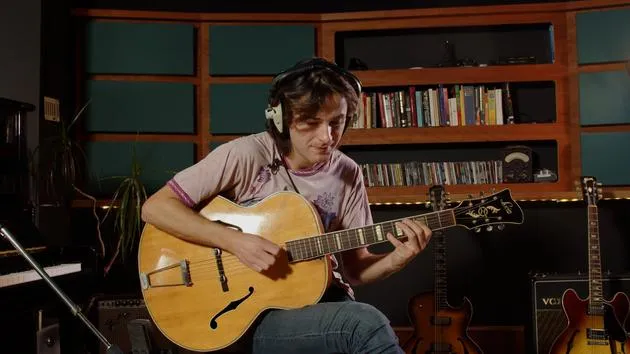
11. Clouds - Performance
3:49
12. Clouds - Performance (vereinfacht)
2:40
01. Warum Joe Pass studieren?
2:23
02. Einführung in das Solospiel und die Parallelharmonie
4:00
03. Verminderte Linien und „sizilianische Terzen“
5:19
04. Im Tempo spielen mit pianistischen Voicings
5:22
05. Wie man die zweite Hälfte spielt
5:06
06. Hybrid Picking vs. Fingerstyle
5:57
07. November in Norway - Performance
2:29
08. November in Norway - Aufführung (vereinfacht)
1:27
Transkript der Lektion
Melody for "Clouds"
So here we are talking about the melody for this piece, which we call Clouds, very much inspired by Django Reinhardt's original and most famous recording in the key of F.
I based my melody on the actual guitar solo from the original, which very famously uses artificial harmonics with the right hand. Django starts his solo with this beautiful phrase, which is a legendary sort of early use of artificial harmonics in the story of the guitar. I mean, you know, the recorded story of the guitar in the 20th century.
I don't think many people had played down harmonics in that way in an improvised solo before Django. So I've based my melody on that. Rather than playing the artificial harmonic, I've just played the melody in natural notes and slightly altered a few things.
My First Phrase
As you hear, my first phrase is very close to Django's, but I'm just altering a few notes here and there to fit with my accompaniment.
- I showed you those tricks in the chordal part that we recorded earlier.
- I've got this passing C7, sharp 5.
So there I've altered my melody to reflect that little tension resolution. I go, which creates a nice feeling, and it's a nice melody as well.
We must always remember that melodies are just that, they should be singable, they should be whistleable. With a guitar, it can be pretty difficult to compose melodies that are still singable because of the nature of the instrument. We want to run away with our fingers.
But in jazz, melodies often have to have this singing quality that someone could really get that hook stuck in their ear, which I think this does.
Moving to D Minor
So that's my first eight bars of melody. Then, when we move to the relative minor key, to D minor, we've got this pretty much sort of quote from the original melody.
So I'll break that down quickly. What we've got here is this great use of chromaticism around the fifth of the relative minor, around that A, resolving to the D minor. We've got this lovely sort of, you could call it enclosure.
When we take a chord tone like this, A, and we enclose each note of the chord. So rather than just playing a phrase like this, where they enclose each note, I'm kind of alluding to this concept, we're enclosing that G, and we're also using chromaticism around the A.
The same thing there with that F. The F is the third of D minor, and we're enclosing it. That sound of G, E, F is very typical in classical music as well. It's a trick borrowed from Bach, using chromaticism to enclose our arpeggios and our chord tones.
It creates a very nice and elegant way to add complexity to very simple harmonies.
Melody Development
So we get this melody here, and then we run down an arpeggio basically down to that third, that B, which is the third of the G7.
Then our melody just goes down a semitone to a G, to a B flat over the G flat seventh chord, reflecting the changing harmony. You get again back up again when it goes back to the G7 and runs up sort of a scale.
It's not really an A scale; it's more of F major minus the B flat from C to C, removing the B flat there. Then the melody cycles back on itself.
Transition to B Flat
It's going to change a little bit this time because we're going into B flat.
- We use this A, which is the ninth of the G flat seventh.
- Then we've got F7 and we use the seventh and the third to resolve into the B flat major chord.
And then we're up to B flat minor, the IV minor, a sound typical of the 30s, really emphasizing these tones, which is the sixth, the minor sixth, very common in B flat minor 6 in this era.
Counterpoint Element
Then we use a bit of counterpoint here.
- We get this sort of almost like a double melody; the higher note goes up and the lower note goes down, which is what we call counterpoint (or contrapunto in Italian).
It simply means notes going in opposite directions. When you add the bass note in, it's very satisfying.
Conclusion
Then we're going to just repeat the last phrase, the first phrase, as our concluding phrase. Just to create a resolution.
And then that four minor comes back again, which is the way we finish our melody.
So I'll just play you that from the last eight bars of melody. You're going to hear this.
So that's our melody, and it's really up to you guys how you phrase it rhythmically. It's very open-ended.
As you can see, it's pretty easy to compose your own melodies on a chord sequence like this, simply choosing an attractive chord tone or an extension like a sixth on that four minor and resolving it using those simple techniques such as:
- Counterpoint, where your upper melody note goes up and your lower melody note goes down, or vice versa.
- Using simple chromatic enclosures and other chord tones.
- Incorporating little scalic runs.
I think it's well within everyone's reach to compose their own melody over a chord sequence such as this one.
28 Lektionen
2 Std. 7 Min. strukturierte Videolektionen
Erweiterte Videofunktionen
Verlangsamen, Passagen loopen, mitlesen
Handy, Tablet & Desktop
Üben, wo du willst
100 % Zufriedenheitsgarantie
30 Tage Geld-zurück-Garantie
Lern deinen Guru kennen
Lern deinen Guru kennen
Rob Luft ist ein preisgekrönter Musiker aus London, der weithin als einer der herausragendsten und talentiertesten jungen zeitgenössischen Jazzgitarristen des Vereinigten Königreichs beschrieben wird. Von The Times als jemand gelobt, der 'in Zukunft Großes erreichen wird', gewann Rob 2016 den Kenny Wheeler Jazz Prize in Zusammenarbeit mit Edition Records und belegte 2016 den 2. Platz beim Montreux Jazz Guitar Competition. Sein Debütalbum 'Riser' erschien im Juli 2017 und erhielt in den europäischen Jazzmedien breite kritische Anerkennung. John Fordham schrieb im The Guardian, es sei ein 'sehr raffiniertes Debüt, doch angesichts von Lufts altweisen Leistungen seit seiner frühen Jugend hätten wir es kommen sehen müssen'.
'So jung und so talentiert!' - Jamie Cullum, BBC Radio 2 (UK)
'...ein außergewöhnliches Talent!' - Julian Joseph, BBC Radio 3 (UK)
'Die Virtuosität der drei [Gitarristen Al di Meola, John McLaughlin und Paco de Lucia] erinnert an den 23-jährigen Londoner Rob Luft, der als neues "Wunderkind" gefeiert wird' - Spiegel Online (D)
In Play Authentic Jazz Guitar öffnet Rob die harmonische Sprache, die Phrasierung und die Improvisationsinstinkte hinter diesem 'altweisen' Sound und zeigt dir, wie er wirklich über das Griffbrett denkt, damit du beginnen kannst, deine eigene Stimme im Jazz zu finden.







