



Wie man die zweite Hälfte spielt

Mit
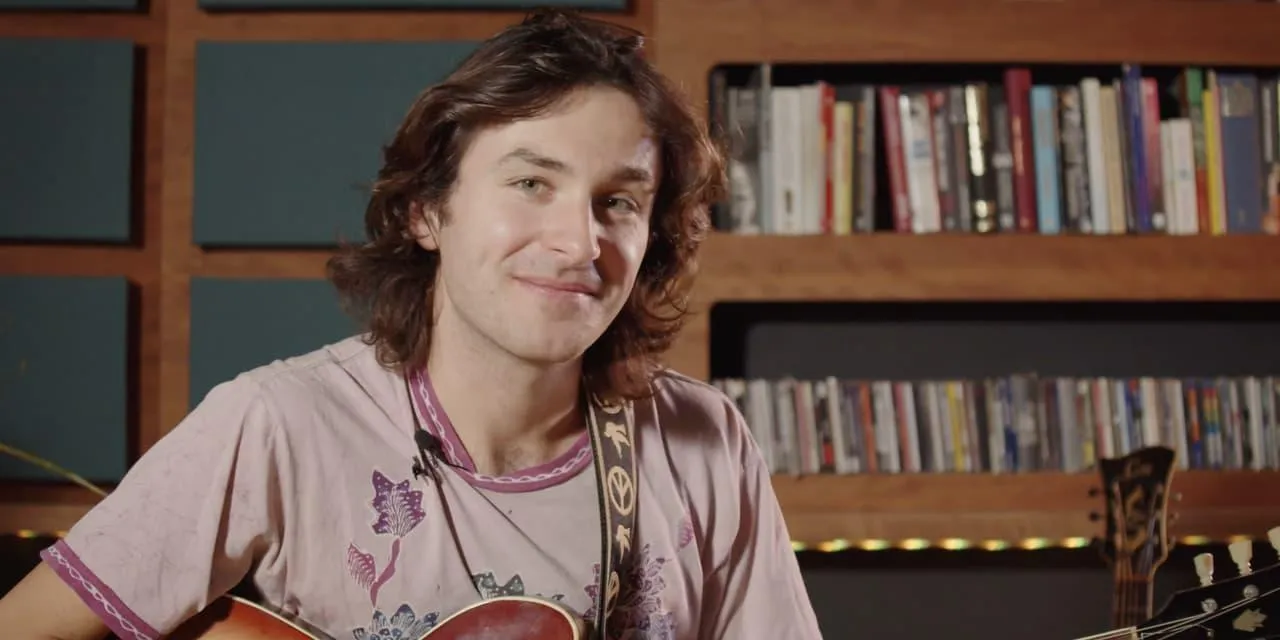
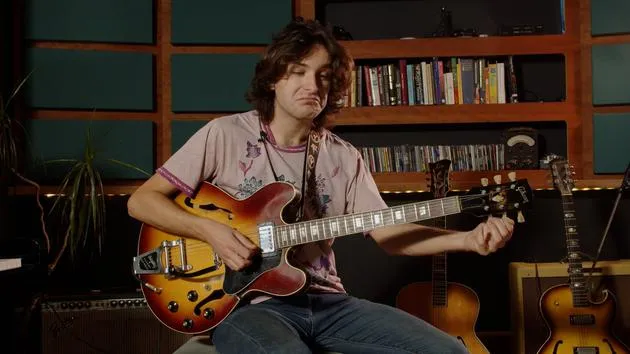
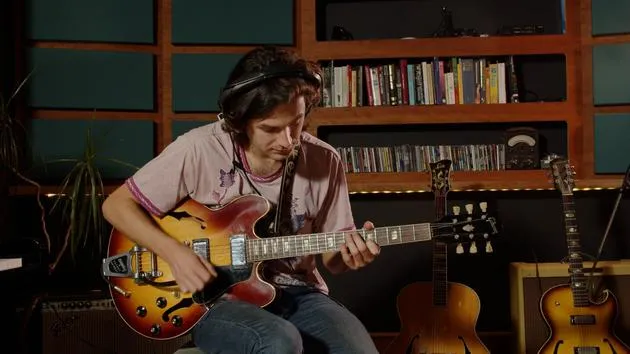
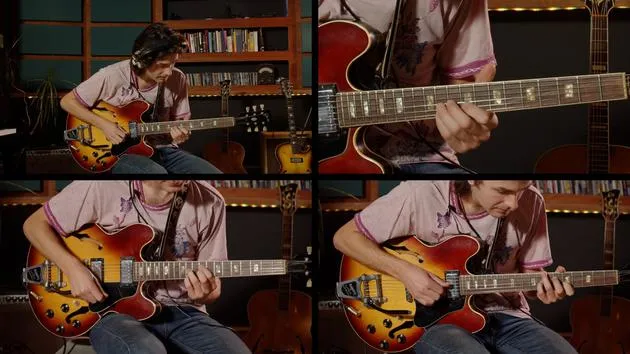
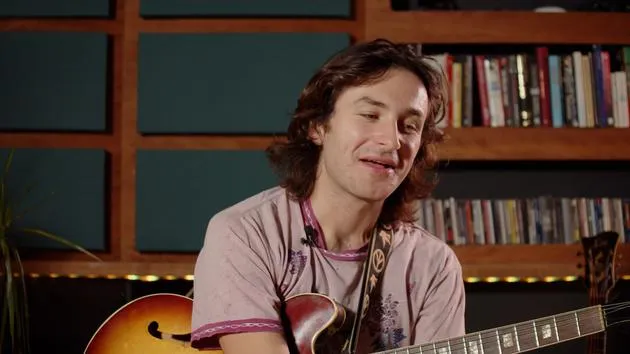
Rob LuftRob Luft arbeitet die schwierigere zweite Hälfte des Stücks durch und navigiert die 2-5-1-Bewegungen von C-Dur nach a-Moll und die anschließende Modulation.
Das steckt im Kurs
28 Lektionen (2h 7m) · 1 gratis
01. Warum Django Reinhardt studieren?
3:45
02. Akkorde und Harmonie - Teil A
11:06
03. Akkorde und Harmonie - Teil B
2:21
04. Techniken der rechten Hand - Europäisch vs. Amerikanisch
5:04
05. So erzeugst du das Swing-Feel
1:51
06. Melodie-Durchgang
9:10
07. Solieren - Arpeggien und Enclosures
Gratis-Lektion10:40
08. Solieren - Die harmonisch-Moll-Bebop-Tonleiter
8:27
09. Solieren - Einsatz von Pentatoniken
9:45
10. Clouds - Performance (Splitscreen mit Begleitung)
3:48
11. Clouds - Performance
3:49
12. Clouds - Performance (vereinfacht)
2:40
01. Warum Joe Pass studieren?
2:23
02. Einführung in das Solospiel und die Parallelharmonie
4:00
03. Verminderte Linien und „sizilianische Terzen“
5:19
04. Im Tempo spielen mit pianistischen Voicings
5:22
05. Wie man die zweite Hälfte spielt
Du bist hier5:06
06. Hybrid Picking vs. Fingerstyle
5:57
07. November in Norway - Performance
2:29
08. November in Norway - Aufführung (vereinfacht)
1:27
Transkript der Lektion
Music Lesson: Understanding Chord Progressions and Pedal Points
Introduction
Now, because this is the hard bit, is where the chord transitions occur. This part is really challenging.
Chord Transitions
We're going to move between:
- C Major
- A Minor
We're going to use a 2-5-1 progression to transition from C Major to A Minor, which would be:
- B half diminished (adding an E natural in the melody, giving us an 11th)
- B minor 7 flat 5, add 11 (a bit of a mouthful)
- E7 into A minor
Joe's cleverly modulating into E Major, leading into this A minor over G, which gives a sort of Stairway to Heaven moment transitioning into F# minor 7 flat 5, then to E7, and finally to E add 9 and G sus, the most holy of all chords.
The Beauty of the Transition
The way in which he does it is beautiful. He creates the illusion of everything happening at once when it's not.
Let me demonstrate it for you:
-
Slow tempo:
- 1, 2, 3, 4.
-
Faster tempo:
- 1, 2, 3, 4.
As you see, we then move seamlessly out of time.
Repeating the Phrase
We repeat our first phrase, arpeggiating the C Major moving into a 2-5-1 into D here, adding a phrasal bar melody. Then, we have these little movements here.
Joe loved those wide voicings, very pianistic.
Understanding Pedal Point
This is what we call pedal point.
- Definition:
- Pedal point is usually associated with a bass player, such as a double bass player holding a note (let's say an E).
- Over the top of that E, you play A minor and then you play E7.
- The bass player holds the E, and you play A minor again while the bass player continues holding the E. You're changing your chord between shifts.
Then, the pedal point resolves.
Inverted Pedal Point
What Joe Pass was a master of was inverted pedal point.
- The pedal no longer sits in the bass but in the melody.
- You get the C pedal on the top while the chords move beneath it.
- I would always have a C on top of my voicing, but Joe would move these little two-note voicings around underneath it.
It's really beautiful and creates the feeling of "the swan on the water."
- The swan appears calm while underneath it's paddling like crazy.
- This C on top creates a stillness and beauty, which is a hallmark of Joe's playing.
- These inverted pedal points allow you to imagine the chords underneath, moving through G, F, E minor, D minor, while he's just using these little two-note voicings to give the impression that all of that is happening.
Mastering Tempo Rubato
Like I say, Joe is moving in and out of time so effortlessly. That's an important art to master in jazz known as tempo rubato.
Definition of Rubato:
- Rubato is an Italian word meaning "stolen tempo."
- It's a good way to think about playing out of time.
Concept:
- You're stealing rhythm from the next bar and putting it into the bar that you're currently in, which means you may lose some time to the next bar.
- That's the art of playing rubato: it's about stealing time.
Conclusion
To finish, I could put it all together and play a complete version for you.
28 Lektionen
2 Std. 7 Min. strukturierte Videolektionen
Erweiterte Videofunktionen
Verlangsamen, Passagen loopen, mitlesen
Handy, Tablet & Desktop
Üben, wo du willst
100 % Zufriedenheitsgarantie
30 Tage Geld-zurück-Garantie
Lern deinen Guru kennen
Lern deinen Guru kennen
Rob Luft ist ein preisgekrönter Musiker aus London, der weithin als einer der herausragendsten und talentiertesten jungen zeitgenössischen Jazzgitarristen des Vereinigten Königreichs beschrieben wird. Von The Times als jemand gelobt, der 'in Zukunft Großes erreichen wird', gewann Rob 2016 den Kenny Wheeler Jazz Prize in Zusammenarbeit mit Edition Records und belegte 2016 den 2. Platz beim Montreux Jazz Guitar Competition. Sein Debütalbum 'Riser' erschien im Juli 2017 und erhielt in den europäischen Jazzmedien breite kritische Anerkennung. John Fordham schrieb im The Guardian, es sei ein 'sehr raffiniertes Debüt, doch angesichts von Lufts altweisen Leistungen seit seiner frühen Jugend hätten wir es kommen sehen müssen'.
'So jung und so talentiert!' - Jamie Cullum, BBC Radio 2 (UK)
'...ein außergewöhnliches Talent!' - Julian Joseph, BBC Radio 3 (UK)
'Die Virtuosität der drei [Gitarristen Al di Meola, John McLaughlin und Paco de Lucia] erinnert an den 23-jährigen Londoner Rob Luft, der als neues "Wunderkind" gefeiert wird' - Spiegel Online (D)
In Play Authentic Jazz Guitar öffnet Rob die harmonische Sprache, die Phrasierung und die Improvisationsinstinkte hinter diesem 'altweisen' Sound und zeigt dir, wie er wirklich über das Griffbrett denkt, damit du beginnen kannst, deine eigene Stimme im Jazz zu finden.







