



DJing mit Digital: mein Weg von analog zu digital
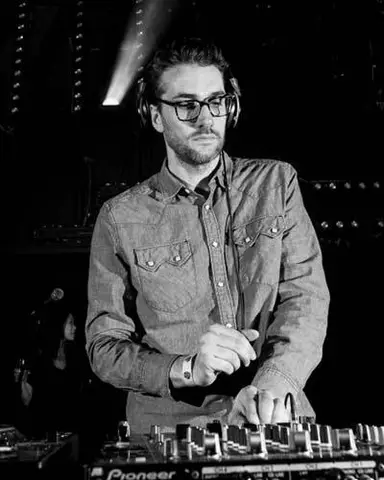
Lesson time: (4min 47sec)
Course preview
This lesson is part of the course Finde deinen eigenen Weg in House und Techno mit DJ Deep
Watch a preview of the full course below.
Lesson transcript:
My Analog to Digital Process
So, let's talk about my analog to digital process.
Curiosity and Learning
As I tried to say before, I'm always very curious and trying to go deep into details and learn by myself. There is what everybody's telling you:
"This is the standard, you have to do it this way."
Most of the time, it is right. But you can also look at things from different angles.
Mentorship
My good friend, brother, and mentor, Kerry Chandler, is a great person to discuss technical things with. He has taught me a lot, and I'm always learning from him.
Exploring Limitations
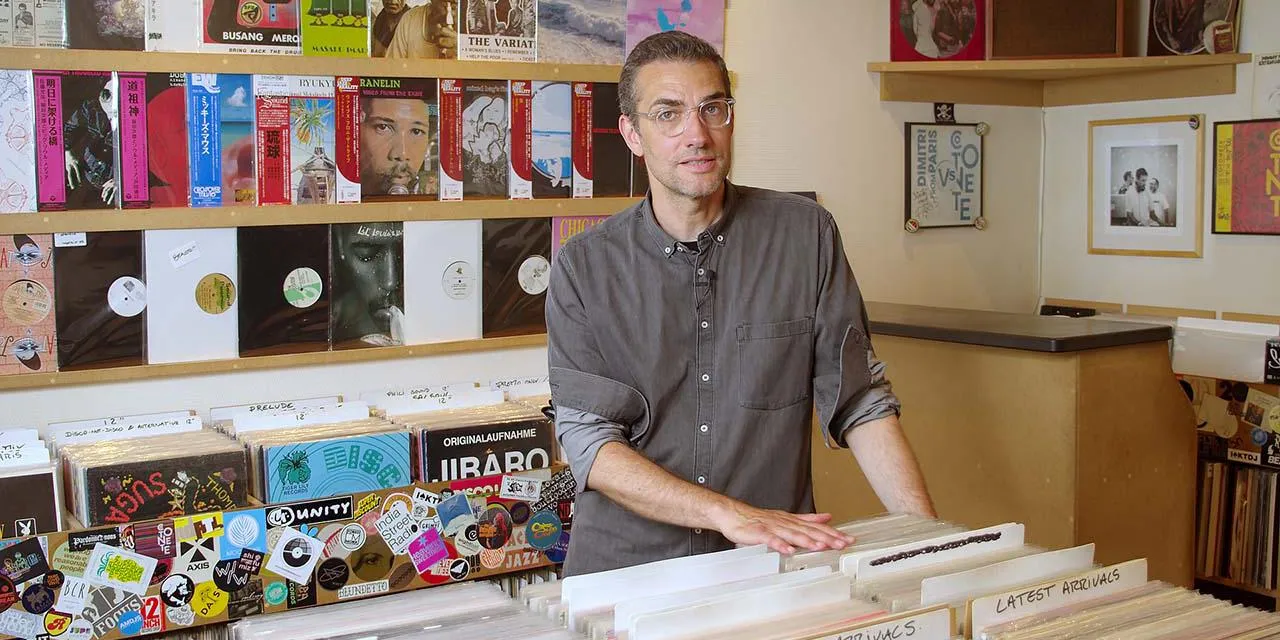
For instance, there are ways to work around the digital and analog limitations. There are ways to find your own path that corresponds to yourself. For me, I love vinyl. As you can see, I have a few records, and in today's world,
"It's not only easier, but you have to play digitally most of the time."
A lot of places, and sometimes clubs, don't have the proper vinyl equipment, or if they do, the system doesn't work perfectly with it anyway.
The Sonic Experience
My goal as a music lover is to give people the best sonic experience as I possibly can. From my end, I consider I deliver the source, and from that point, it goes to the system.
"Of course, I'm not running the system; I'm not the sound engineer."
I'm trying to give the sound engineer the best signal possible.
Bypass Converters
Learning again from my friend Kerry Chandler, I'm trying to bypass as much as I can converters and ADDA as much as possible.
Recording Process
So, what I do most of the time is:
- Record my vinyl from this turntable using the different cartridges we mentioned before.
- Each cartridge has unique qualities depending on the music I'm ripping.
I'm going through my modified URI to my RME Fireface 800, which is also modified, and then to my music software.
Software Choices
I use:
- Sometimes Ableton Live
- Sometimes Logic Pro
- Occasionally Pro Tools
These options depend on the music I want to record. I use different software, cartridges, or combinations to the advantage of the music, ensuring I get the best result once the music is recorded.
Pioneer Record Box
I use Pioneer Record Box because I mainly perform in clubs with Pioneer CDDJs 2000 NX2.
- It's easier for me for various reasons because the screens correspond.
- It has the same logical approach.
Additionally, I have a Pioneer controller called DDJ-RX, which serves as a remote control. I don't really play music with this device; instead, I use it to put markers on my screen for my tracks.
Visual Markers
I know where the breaks are, whether there is a hi-hat, mute, or anything.
"This allows me to have a visual aspect of what I get on a vinyl."
Now, I can see it on my screen or on my CDJ screen using those markers.
Demonstration of Marking
In a second, I'll show you very quickly what I mean.
If I do this, I go back to the beginning of the track. Here is my track.
- Let's say I want to mark the kick in the track.
- I'll move to where the kick comes in, which is here.
- I just put a marker.
You see, the C marker indicates that the kick comes in.
Combining Analog and Digital
Basically, I'm using these tools to my advantage. I'm playing analog with a digital device and trying to take advantage of all technologies combined.
I love the sound I'm getting because:
- I ripped it myself.
- I took care of it myself.
- I know how it sounds, and I see how it sounds.
Digitally, I can mark it and make it look as comfortable as possible for myself, just as if I was playing vinyls.
So, yeah, those are a few examples of what I do to my files, how I record them, and how I mark them in order to DJ with them.
About the instructor
DJ Deep ist ein französischer House- und Techno-Produzent und DJ und der Mann hinter dem Label Deeply Rooted (früher Deeply Rooted House). Über mehr als 20 Jahre war er einer der großen Kuratoren der Dance-Musik, und genau dieses Gehör dafür, was einen Track wirklich funktionieren lässt, macht ihn zu einem Wegweiser, von dem zu lernen sich lohnt. 'Ich sehe meinen Job darin, ein großer Filter zu sein', sagt er und spielt damit eher die Rolle herunter, die der Franzose in der Entwicklung der House-Musik gespielt hat. 'Als Vinyl-Junkie bin ich fast täglich in den Plattenläden auf der Jagd nach Krachern. Zu teilen, was ich für die großartigsten Platten des Moments oder die zeitlosesten persönlichen Klassiker halte, ist etwas, das mich über die Jahre angetrieben hat.' Cyril Etienne trat aus der Pariser Szene hervor, um auf der Weltbühne wirklich Eindruck zu machen. Er begann damit, für Laurent Garnier auf Partys wie Oz und Zoo im Club Palace aufzulegen, wurde dann Stammgast im Rex Club und etablierte seinen einzigartigen Geschmackssinn mit seinen 'A Deep Groove'-Sendungen auf dem Piratensender Radio FG und später auf Radio Nova. Rasch stieg er dazu auf, weltweit aufzulegen, und trug dabei stets einen von seiner Liebe zu Chicago, New York und Detroit geprägten Sinn für Geschichte mit sich. Er verwischt die Grenzen zwischen House und Techno und verbindet zugleich klassische und zeitgenössische Cuts mit seinem eigenen Erzählgefühl – nicht nur als DJ und Produzent, sondern auch als Labelchef und Party-Kurator. Seit 2003 leitet er sein eigenes zukunftsgewandtes Label Deeply Rooted, gleichbedeutend mit stilvollem, wurzeltreuem House und Techno von neuen und etablierten Größen wie Kerri Chandler, Ben Klock, Francois X, Ben Sims und Roman Poncet sowie dem aufstrebenden französischen Star und Concrete-Paris-Stammgast Marina Trench. Seine eigene Raw-Cuts-Reihe schlägt die Brücke zwischen der innigen Emotion des House und der direkten Wucht des Techno. Über sein eigenes Label hinaus hat er auf Rekids, Kaoz Theory und Tresor veröffentlicht und als Remixer Künstler wie Carl Craig, St Germain, DJ Honesty, Scan 7, Borderland (Juan Atkins) und Point G überarbeitet, wobei er stets seine einzigartig warmen Atmosphären in alles einbringt, was er herausbringt. Außerdem macht er unter diversen anderen Aliassen Musik: Rebeval, mit roher klingendem Material auf L.I.E.S.; Sergie Rezza, ein Kollaborationsprojekt und gleichnamiges Label gemeinsam mit Roman Poncet, das experimentelleren, ambientdurchsetzten House und Techno sowohl im EP- als auch im LP-Format auslotet; Fang, für zeitgenössischen House; und Adventice, für treibenden, klassisch verwurzelten Techno, mit Veröffentlichungen auf Tresor und Liveauftritten an Orten wie Berlin Atonal. Seine eklektischere Seite kommt in seinen Open-Library-Radiosendungen auf Worldwide FM zum Vorschein – zweistündige Fenster aus Jazz, Soul, Dub, Funk und Ambient, die ganz besondere, immersive Soundtracks ergeben. Was auch immer er spielt oder produziert, DJ Deep hat stets etwas Hörenswertes. In Find Your Own Path in House & Techno teilt er, wie er Tracks auswählt, anordnet und formt, sodass du, statt Trends hinterherzujagen, einen Sound und einen Geschmack aufbauen kannst, die unverkennbar deine eigenen sind. read more