



Fragerunde mit der angehenden DJ Elisa

Mit
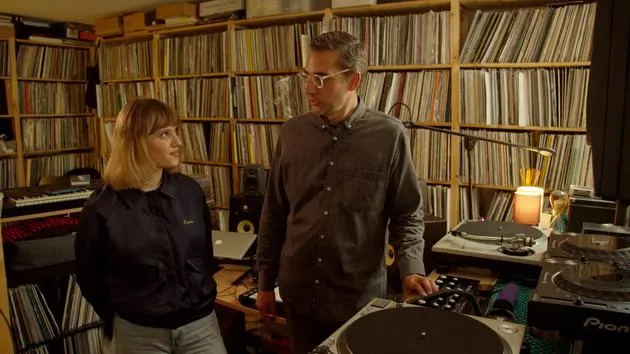
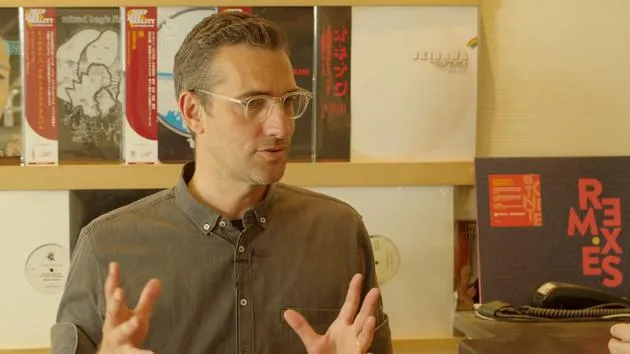
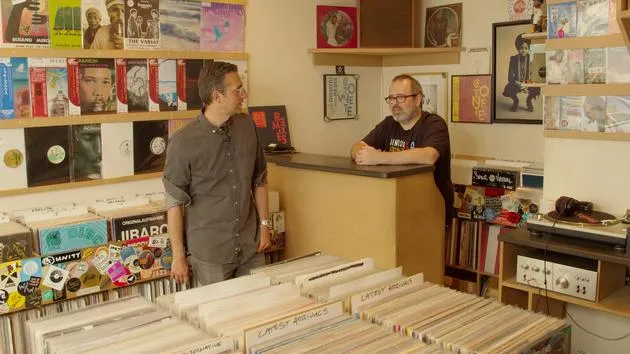
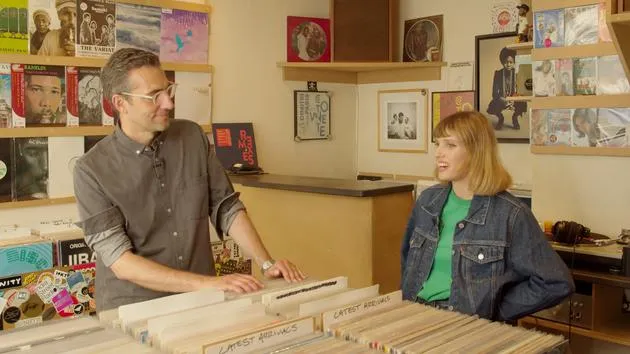
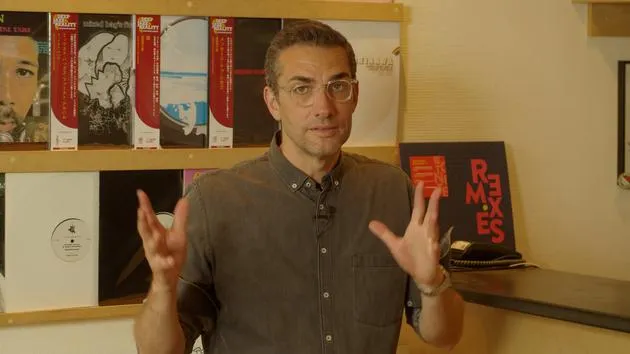
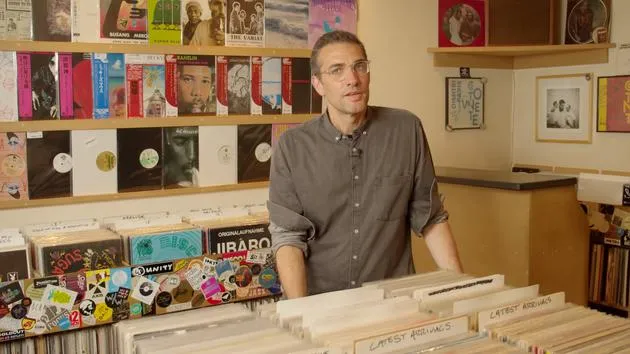
DJ DeepDJ Deep beantwortet die Fragen der angehenden DJ Elisa - von seiner Herangehensweise an ein Club-Set bis zur Wahl seiner Tonabnehmer-Systeme.
Das steckt im Kurs
21 Lektionen (1h 33m) · 1 gratis
01. Willkommen zum Kurs
1:31
02. Inspiration von Mentoren gewinnen
Gratis-Lektion3:29
03. Die wichtigsten Platten aus New York, Chicago und Detroit
4:26
04. Sei neugierig, verstehe die Stile und die Maschinen
5:56
05. Geh deinen eigenen Weg, definiere deinen eigenen Sound
3:26
06. Meine Karriere und wie ich meinen Stil gefunden habe
5:59
07. Meine Definition eines DJs
6:03
01. Fragerunde mit der angehenden DJ Elisa
Du bist hier10:19
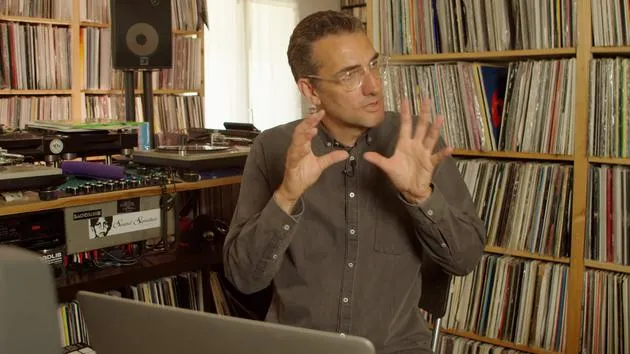
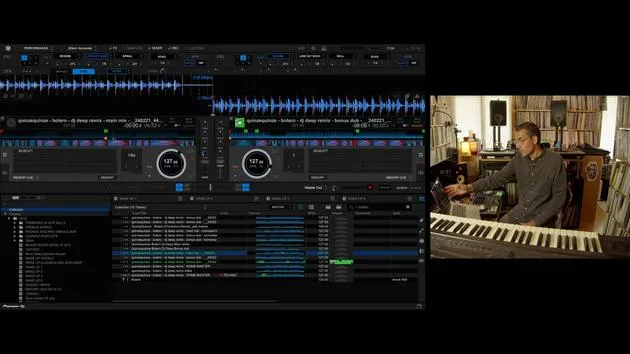
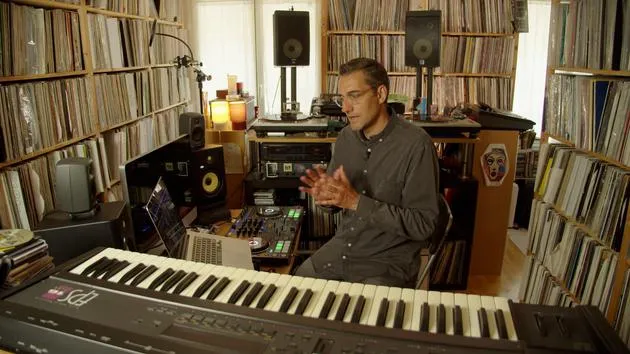
Transkript der Lektion
Music Lesson: DJ Techniques and Insights
Introduction
I'm now joined by Elisa, who's a young aspiring DJ. I think you have a few questions about equipment and music in general, and I would love to discuss it with you.
Elisa: Yes, I'm really happy to be with you and learn about your experience as a DJ.
Preparing for a Set
Elisa: My first question is maybe a little bit basic, but how do you approach a set in a club?
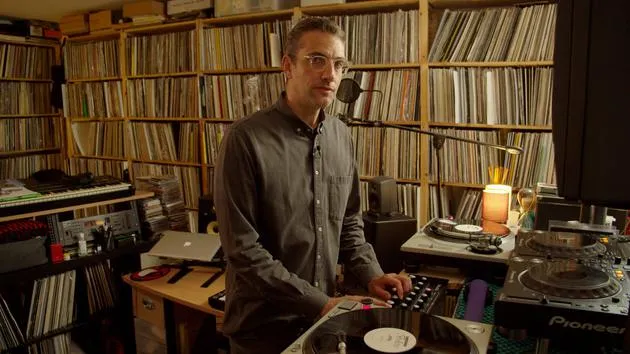
You know what, I have a few ways of approaching a set in a club. If it's a club I've never been to, I'm trying to find some information about it:
- I might call friends who have played there and ask them:
- How was the vibe?
- What is their favorite style?
- How did you feel it?
- How was the sound system?
- What equipment do they have?
Just basic inquiries to learn more.
On a musical level, I would prepare playlists. As I mentioned before, I transfer my vinyls to digital, creating playlists to align with the club's vibe:
- Example: If it's a place known for house and techno, I would create:
- One house playlist
- One techno playlist
Every time I play somewhere, I make a specific playlist for that location. Of course, I have many backup playlists stored on my hard drive.
Every gig I approach, I now envision as if I'm bringing a record case with me. I think, "Let's bring 100 house records and 100 techno records." I approach it as I would have with a real record box.
Managing Equipment
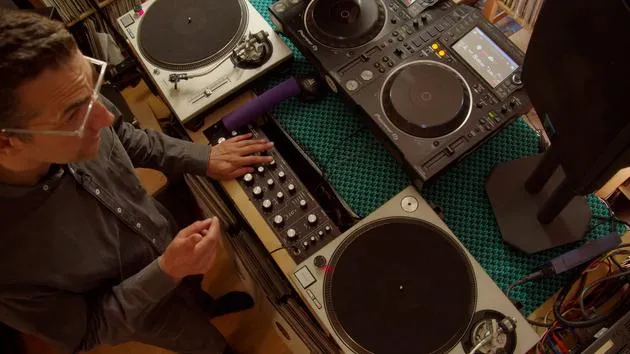
Elisa: I have a bit of difficulty managing cartridges.
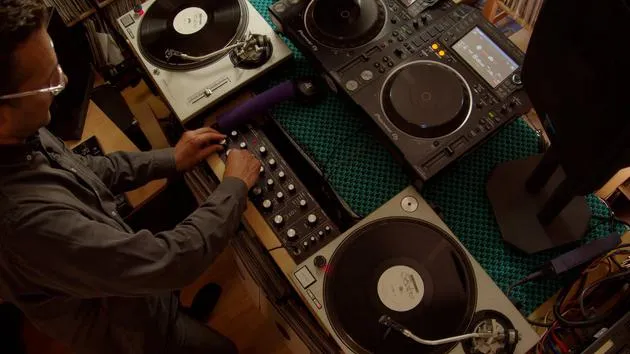
DJ: Yes, I know it's a big topic, the differences between cartridge brands can be complicated. It took me a long time to choose. I was a big fan of the Shure M447, which got discontinued, unfortunately. However, there are some nice alternatives, such as:
- Ortofon (I mentioned this before)
- Some Japanese brands are redoing the Shure models
Cartridges are very important because they are the source of your music. They are the first thing that your record touches before the mixer, the amplifier, and the sound system.
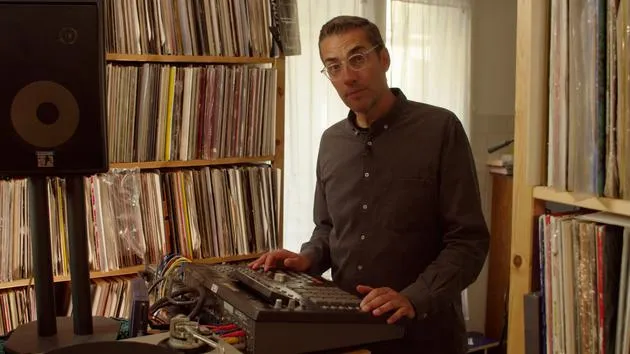
Let me show you a few cartridges, such as the Grado cartridges Kerry Chandler gave me as a present in Paris. They're really nice, especially for jazz, as they have a very nice high end.
Each cartridge has its own character, and I recommend finding one equivalent to the Shure M447, like the Ortofon I mentioned.
Sometimes stores let you test cartridges. Follow your ears, bring a record you love, try it out on the system, and see which one feels right for you.
Preparing vs. Improvising
Elisa: How do you think? Should I prepare my set beforehand, or can I improvise?
You know what? I'm very tempted to say both!
- Key Point: Always read the crowd.
- In the past, I made mistakes by wanting to replicate a set I heard from Frankie Feliciano. I would prepare my records and mixes meticulously, and sometimes it wouldn't translate well in front of people.
You have to be connected with the audience.
Preparing for a set helps. For instance, consider:
- This record works with that one.
- Plan your deep intro, harder moments, softer moments, and key songs.
So, it's beneficial to prepare a few blocks of music so that if you sense a change in the crowd's energy, you can easily adapt.
Finding Your Style
Elisa: Sometimes I feel a little lost about my style. I love house music, but I want to play techno. Can I play both at a party?
You know what? I get lost sometimes too. Like you, I enjoy different styles and collect so much music, wanting to play it all. However, not every crowd is open-minded enough to go left and right and up and down.
It's essential to prepare and organize, think of it as a safety net. Once you have that in place, you can let go and have fun during the party.
For example, you might want to try a new song that you're unsure about. If it doesn't work, you can pivot back to something familiar.
From many DJs I admire, I've learned that sometimes they play tracks I didn't like initially. Still, their reasoning often makes sense after some context, showing that music is a journey of feelings and vibes.
Understanding Different Tracks
Elisa: So, tell me more about learning to like tracks you may not enjoy.
You're right; it sounds a bit extreme. But sometimes, I've heard tracks I didn't feel initially, but once I heard them in a different context, I began to appreciate them.
I view DJing as guiding people through a musical journey, through mountains and valleys. For an audience to relish the peaks, you need to navigate them through lower moments too.
This is part of respecting art, as we all play other people's music. It's a significant part of the culture.
Final Advice for Young DJs
Elisa: What advice do you have for young DJs like me?
DJ: That's tough. I think the most crucial thing is to play what you love. Of course, you're playing for people, so it's not just about what you want to hear. Tune into the vibe and feel what resonates with the audience.
However, never compromise by playing something you don't like. Throughout my career, I always believed there's at least one track in my collection that the crowd will enjoy.
It's a dialogue between you and the audience.
To quote my brother and mentor, Kerry Chandler: "A good night is 50% the people, 50% you."
You could be the best DJ, but if the crowd isn't grooving or if you're not fully understanding their vibe, it simply won't work.
Thank you very much!
Elisa: Thank you! Thank you!
21 Lektionen
1 Std. 33 Min. strukturierte Videolektionen
Erweiterte Videofunktionen
Verlangsamen, Passagen loopen, mitlesen
Handy, Tablet & Desktop
Üben, wo du willst
100 % Zufriedenheitsgarantie
30 Tage Geld-zurück-Garantie
Lern deinen Guru kennen
Lern deinen Guru kennen
DJ Deep ist ein französischer House- und Techno-Produzent und DJ und der Mann hinter dem Label Deeply Rooted (früher Deeply Rooted House). Über mehr als 20 Jahre war er einer der großen Kuratoren der Dance-Musik, und genau dieses Gehör dafür, was einen Track wirklich funktionieren lässt, macht ihn zu einem Wegweiser, von dem zu lernen sich lohnt.
'Ich sehe meinen Job darin, ein großer Filter zu sein', sagt er und spielt damit eher die Rolle herunter, die der Franzose in der Entwicklung der House-Musik gespielt hat. 'Als Vinyl-Junkie bin ich fast täglich in den Plattenläden auf der Jagd nach Krachern. Zu teilen, was ich für die großartigsten Platten des Moments oder die zeitlosesten persönlichen Klassiker halte, ist etwas, das mich über die Jahre angetrieben hat.'
Cyril Etienne trat aus der Pariser Szene hervor, um auf der Weltbühne wirklich Eindruck zu machen. Er begann damit, für Laurent Garnier auf Partys wie Oz und Zoo im Club Palace aufzulegen, wurde dann Stammgast im Rex Club und etablierte seinen einzigartigen Geschmackssinn mit seinen 'A Deep Groove'-Sendungen auf dem Piratensender Radio FG und später auf Radio Nova. Rasch stieg er dazu auf, weltweit aufzulegen, und trug dabei stets einen von seiner Liebe zu Chicago, New York und Detroit geprägten Sinn für Geschichte mit sich. Er verwischt die Grenzen zwischen House und Techno und verbindet zugleich klassische und zeitgenössische Cuts mit seinem eigenen Erzählgefühl – nicht nur als DJ und Produzent, sondern auch als Labelchef und Party-Kurator.
Seit 2003 leitet er sein eigenes zukunftsgewandtes Label Deeply Rooted, gleichbedeutend mit stilvollem, wurzeltreuem House und Techno von neuen und etablierten Größen wie Kerri Chandler, Ben Klock, Francois X, Ben Sims und Roman Poncet sowie dem aufstrebenden französischen Star und Concrete-Paris-Stammgast Marina Trench. Seine eigene Raw-Cuts-Reihe schlägt die Brücke zwischen der innigen Emotion des House und der direkten Wucht des Techno. Über sein eigenes Label hinaus hat er auf Rekids, Kaoz Theory und Tresor veröffentlicht und als Remixer Künstler wie Carl Craig, St Germain, DJ Honesty, Scan 7, Borderland (Juan Atkins) und Point G überarbeitet, wobei er stets seine einzigartig warmen Atmosphären in alles einbringt, was er herausbringt.
Außerdem macht er unter diversen anderen Aliassen Musik: Rebeval, mit roher klingendem Material auf L.I.E.S.; Sergie Rezza, ein Kollaborationsprojekt und gleichnamiges Label gemeinsam mit Roman Poncet, das experimentelleren, ambientdurchsetzten House und Techno sowohl im EP- als auch im LP-Format auslotet; Fang, für zeitgenössischen House; und Adventice, für treibenden, klassisch verwurzelten Techno, mit Veröffentlichungen auf Tresor und Liveauftritten an Orten wie Berlin Atonal.
Seine eklektischere Seite kommt in seinen Open-Library-Radiosendungen auf Worldwide FM zum Vorschein – zweistündige Fenster aus Jazz, Soul, Dub, Funk und Ambient, die ganz besondere, immersive Soundtracks ergeben. Was auch immer er spielt oder produziert, DJ Deep hat stets etwas Hörenswertes. In Find Your Own Path in House & Techno teilt er, wie er Tracks auswählt, anordnet und formt, sodass du, statt Trends hinterherzujagen, einen Sound und einen Geschmack aufbauen kannst, die unverkennbar deine eigenen sind.







