



Mein eigenes DJ-Setup

Lesson time: (7min 6sec)
DJ Deep führt durch sein eigenes hybrides Setup, das digitale CDJs mit seinem geliebten Rotary-Mixer UREI 1620 kombiniert, und erklärt die Gerätewahl hinter seinem Sound.
Course preview
This lesson is part of the course Finde deinen eigenen Weg in House und Techno mit DJ Deep
Watch a preview of the full course below.
Lesson transcript:
DJ Setup and Philosophy
Combining Worlds
So here we are. On my DJ setup, I try and apply the same philosophy I do about music with equipment. Therefore, I combine two worlds:
- The digital world of the CDJS 2000 and XS2.
- Those actually are the Rex Club ones that they kindly let me use during the pandemic.
- My beloved URI 1620 modified mixer.
- I love the sound of it.
- I love to record my vinyls with it.
This mixer was the inspiration for starting to collaborate with ENS and design the DJR 400 mixers. Back in 2003, when there was no hype around rotary mixers, I had to go around the world with my little portable version of the DJR 100, not the DJR 400, but the DJR 100, the baby first born of our collaboration. I had to convince promoters and club owners that the sound of it was really incredible.
Finding My Groove
The reason I like this setup so much is that it allows me to find my groove in mixing vinyls. I love the digital world for how convenient it is and how fast I can process and go through music. But sometimes, I lose myself in playing vinyls in my studio.
- I get into this groove where I can go on and on.
- That's a source of inspiration I hardly get from playing digital only all the time.
So, not only do I have to treat and record my files in a specific way, but I also have to put myself in a certain mindset when playing digital files, remembering the feeling I had at home grooving with the turntables and my URI.
Inspiration from the Past
The first time I went to the US, in New York, and I heard some DJs play, I was blown away by how smooth the transitions were. That technique was very different from the one I knew as a young European kid where I had to play with a bass EQ all the time to compensate.
When mixing two records together with this mixer, there is this sort of compression compensation between two channels, which allows you to go from one record to the other very smoothly without having any EQ. There is no EQ per channel on this mixer, only on the master and mono.
As a DJ, I always try to go back to this special magic moment. I call it a secret garden.
Magical Moments and Creativity
I remember when I was younger, I would be home in my very little studio and play records, getting carried away by the sound of house and techno I was discovering. Those magic moments are kept very dearly in my heart and are my source of inspiration.
When I started DJing and found my way through mixing records, I would try to recreate those magical moments during parties. I always kept this way of working, striving to bring myself to this creative place.
- Therefore, as I transition from the analog world to the digital, I always have this in mind:
- How am I going to escape reality and the material world?
- How can I just be creative and reside in my magic garden, sharing that experience with others?
Equipment Matters
This is why you see in my studio different equipment from different worlds. Because I always question things:
- What can they do?
- How can they help me to be in this creative place?
We all have different ideas, different ears, and different visions. I encourage everybody to find their own balance with the equipment they have at their disposal.
Choosing the Right Equipment
There are so many options today; it's sometimes challenging to choose.
- Should I take this CD player or that one?
- Is vinyl better than this format, or is that better than this?
The actual fact is that today's standard is pretty high for equipment. But you have to know what you're looking for and go to it as directly as possible. This is specifically the philosophy of my mixer, from the input to the output, it's a very direct route. There aren't many things going around, which is why the sound has so much character and specificity.
The Importance of Cartridges
One of the key pieces of equipment in a DJ's studio is the cartridge.
- If you play vinyl, vinyl doesn't have a sound on its own.
- What gives a sound to vinyl is the cartridge, serving as your transmitter to manipulate vinyl in the DJ world.
I enjoy the Shure M447, which unfortunately got discontinued recently. However, I found a nice alternative. Many alternatives exist; some Japanese brands have created clones. I tried a few, but my personal choice was the Autofun VNL Series.
- It's not a Shure M447, but it has many qualities akin to it.
- It is very resistant and comes with three spare needles.
I find myself in the same place sonically and in handling them as I do with the Shure, which works for me.
Advice for Young DJs
This is also something I'd advise younger DJs:
- Learn as much as you can about the techniques, inside and out of the equipment.
- Follow your ears. If it works for you, it works.
If it sounds good to your ears and you feel the bass and highs the way you want, that's what matters. That's what will make you creative when using them.
Training Your Ears
It's a bit like if you were sound-engineering a room and locked into watching an iPad showing you view meters instead of listening.
- You must follow your ears.
- Train your ears, learn how things work, and then let go at one point and just listen.
And this is what I try to do. So far, so good.
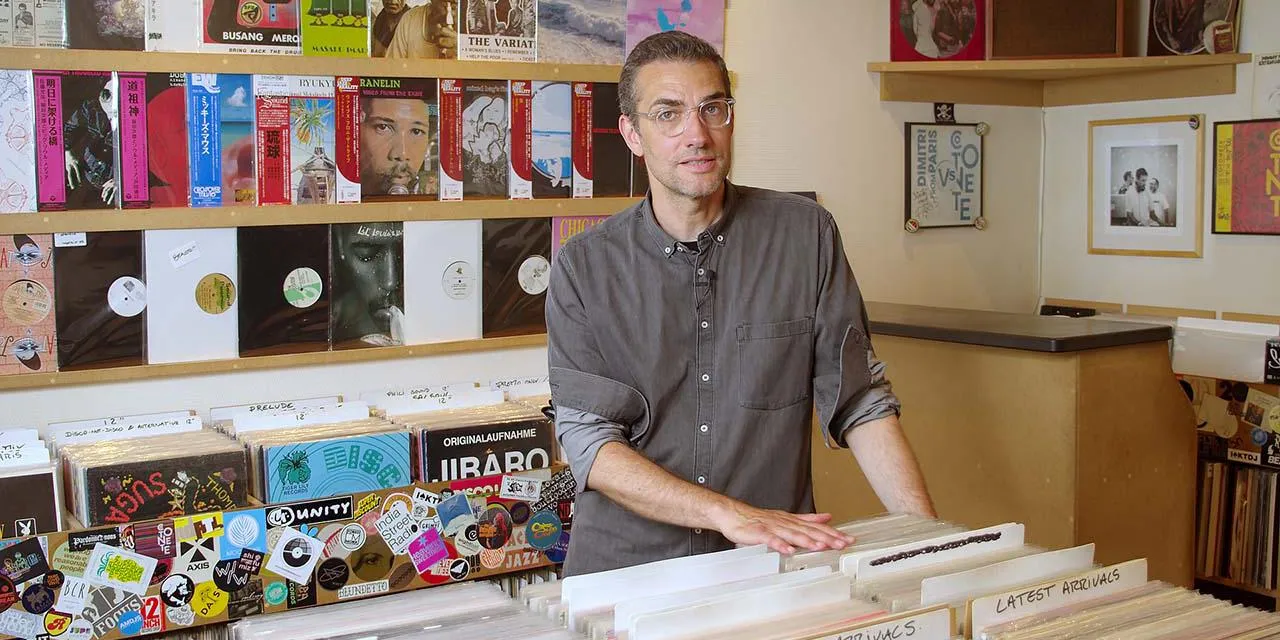
About the instructor
DJ Deep ist ein französischer House- und Techno-Produzent und DJ und der Mann hinter dem Label Deeply Rooted (früher Deeply Rooted House). Über mehr als 20 Jahre war er einer der großen Kuratoren der Dance-Musik, und genau dieses Gehör dafür, was einen Track wirklich funktionieren lässt, macht ihn zu einem Wegweiser, von dem zu lernen sich lohnt. 'Ich sehe meinen Job darin, ein großer Filter zu sein', sagt er und spielt damit eher die Rolle herunter, die der Franzose in der Entwicklung der House-Musik gespielt hat. 'Als Vinyl-Junkie bin ich fast täglich in den Plattenläden auf der Jagd nach Krachern. Zu teilen, was ich für die großartigsten Platten des Moments oder die zeitlosesten persönlichen Klassiker halte, ist etwas, das mich über die Jahre angetrieben hat.' Cyril Etienne trat aus der Pariser Szene hervor, um auf der Weltbühne wirklich Eindruck zu machen. Er begann damit, für Laurent Garnier auf Partys wie Oz und Zoo im Club Palace aufzulegen, wurde dann Stammgast im Rex Club und etablierte seinen einzigartigen Geschmackssinn mit seinen 'A Deep Groove'-Sendungen auf dem Piratensender Radio FG und später auf Radio Nova. Rasch stieg er dazu auf, weltweit aufzulegen, und trug dabei stets einen von seiner Liebe zu Chicago, New York und Detroit geprägten Sinn für Geschichte mit sich. Er verwischt die Grenzen zwischen House und Techno und verbindet zugleich klassische und zeitgenössische Cuts mit seinem eigenen Erzählgefühl – nicht nur als DJ und Produzent, sondern auch als Labelchef und Party-Kurator. Seit 2003 leitet er sein eigenes zukunftsgewandtes Label Deeply Rooted, gleichbedeutend mit stilvollem, wurzeltreuem House und Techno von neuen und etablierten Größen wie Kerri Chandler, Ben Klock, Francois X, Ben Sims und Roman Poncet sowie dem aufstrebenden französischen Star und Concrete-Paris-Stammgast Marina Trench. Seine eigene Raw-Cuts-Reihe schlägt die Brücke zwischen der innigen Emotion des House und der direkten Wucht des Techno. Über sein eigenes Label hinaus hat er auf Rekids, Kaoz Theory und Tresor veröffentlicht und als Remixer Künstler wie Carl Craig, St Germain, DJ Honesty, Scan 7, Borderland (Juan Atkins) und Point G überarbeitet, wobei er stets seine einzigartig warmen Atmosphären in alles einbringt, was er herausbringt. Außerdem macht er unter diversen anderen Aliassen Musik: Rebeval, mit roher klingendem Material auf L.I.E.S.; Sergie Rezza, ein Kollaborationsprojekt und gleichnamiges Label gemeinsam mit Roman Poncet, das experimentelleren, ambientdurchsetzten House und Techno sowohl im EP- als auch im LP-Format auslotet; Fang, für zeitgenössischen House; und Adventice, für treibenden, klassisch verwurzelten Techno, mit Veröffentlichungen auf Tresor und Liveauftritten an Orten wie Berlin Atonal. Seine eklektischere Seite kommt in seinen Open-Library-Radiosendungen auf Worldwide FM zum Vorschein – zweistündige Fenster aus Jazz, Soul, Dub, Funk und Ambient, die ganz besondere, immersive Soundtracks ergeben. Was auch immer er spielt oder produziert, DJ Deep hat stets etwas Hörenswertes. In Find Your Own Path in House & Techno teilt er, wie er Tracks auswählt, anordnet und formt, sodass du, statt Trends hinterherzujagen, einen Sound und einen Geschmack aufbauen kannst, die unverkennbar deine eigenen sind. read more