



Kreatives Tonleiter-Üben
Mit
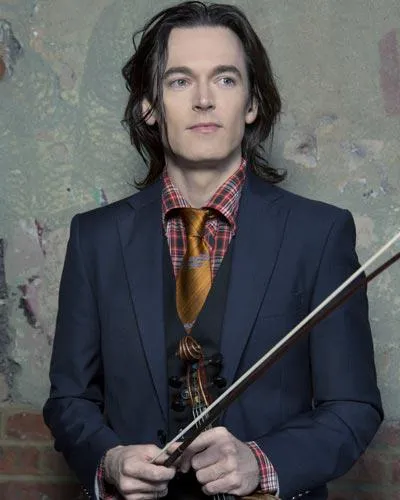
Zach BrockZach Brock denkt Tonleitern und Arpeggien als harmonische Werkzeuge neu - er spielt sie vertikal und horizontal über die Saiten hinweg -, um echte Geläufigkeit für die Improvisation aufzubauen.
Das steckt im Kurs
24 Lektionen (2h 32m) · 1 gratis
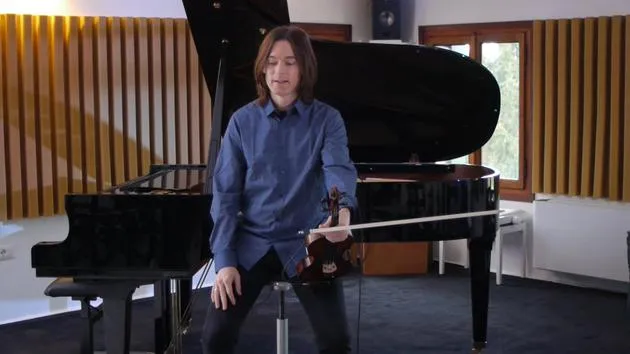
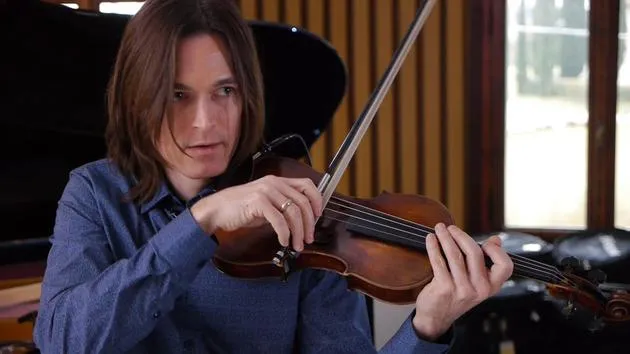
Transkript der Lektion
Understanding Music Fundamentals
Everything that we're going to do from a technical standpoint with our string instrument will deal with the three areas that make up music:
- Melody
- Harmony
- Rhythm
I won't get into aspects like vibe and atmosphere, as that can all be part of those three fundamental areas.
The Importance of Scales
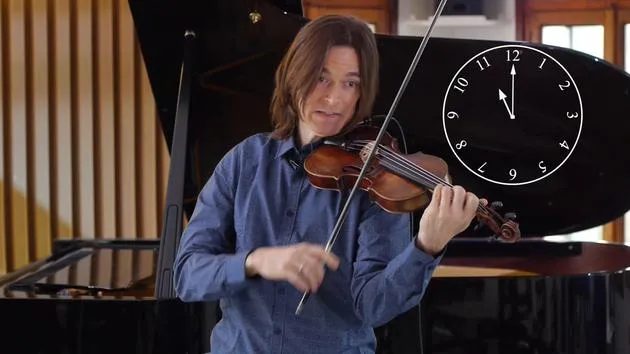
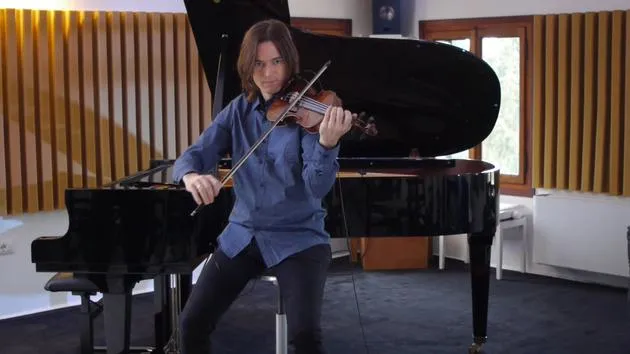
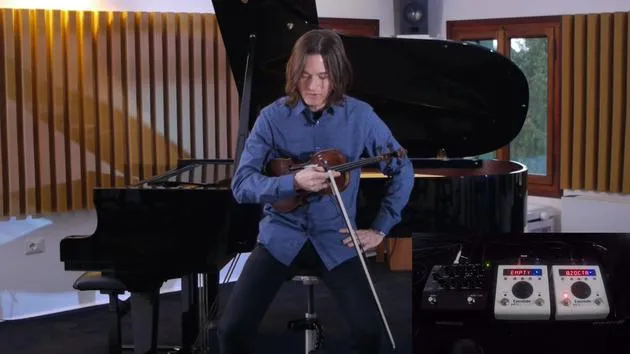
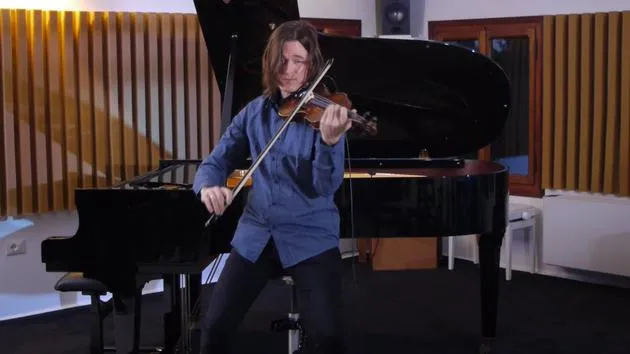
Let's talk about scales. We will be playing scales in ways that you may not have practiced before. It's important to think about the direction and the container of the scale you're playing on your instrument while practicing.
-
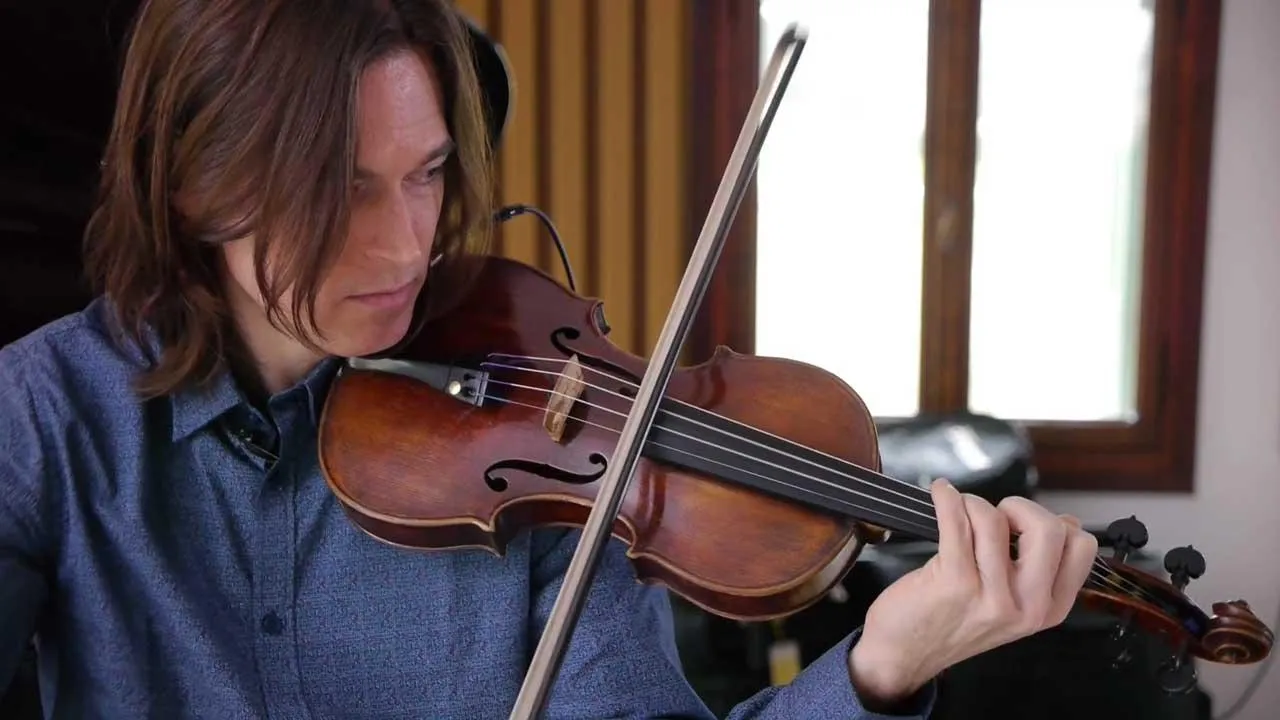
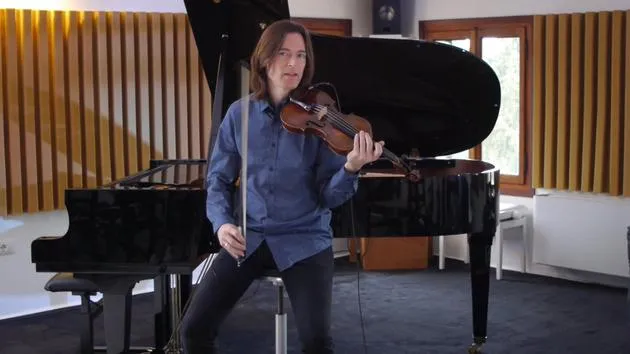
Vertical Playing: For me, if I play a scale on one string, I call that completely vertical.
-
Horizontal Playing: Playing in position, whether I'm in first, second, third, etc., refers to horizontal playing.
When you combine these two approaches, that's essentially what you are doing. For example, if you're playing your three-octave scales and arpeggios, etc., this combination is crucial.
Exploring Modes and Container Techniques
Additionally, there's another useful way of playing scales: focusing on modes. This is a great way to open up your creative spirit and explore what you're already playing on your instrument.
Two-String Octave Containment
On the violin and viola, we are fortunate to have the ability to contain one octave across two strings. For cello players, I know it gets a bit more complicated. And bass players, well, you're on your own!
When thinking about scales within the one-octave container:
- This also applies to arpeggios.
- For example, playing an A flat octave: A, B flat, C, F.
- I'm simply moving the frame to each root and playing within it.
Of course, this could also be an arpeggio:
- A B major triad
- An E flat major triad
- A G major triad
Understanding Seventh Chords
We will discuss seventh chords, which are extremely useful for improvisation across all styles when talking about harmony.
After mapping out your arpeggios, if you're playing in the key of E flat, for instance, adding the D natural, the seventh tone, will be key.
I should also mention that, while discussing arpeggios, I will refer to them as voicings. On instruments like the piano or guitar, you can play all of those sounds simultaneously. We can also play those voicings in a more linear way.
Basic Forms of Harmonic Information
You want to first focus on the most basic forms of these pieces of harmonic information. You will come back to this foundational knowledge regularly.
- As you advance, you will realize the importance of understanding the basic structure of chords:
- A major triad
- A minor triad on top of that
- Perhaps another minor triad
Starting to think about harmony in this way will help you avoid getting stuck. Skipping the basics and jumping straight to more complex voicings, like a C7, can leave you feeling lost if you're unaware of the underlying structures.
Fun Scale Exercise
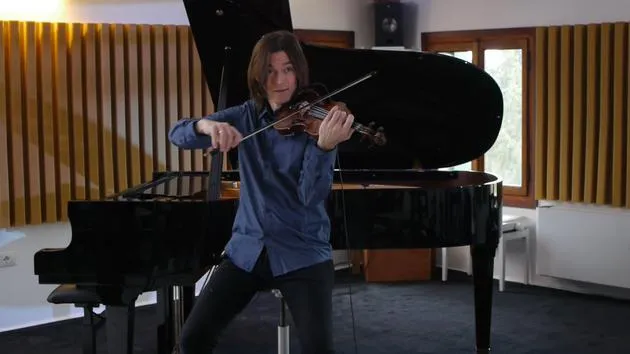
Here's a fun scale exercise you can try:
-
Pick one particular fingering and practice moving that around the instrument.
-
Next, try playing a G major scale, starting on the open G.
-
Move that up to the next pair of strings (you'll get a D major scale).
-
Then, move it up to the next set of strings, up a fifth.
Let's also talk about making variations or creating a little melody within that frame. Play a scale, then challenge yourself to create a melody assignment using the notes you have right there.
That's the first thing I want you to do before we transition into more advanced techniques.
24 Lektionen
2 Std. 32 Min. strukturierte Videolektionen
Erweiterte Videofunktionen
Verlangsamen, Passagen loopen, mitlesen
Handy, Tablet & Desktop
Üben, wo du willst
100 % Zufriedenheitsgarantie
30 Tage Geld-zurück-Garantie
Lern deinen Guru kennen
Lern deinen Guru kennen
Zach Brock, gefeiert als „der herausragende improvisierende Geiger seiner Generation“, ist ein Violinist und Komponist, dessen Musik aus den Traditionen des Jazz, der Klassik, der Weltmusik und der Popmusik schöpft.
Zach erhielt 2017 seinen ersten Grammy Award für seine Mitwirkung am Album Culcha Vulcha von Snarky Puppy. Seine Anerkennung als Bandleader wuchs durch Auftritte in Sälen wie der Carnegie Hall und bei Festivals wie „Tudo e Jazz“ in Brasilien, während sich sein Ruf als Sideman durch die Zusammenarbeit mit dem legendären Bassisten Stanley Clarke, der zeitgenössischen Instrumental-Supergroup Snarky Puppy und den Jazzmeistern Phil Markowitz und Dave Liebman verbreitete.
Zach hat zehn Aufnahmen als Leader oder Co-Leader eingespielt und ist der erste Geiger, der für das altehrwürdige niederländische Jazzlabel Criss Cross aufgenommen hat. Außerdem hat er das US-Außenministerium als musikalischer Botschafter auf den Salomonen vertreten, als Gastsolist für die Filmmusik zweier Spielfilme des Sundance Festivals gespielt und ist derzeit Artist in Residence an der Temple University in Philadelphia.
In seinem Kurs lernst du, auf der Violine direkt aus der Quelle zu improvisieren: wie Zach an Melodie, Rhythmus und Harmonie herangeht und wie du beginnst, deine eigene Stimme zu finden, so wie er es an der Seite von Snarky Puppy und darüber hinaus getan hat.







