



Fortgeschrittenes Tonleiter-Üben für die Improvisation

Mit
Zach BrockZach Brock zeigt, wie man Tonleitern nach Tonumfang statt vom Grundton aus übt – das befreit dein Improvisieren und bringt dich über die einfachen Tonarten mit leeren Saiten hinaus.
Das steckt im Kurs
24 Lektionen (2h 32m) · 1 gratis
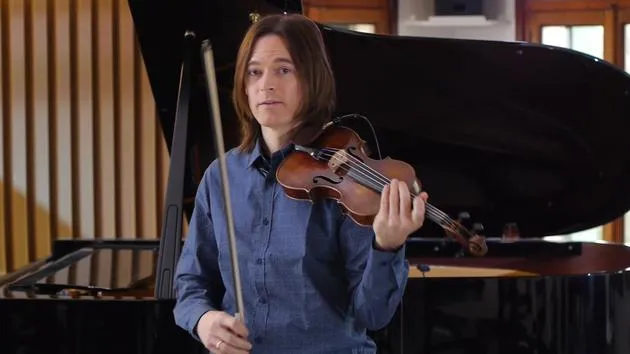
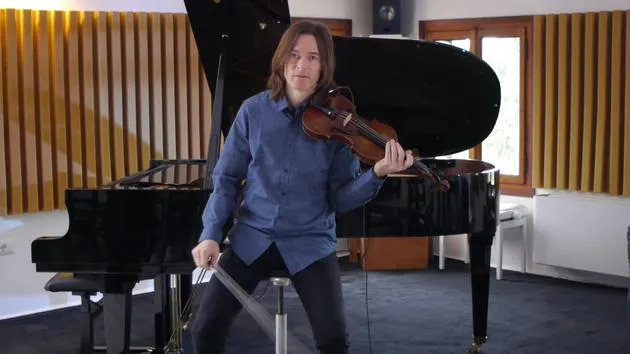
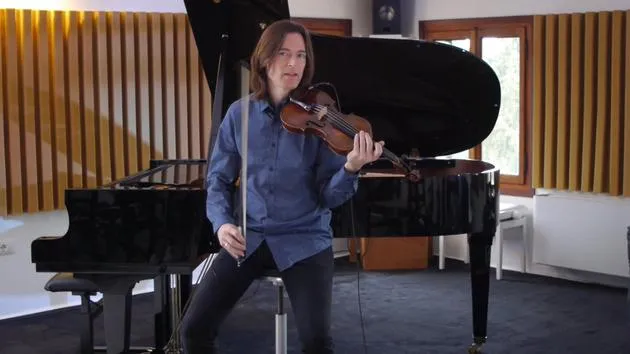
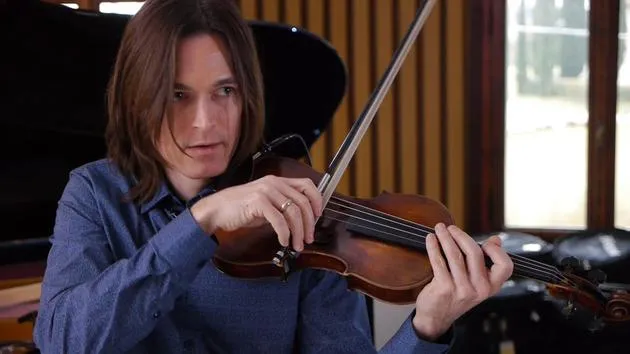
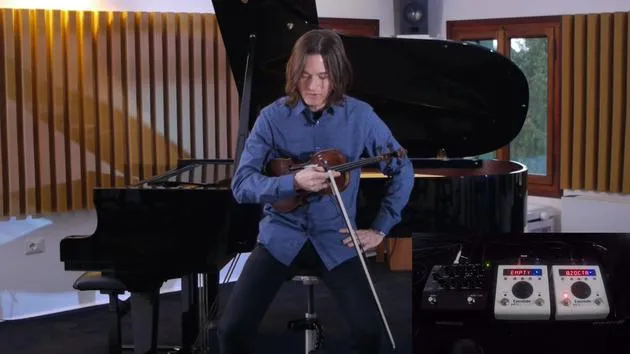
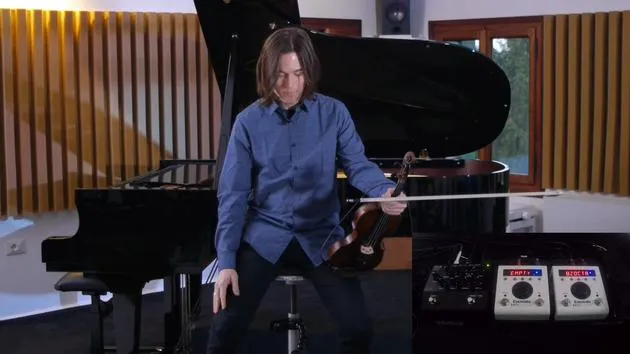
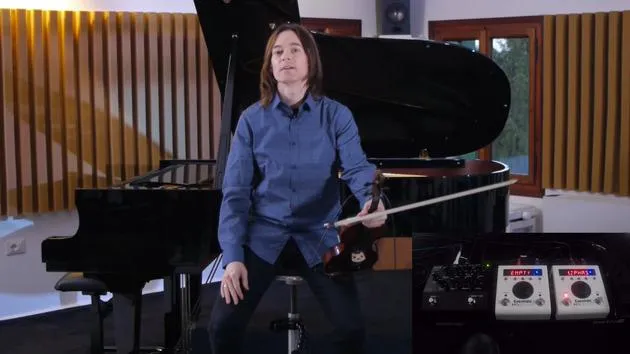
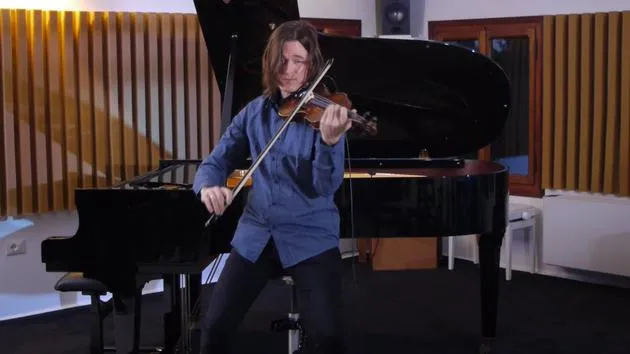
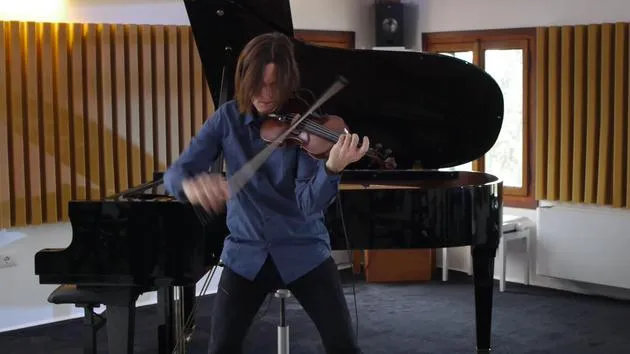
Transkript der Lektion
String Player Improvisation Techniques
String players tend to be very root-centric and key-centric. Even those who have reached a fairly high level of improvisatory vocabulary, for instance, when playing jazz and learning how to play blues in B flat, often begin their ideas from the root note of the chord.
Breaking Away from the Root
Today, I want to discuss how to practice your scales so that you aren't confined to always starting your ideas from the root of the chord. I have a little challenge for you to expand how you think about your instrument.
For those who have played Galamian scales or Carl Flesch scales, when I say "C major scale," many will instinctively begin with the second position, second finger. If I mention B flat, the same tendency arises, followed by F, where you'll hear similar patterns. This system of playing scales always starts from the root.
Thinking in Ranges
What has opened up a lot of exploration for me on my instrument, not just in improvisation but in classical pieces too, is the concept of thinking in terms of ranges instead of always starting from the first note of a scale.
- Low: The first octave
- Medium: Into the second octave and sometimes up higher
- High: A three-octave scale
- Extra High: Going to that fourth octave, generally occurring on one string
This approach might be advanced for some, but don't worry; it's easy to break down and build up to. Begin with one octave and then move to two.
Shifting Techniques
One valuable principle I learned from my teacher about playing scales on a string instrument is to always shift on a half step. If that isn't possible, shift on a strong beat. While this is technically sound for intonation and cleanness, during improvisation, you may need to shift on a whole step.
Playing range-based scales is a great way to start working on this. Here's a simplified way to think about it:
- The lowest note of any scale in any tonality is either going to be a G natural, A flat, or G sharp.
- I won't get into double sharps or flats.
Example: B Flat Scale
For instance, if I ask you to play a B flat scale, two octaves, most of you would start like this. Instead, I want you to:
- Play me a two-octave B flat major scale, starting on the lowest note that you can access.
It may not sound like B flat major to you, it might sound like G minor, but by practicing in this method, you'll gain access to the full range of that scale when improvising.
Directions of Playing
Let's also consider the different directions you can play on your string instrument:
- Vertical Plane: Going straight up one string
- Horizontal: Playing in position (first position, second position, etc.)
- Diagonal: Moving from low to high, etc.
Each of these approaches is worth exploring in every tonality you work on for improvisation, and it's excellent for technique as well.
Full Range Practice
Now, let's return to the B flat major scale and practice it through the full range of the low position. This way, you're starting at the root but exploring all possible notes.
"It still sounds like G minor to a lot of you out there."
You can also utilize a tuner to help with this. Here's a nice B flat drone.
- Start from the lowest note.
- Shift up through the positions, playing B flat major.
This practice helps you become more aware of the notes you are playing up the neck, an essential skill for improvisation.
Playing Through All 12 Keys
For those of you who have spent a lot of time playing scales using method books (like Galamian or Carl Flesch), I challenge you: Have you ever played through all 12 keys without a book?
You must practice in all 12 keys to prepare for any possible situation in an improvised setting.
Note that jazz often involves flat keys because horns typically play in those keys. Personally, when I started improvising, I was comfortable in G and D (the 'happy keys' with open strings) but realized I had much work to do when it came to blues in D flat.
In summary, playing in all 12 keys is crucial, and there are efficient ways to practice this, which I will definitely discuss in future lessons.
24 Lektionen
2 Std. 32 Min. strukturierte Videolektionen
Erweiterte Videofunktionen
Verlangsamen, Passagen loopen, mitlesen
Handy, Tablet & Desktop
Üben, wo du willst
100 % Zufriedenheitsgarantie
30 Tage Geld-zurück-Garantie
Lern deinen Guru kennen
Lern deinen Guru kennen
Zach Brock, gefeiert als „der herausragende improvisierende Geiger seiner Generation“, ist ein Violinist und Komponist, dessen Musik aus den Traditionen des Jazz, der Klassik, der Weltmusik und der Popmusik schöpft.
Zach erhielt 2017 seinen ersten Grammy Award für seine Mitwirkung am Album Culcha Vulcha von Snarky Puppy. Seine Anerkennung als Bandleader wuchs durch Auftritte in Sälen wie der Carnegie Hall und bei Festivals wie „Tudo e Jazz“ in Brasilien, während sich sein Ruf als Sideman durch die Zusammenarbeit mit dem legendären Bassisten Stanley Clarke, der zeitgenössischen Instrumental-Supergroup Snarky Puppy und den Jazzmeistern Phil Markowitz und Dave Liebman verbreitete.
Zach hat zehn Aufnahmen als Leader oder Co-Leader eingespielt und ist der erste Geiger, der für das altehrwürdige niederländische Jazzlabel Criss Cross aufgenommen hat. Außerdem hat er das US-Außenministerium als musikalischer Botschafter auf den Salomonen vertreten, als Gastsolist für die Filmmusik zweier Spielfilme des Sundance Festivals gespielt und ist derzeit Artist in Residence an der Temple University in Philadelphia.
In seinem Kurs lernst du, auf der Violine direkt aus der Quelle zu improvisieren: wie Zach an Melodie, Rhythmus und Harmonie herangeht und wie du beginnst, deine eigene Stimme zu finden, so wie er es an der Seite von Snarky Puppy und darüber hinaus getan hat.







