



Mozart Requiem
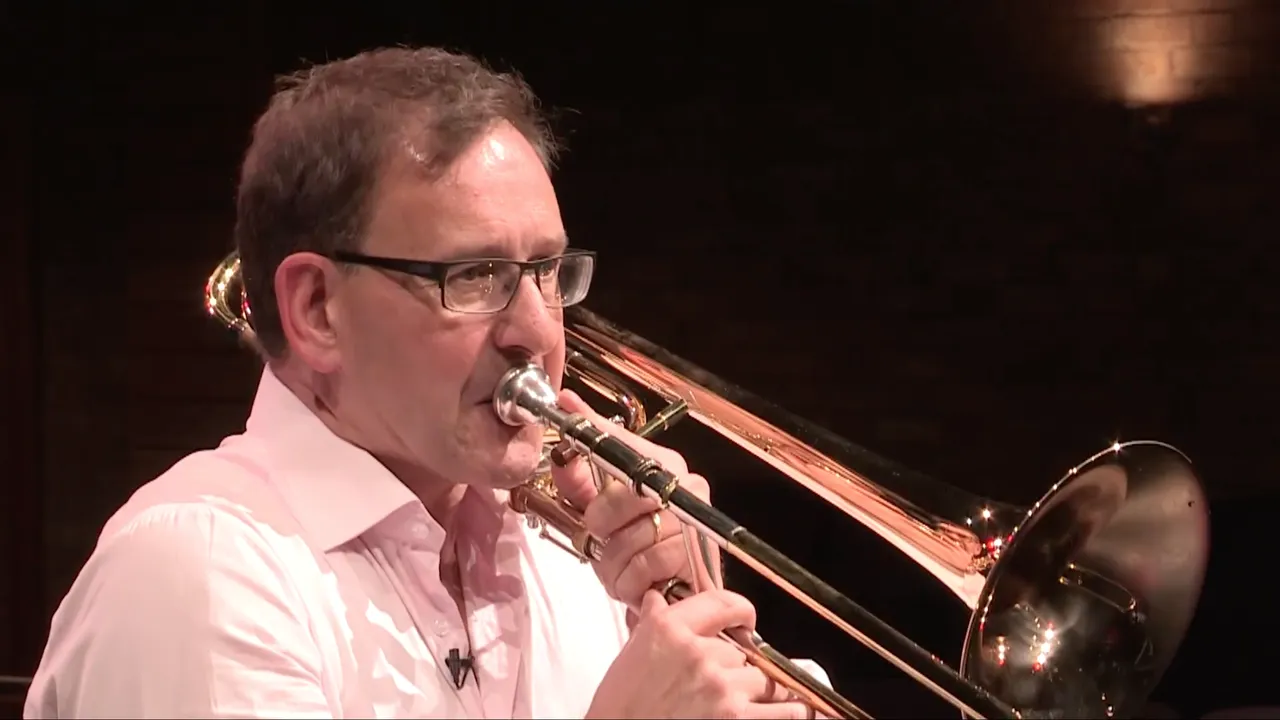
Das steckt im Kurs
10 Lektionen (2h 21m) · 1 gratis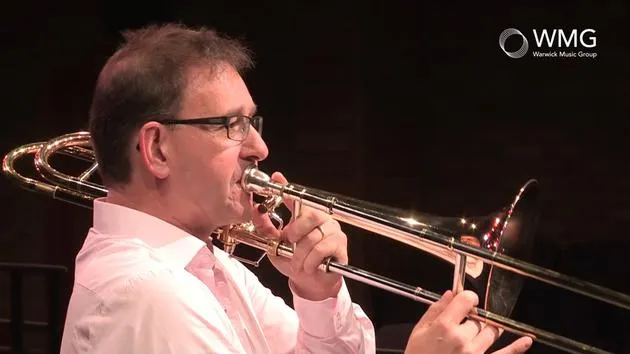
01. Breathing, part 1
Gratis-Lektion6:59
02. Rossini, William Tell and The Thievish Magpie
14:54
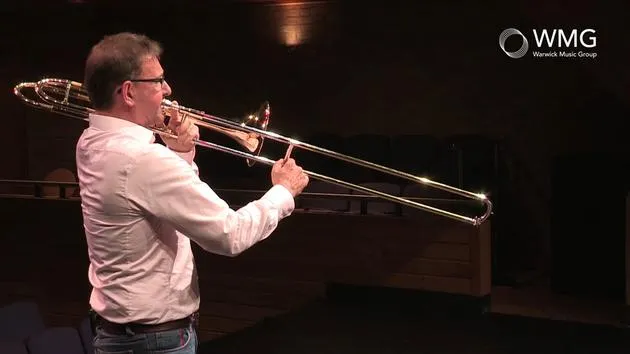
03. High Range Building
8:50
04. Detached Articulation
18:50
05. Mahler's Third Symphony
22:21
06. Mozart Requiem
Du bist hier13:41
07. Ravel's Bolero
11:35
08. Legato
17:55
09. The Philosophy of Warm Up
14:04
10. Wagner, Ride of the Valkyries and Prelude to Act 3 of Lohengrin
12:20
Transkript der Lektion
Preparing the Mozart Requiem for Trombone Auditions
One of the most commonly found excerpts in a trombone audition is the Mozart Requiem. The tenor trombone solo, namely the second trombone solo from the Mozart Requiem, is indeed one of the most important pieces in trombone repertoire. Let's dive into it in detail, focusing on how to prepare, practice, and think musically about this excerpt.
First Phrase
First, let's address the first phrase:
- There is a measure (bar) of rest before it.
- Ensure the next phrase is in the same tempo.
- Many auditions are ruined because candidates fail to keep tempo, counting: "1, 2, 3, 1." This happens more often than you might think.
Best Practices:
- Use a metronome. Check to ensure the first couple of bars maintain the same tempo.
- Count that bar of rest in the correct tempo and enter at the same tempo as the beginning. This detail is perhaps the most critical piece of information in this entire video.
Articulation:
For me, it's vital that:
- The articulation is clear.
- We don't lose the musical line.
While it might be tempting to overdo the articulation, we must remember:
- It's classical music, not romantic.
- We should maintain a legato air while articulating clearly.
Tempo:
- My chosen tempo is rather quick, with a feeling of being in two.
- Some orchestras may prefer a slower interpretation; you must be flexible and adapt accordingly.
- If playing slower in four, ensure that your breath and emphasis align with the musical phrase.
Next Phrase
Now, let's move on to the next phrase:
- This section often causes debate about whether to play legato or detached.
- I always opt for a legato, adhering to what I call natural slurs:
- Natural slurs cross the harmonics where no tongue is needed.
- Tonguing is used when crossing the harmonic.
Position Choices:
- I'm utilizing alternative positions to facilitate natural slurs across the harmonics (for example, B flat in fifth, D in fourth, F in fourth).
Challenges Under Pressure:
- The distance between an F and an A flat (moving from first to third or from fourth to third) can feel significant.
- The movement between these notes can be tight, assisting with embouchure adjustments.
Airstream and Flexibility
While playing, it's crucial to maintain:
- A smooth and even airstream.
- Accuracy with the slide, ensuring it is paired with smooth air.
Considerations for Various Styles:
- Some orchestras may prefer that the legato includes tongue articulation, while I prefer a smoother approach. Always be prepared for all styles.
Vibrato
- Vibrato is a no-no in the Mozart Requiem.
- If you've been practicing with vibrato in your Bordonis, eliminate it when performing the Mozart Requiem; it is not stylistically appropriate.
Musical Structure
Understanding the musical structure is vital:
- There's a recurring figure that appears throughout Mozart.
- Recognize the musicality required to express the excerpts effectively.
Intensity and Expression:
- Grow in intensity while keeping the quarters (crotchets) long.
- Tastefully back away as you approach the A flat, but don't overdo it. Remember, this is classical music, tone down the romantic expressiveness.
Summary
To sum up how to approach the Mozart Requiem:
-
Technical Issues:
- If experiencing any difficulties, it's best to work on these separately from the excerpt.
- Refer to specific coaching videos for articulation and legato. Return to etudes to ensure your technique is flawless.
-
Audition Imperatives:
- Keeping a consistent tempo between the first and second phrases is key, audition panels will be checking that.
- Use your natural legato and alternative positions where needed, ensuring a smooth flow throughout.
-
Highlighting Harmony:
- Identify important harmonic notes in the Mozart Requiem and subtly highlight them to aid listener understanding, but don't overdo it, remember, it's Mozart, not Rachmaninoff.
By embodying these practices, you will be better prepared to tackle the nuances of this essential trombone excerpt!
10 Lektionen
2 Std. 21 Min. strukturierte Videolektionen
Erweiterte Videofunktionen
Verlangsamen, Passagen loopen, mitlesen
Handy, Tablet & Desktop
Üben, wo du willst
100 % Zufriedenheitsgarantie
30 Tage Geld-zurück-Garantie
Lern deinen Guru kennen
Lern deinen Guru kennen
Ian Bousfield steht seit über einem Vierteljahrhundert an der Spitze seines Fachs und brilliert in vielleicht mehr Facetten des Musikgeschäfts als jeder andere Posaunist bis heute. Seine Laufbahn umfasst das Mitwirken in zwei der anerkannt weltbesten vier Orchester, von denen eines als vielleicht größtes Opernorchester gilt, Auftritte als Solist auf höchstem Niveau mit Orchestern, Brass Bands und auf historischen Instrumenten, Soloaufnahmen bei Spitzenlabels, das Einspielen von Titelmelodien für Hollywood-Blockbuster sowie die Lehrtätigkeit an der Royal Academy in London.
Als Solist ist Ian unter anderem mit der Vienna Philharmonic, dem London Symphony, dem London Philharmonic, dem BBC Philharmonic, dem Halle Orchestra, dem Sapporo Symphony und dem Austin Symphony aufgetreten. Er hat mit folgenden Dirigenten gearbeitet: Riccardo Muti, Michael Tilson Thomas, Sir Neville Marriner, Kent Nagano, Ion Marin und Matthias Bamert, und EMI, Camerata, Chandos und Doyen zählen zu den Labels, für die Ian im Laufe der Jahre mehrere Soloaufnahmen gemacht hat. Die wohl beiden Höhepunkte von Ians Solokarriere bis heute waren die dreimalige Aufführung des Nino-Rota-Konzerts mit der Vienna Philharmonic und Riccardo Muti (2008) in Wien sowie beim Lucerne Festival und in Tokio und die Uraufführung von Jonathan Doves Stargazer, das für ihn geschrieben und ihm gewidmet wurde, mit dem London Symphony Orchestra unter Michael Tilson Thomas (2007). Er ist mit allen bedeutenden Brass Bands der Welt aufgetreten und hat mit vielen von ihnen aufgenommen. Als Solist ist er praktisch überall auf der Welt aufgetreten, und als Dozent ist es vermutlich einfacher, die Konservatorien und Festivals zu nennen, bei denen er nicht aufgetreten ist!







