



Moll in der 5. Position als Alternative zu Moll in der 3. Position

Lesson time: (5min 7sec)
PT Gazell stellt die 5. Position in Moll als intuitive Alternative zur 3. Position vor, mit der 2 Blow als Grundton und Ventilen für extra Süße.
Course preview
This lesson is part of the course Wie du Valved Bends meisterst und in Songs einbaust
Watch a preview of the full course below.
Lesson transcript:
Lesson 6: Fifth Position Minor
Hi everybody. Welcome back. This is the sixth lesson in the course, and this one is called Fifth Position Minor.
I like to think of fifth position as a nice alternative to third position minor. The reason I say that is I think it's a very intuitive position to play in. In combination with the valves, it really becomes a great position to play minor pitch tunes out of.
Pentatonic Scale in Fifth Position Minor
A good place to start is to show you the pentatonic scale in fifth position minor.
- We have our A flat half-valved harmonica.
- The first thing we have to remember when playing in fifth position is that our root note is the two blow note.
Let me play the pentatonic scale in two octaves for you so you can hear what that sounds like in fifth position.
"Look at your tab, follow along, and this is the two blow that I'm starting on."
Demonstration
Let's do that one more time.
As you can see, that's a minor scale; it's the pentatonic scale.
What's interesting about it is that I'm only using one bent note. The rest of it is just regular blow and draw notes.
Look at your tab and listen to me play it one more time.
"There's our bent note. That's the only one in two octaves of the pentatonic scale in fifth position minor."
Safe Notes
Now, if you think about it, all those are safe notes. If we're starting to play something in fifth minor, all those notes come into play.
There are obviously other notes that we can use, but those are safe notes. So as you start to get your feet under you for fifth position minor, learn that scale because those are all notes that you can jump around to, and they'll all work in fifth position minor without you having to worry about whether or not you're going to land on a correct note.
Creating Riffs
Another great way to think about it is if you start to put together a little riff or passage in fifth position minor and you start to get to the point where,
"Uh oh, how am I going to resolve this?"
You can always resolve back to the two blow or the five blow because they're octaves apart, and that's your root note.
Key Reference
Incidentally, fifth position minor on an E flat harmonica means the song is in C minor.
If we add the valves to it, listen to what happens when I start to use valves with fifth position minor.
"There's my 7 draw bend."
Now listen to me implement the 6th blow bend in fifth position minor.
It's very cool. It kind of gives it...
"It doesn't sound like Oriental or Spanish or Eastern European. It really sounds like a nice minor mode that you can play around in."
That's why I like it. It's actually the position that I prefer for trying to play in minor keys. If it doesn't really lay right for me, then I might look at third minor. But for the most part, fifth position minor works great for most of the stuff I try to accomplish.
In the next lesson, we're actually going to learn to play a song in fifth position minor.
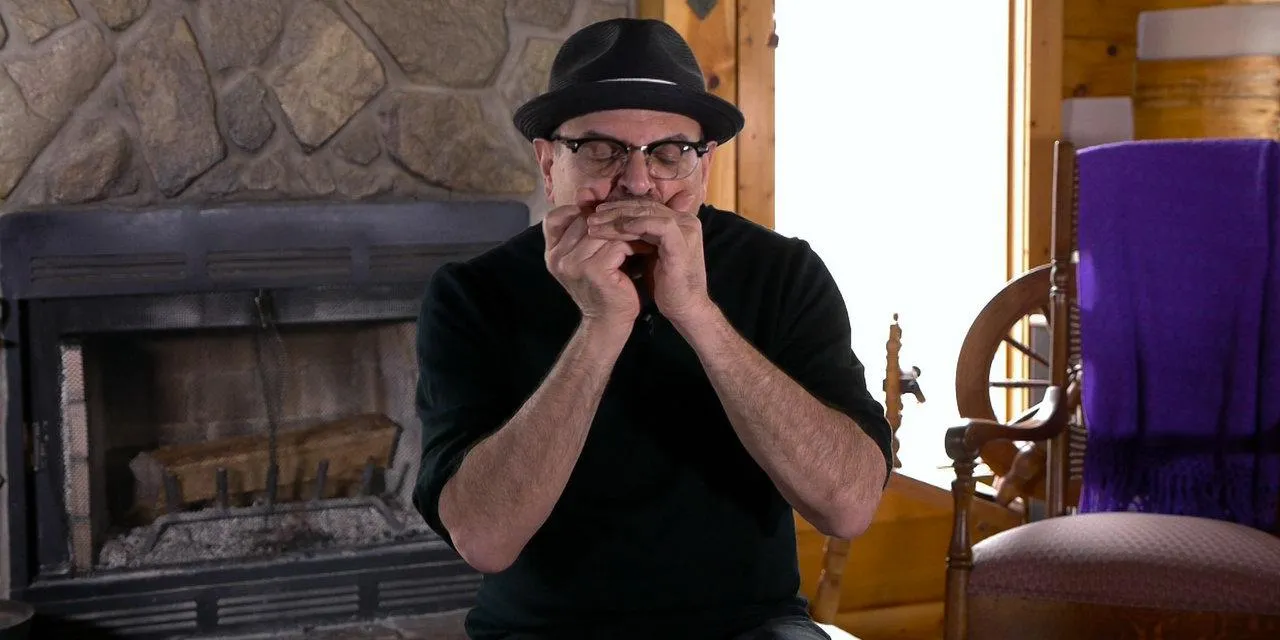
About the instructor
PT Gazell hat sich seine Stellung als Meister der diatonischen Mundharmonika erarbeitet. Nach Jahren als gefragter Begleit- und Studiomusiker für einige der größten Namen Nashvilles entdeckte PT das Half-Valving, und seine Musik erreichte buchstäblich neue Höhen. Kein anderer Spieler verbindet seine Phrasierung, seinen melodischen Stil, seine Stückauswahl und seine Improvisationsfähigkeiten so wie er - am Ende ist es ein ganz eigener Stil. Mit seinem eigenen Signature-Instrument, der von Seydel gefertigten diatonischen Gazell Method, beweist PT, dass die Mundharmonika zu weit mehr fähig ist, als die meisten von uns glauben. Genieß es! In seinen Kursen unterrichtet PT das Half-Valving direkt aus erster Hand, damit du mit der Gazell Method starten, gedämpfte (valved) Bends meistern und sie in deine eigenen Songs einbringen kannst. read more