



3 Bending-Übungen mit Ventil
Mit
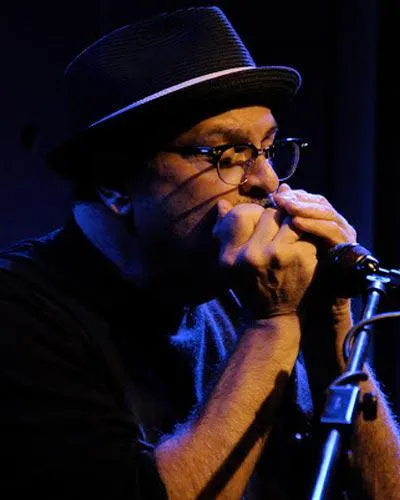
PT GazellPT Gazell geht Bending-Übungen mit Ventil durch, die den Draw Bend an Loch sieben, den Valve Draw Bend und den Blow Bend an Loch sechs trainieren, mit dem Ziel sauberer, entspannter Bends.
Das steckt im Kurs
10 Lektionen (0h 50m) · 1 gratis
01. Wie wir unsere Bending-Technik fokussieren und verfeinern
5:35
02. Die Valved Bends verstehen
Gratis-Lektion4:59
03. Eine weitere Half-Valve-Bending-Übung
5:09
04. 3 Bending-Übungen mit Ventil
Du bist hier4:45
05. Bends mit und ohne Ventile nutzen, um das ganze Instrument zu erkunden
3:54
06. Einen Valve Blow Bend in einer Melodie einsetzen (My Romance)
6:05
07. Die zusätzliche Emotion der Gazell-Methode nutzen
6:59
08. Moll in der 5. Position als Alternative zu Moll in der 3. Position
5:07
09. Lerne das Thema des Songs „Sugar“ in der 5. Lage in Moll
3:40
10. Ein Solo für „Sugar“ lernen und wie du den ganzen Song spielst
4:11
Transkript der Lektion
Valved Bending Exercises
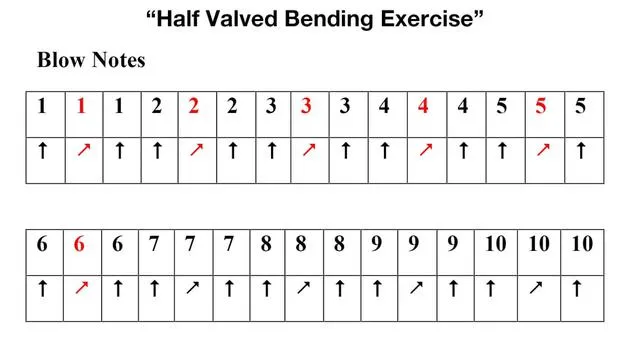
Alright, I'd like to play another valved bending exercise that I want you guys to practice. This one starts on the seven draw bend and ends up using the seven draw bend, valve draw bend, and the six blow bend.
Exercise Overview
- Starting Note: Seven valve draw bend
- Ending Note: Sixth valved blow bend
Listen to what I play.
I'll play it again. The important thing here is to get good clean bends again.
- Don't force it.
- Stay relaxed.
- Use the increments of your mouth and that focused stream that we talked about to be able to execute the seven draw bend and the six blow bend.
Key Points
- Remember: the valve bends happen more towards the front of the mouth, similar to our conventional blow bending at the top of the harmonica, but even up one more notch is probably a good way to think about that.
I'll play this exercise one more time, and you can check that, of course, on your PDF and practice it on your own as well.
Second Valved Bending Exercise
Okay, here's the second valved bending exercise. This is another good little routine for you to start to get the feel for how to:
- Move around
- Connect the valved bends as half steps into the riffs that you already know
This one employs:
- Six blow bend
- Five blow bend
- Seven draw bend
- Eight draw bend
Listen to me play it. I'm going to play it slower. Follow along on the PDF so you can see how I'm playing the notes.
- Remember, the ones in red are the valved bends.
Third Valved Bending Exercise
Great. And finally, here's the third valved bending exercise. This one's not only designed to get you used to playing some of the valved bends, both blow and draw, but it's also designed for you to utilize:
- A conventional blow bend at the top
- A valved blow bend at the bottom
It covers running from the top of the harmonica all the way to the bottom. It's a great exercise.
Let me play it for you at speed and then we'll slow it down and I'll play it again. Follow your tab.
- Remember: the red indicates that it's a valved bend that I'm doing.
I'm going to play it slow now, so we're starting on nine blows.
One more time slowly. Listen for that number two valved blow bend at the bottom. The valve bend was the second last note.
I'll play it one more time.
Practice that one hard. Because you're not only using valve bends and conventional bends, but you're going from the top of the harmonica all the way to the bottom.
It's a great exercise that really gets you familiar with where all the notes are on the harmonica.
10 Lektionen
0 Std. 50 Min. strukturierte Videolektionen
Erweiterte Videofunktionen
Verlangsamen, Passagen loopen, mitlesen
Handy, Tablet & Desktop
Üben, wo du willst
100 % Zufriedenheitsgarantie
30 Tage Geld-zurück-Garantie
Lern deinen Guru kennen
Lern deinen Guru kennen
PT Gazell hat sich seine Stellung als Meister der diatonischen Mundharmonika erarbeitet. Nach Jahren als gefragter Begleit- und Studiomusiker für einige der größten Namen Nashvilles entdeckte PT das Half-Valving, und seine Musik erreichte buchstäblich neue Höhen.
Kein anderer Spieler verbindet seine Phrasierung, seinen melodischen Stil, seine Stückauswahl und seine Improvisationsfähigkeiten so wie er - am Ende ist es ein ganz eigener Stil. Mit seinem eigenen Signature-Instrument, der von Seydel gefertigten diatonischen Gazell Method, beweist PT, dass die Mundharmonika zu weit mehr fähig ist, als die meisten von uns glauben.
Genieß es!
In seinen Kursen unterrichtet PT das Half-Valving direkt aus erster Hand, damit du mit der Gazell Method starten, gedämpfte (valved) Bends meistern und sie in deine eigenen Songs einbringen kannst.







