



Grundtechnik
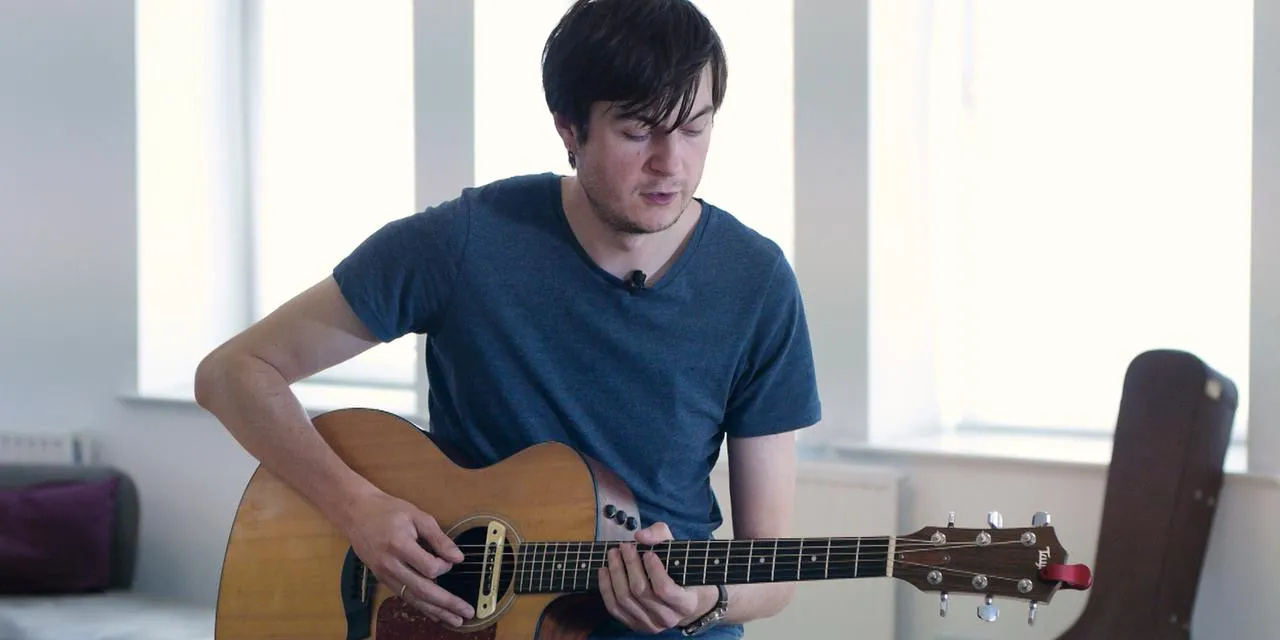
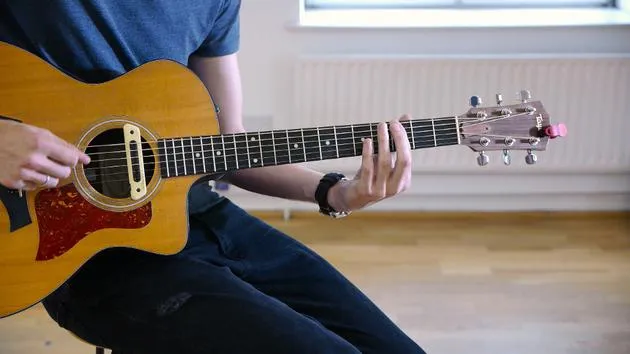
James Barratt behandelt die Grundlagen der Handhaltung an der Gitarre – den Druck der Greifhand, das Platzieren der Fingerkuppe direkt hinter dem Bund und ein präzises Anschlagen mit der rechten Hand.
Das steckt im Kurs
14 Lektionen (2h 12m) · 1 gratis
01. Stimmen
13:34
02. Erste Schritte
Gratis-Lektion9:58
03. Grundtechnik
Du bist hier9:01
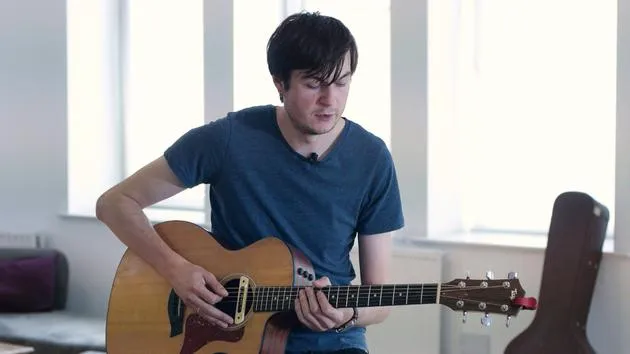
04. Offene Akkorde
6:24
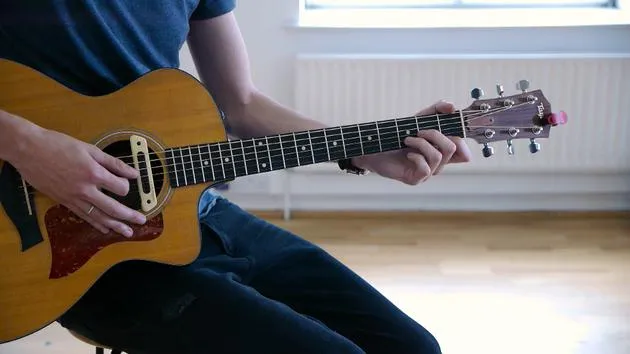
05. Akkordfolgen
7:57
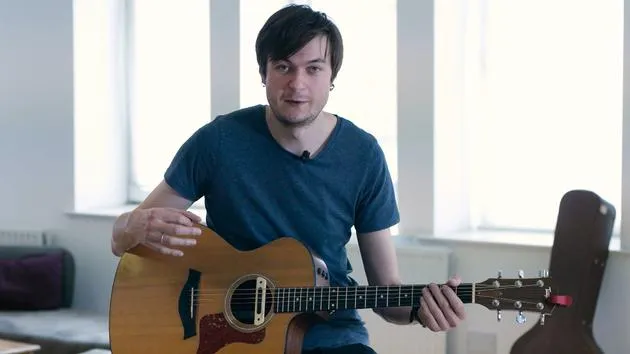
06. Rhythmus und die rechte Hand
11:56
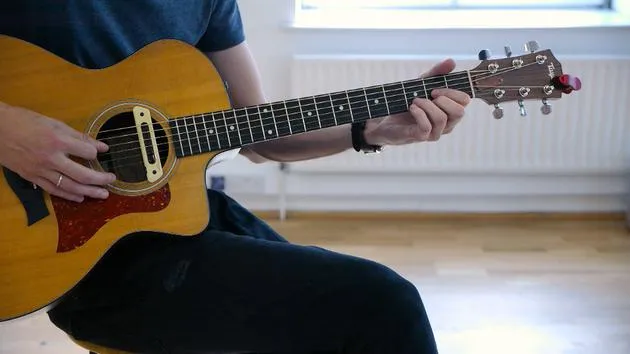
07. REM - Everybody Hurts
9:01
08. Bryan Adams - Run To You
3:23
09. Palm Muting
3:16
10. Legato
8:47
11. Michael Jackson - Beat It
5:23
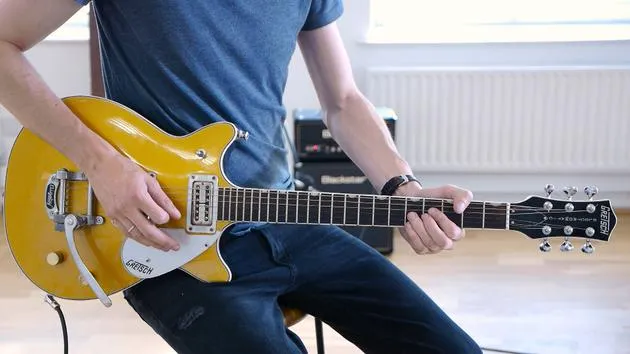
12. Bending
15:36
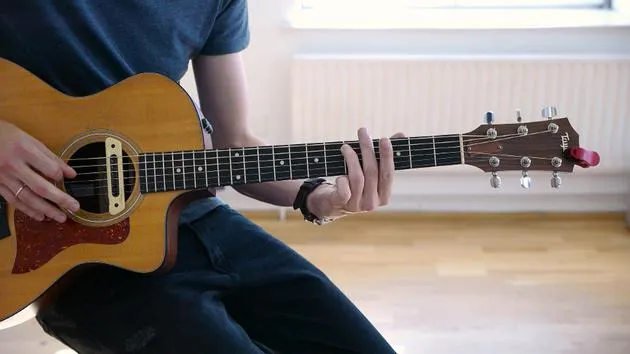
13. Barré-Akkorde
11:35
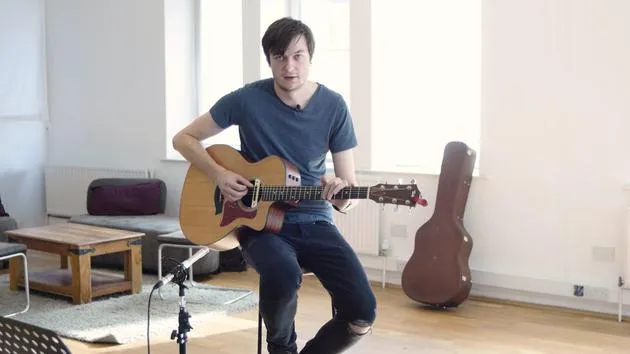
14. Zusammenfassung - AC/DC Back In Black
16:56
Transkript der Lektion
Guitar Lesson: Hand Positions and Playing Techniques
Hey, guys!
In this lesson, I want to discuss some of the finer points of where we're going to put our hands and how we're going to use our fingers to play the guitar comfortably. Hopefully, this will get you on the path to learning quickly with minimal bad habits.
Left Hand Positioning
We've already talked about labeling our fingers on the left hand:
- Thumb
- First Finger
- Second Finger
- Third Finger
- Fourth Finger
Finding the Best Place on the Fret
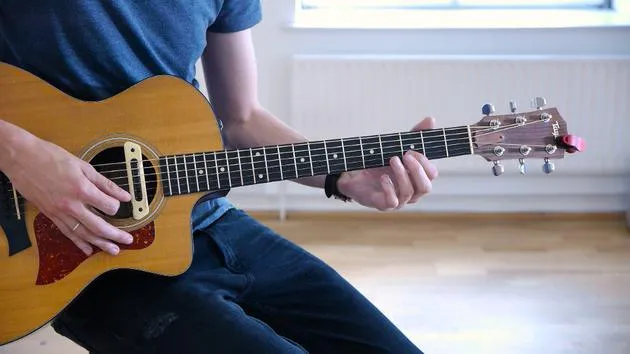
First, let's focus on finger positioning on the fret. For instance, on the third fret, there's a relatively large area compared to the size of my fingertip.
- When asked to play the third fret on the bottom E string, you could technically place your finger anywhere within the 2-centimeter space.
- Optimal Position: Right up against the metal of the third fret, not on top of it, but just on the other side. This position gives a nice clean tone.
If you place your finger too close to the back of the fret (closer to the second fret), you might hear buzzes and require much more pressure to achieve tone and sustain.
- Dull Sound: Playing on top of the metal results in a dull sound, which we want to avoid.
Applying Pressure
Now, let's discuss the amount of pressure needed to make the guitar "sing."
When you're first learning, it can be tempting to apply a lot of pressure with your left hand. However, that's often unnecessary.
- Start with the Third Fret on the Bottom E String:
- Rest your finger on the string without pressing down into the fretboard.
- Gradually apply minimal pressure until you hear a clear note.
You don't need to dig in hard; even with minimal pressure, you can achieve a clean tone. As you push harder, the pitch will change.
- Keep in mind that relaxation is key, and excessive pressure is detrimental. It can slow you down and hurt your fingers.
E Minor Pentatonic Scale Exercise
Let's take a look at the E minor pentatonic scale, a common scale in rock and blues. This will also help synchronize our left and right hands.
The Fingering
- Open String: Start with an open E.
- Second Finger: Fret the third fret on the E string.
- Move to the A String: Open A, then use your first finger for the second fret.
- Repeat for Remaining Strings: When you reach the B string, return to open and then fret the third finger on the third fret.
Practice Instructions
- Start slow to maintain control over what you're doing.
- Use your fingertips to ensure clean sounds.
Right Hand Technique
For your right hand, it's helpful to start with all downstrokes initially.
- Position: Anchor your wrist to the bridge of the guitar. This lets your right hand pick out any string easily.
Practice the Scale
- Play the scale with all downstrokes:
- Open E...
- (Continue with your picking pattern)
Right Hand Exercise: E Minor 7 Chord
Now, let's shift focus to the right hand while fretting an E minor 7 chord with your left hand.
Chord Position
- Use your first finger to fret the second fret on the A string.
- The left hand will perform a simple task so we can focus on the right hand.
Alternate Picking Pattern
- We'll do a downstroke followed by an upstroke: Down, Down, Up, Down, Up, Down, Up.
Picking Pattern
- Play the E string.
- Skip to the D string.
- Back to the A string.
- Skip over to the G string, and so on.
This exercise creates a cool cascading sound and is excellent for developing your right hand's accuracy.
Conclusion
You can apply this picking pattern to any chord. Once you've practiced a few open chords, this becomes a great exercise to enhance your playing skills!
If you get started on this now, we'll move on to the next lesson shortly. Happy playing!
14 Lektionen
2 Std. 12 Min. strukturierte Videolektionen
Erweiterte Videofunktionen
Verlangsamen, Passagen loopen, mitlesen
Handy, Tablet & Desktop
Üben, wo du willst
100 % Zufriedenheitsgarantie
30 Tage Geld-zurück-Garantie
Lern deinen Guru kennen

Lern deinen Guru kennen
James verfolgt seit seinem Abschluss an der Academy of Contemporary Music im Jahr 2007 eine erfolgreiche Karriere als hauptberuflicher Musiker. Seither hat er mit Künstlern und Produzenten von Stereophonics, Ronnie Dunn, Scissor Sisters und vielen anderen zusammengearbeitet. Außerdem komponiert er Musik für Fernsehen und Film, etwa für den Fernsehspot 'Music Pieces' von Sony Walkman und den Trailer zum Film Albatross.
Er bezeichnet sich selbst als eine Art Purist, einen Musiker für Musiker, und diese Herangehensweise an seine Kunst hat die Aufmerksamkeit großer Unternehmen und TV-Produzenten geweckt. Dank seiner natürlichen Vielseitigkeit als Künstler ist James in Sendungen wie 'Geordie Shore' und sogar in Werbespots der British Heart Foundation zu hören. Wie er selbst sagt: „Das beste und häufigste Kompliment, das ich bei Sessions für Kunden bekomme, ist, dass ich das spiele, was für die Musik 'richtig' ist. Oft läuft alles auf Schlichtheit hinaus.“
„James ist das Wahre. Großartiger Spieler, umwerfender Ton, und ich würde ihn ohne zu zögern für jedes Projekt empfehlen. Rock on, James!“ - Joey Sykes (Meredith Brooks / Will Champlin / The Babys)
In Foundations of Rock Guitar Technique gibt James genau diese Philosophie weiter und zeigt dir, wie du eine solide, musikalische Rockgitarrentechnik aufbaust und das spielst, was für den Song 'richtig' ist.







