



Moll-None-Akkorde
Mit
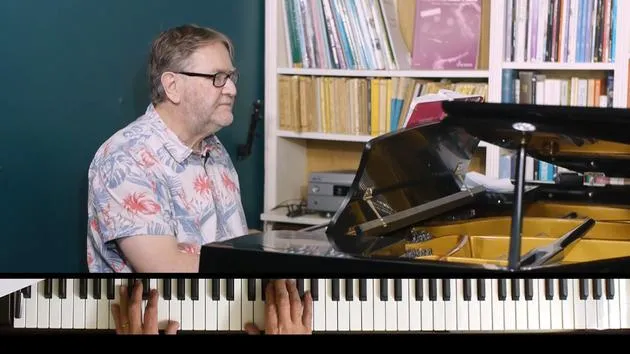
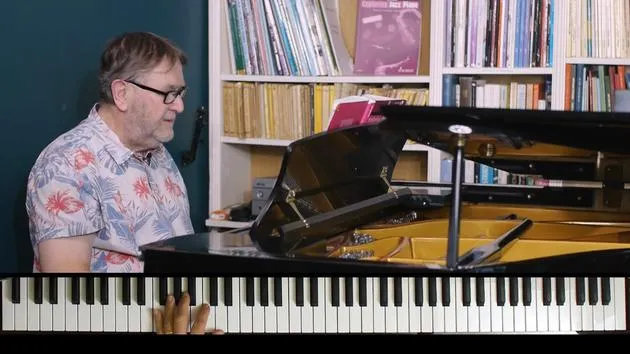
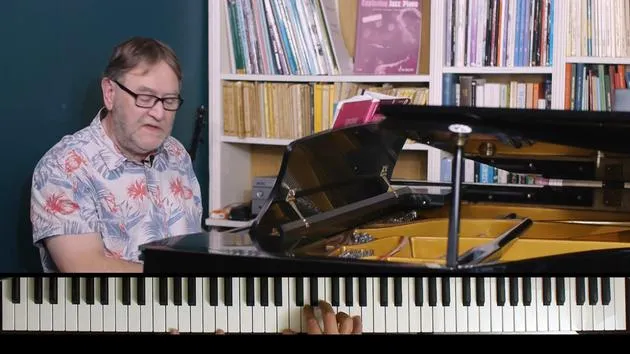
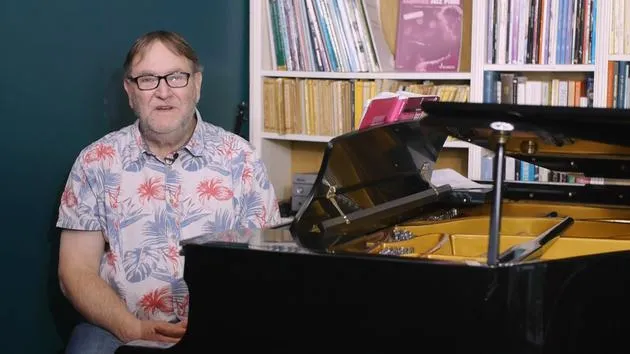
Tim RichardsTim Richards zeigt, wie du die 9 zu Moll-Septakkorden hinzufügst, um am Klavier Moll-Nonen zu bilden, und warum ein C-Moll-9 in der rechten Hand wie ein Es-Dur-7 aussieht.
Das steckt im Kurs
31 Lektionen (1h 44m) · 1 gratis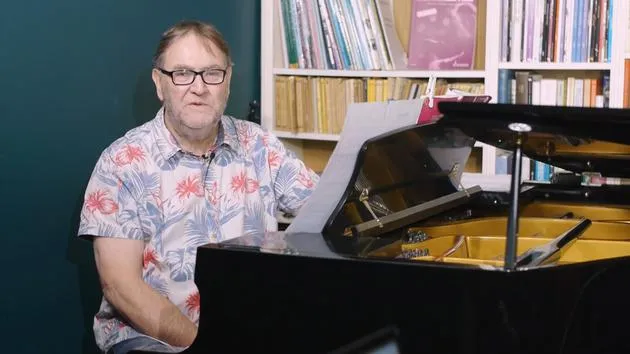
Transkript der Lektion
Minor Ninth Chords
So now we're going to move on to minor ninth chords. As with the others, you just add the second to the basic seventh chords.
C Minor 7
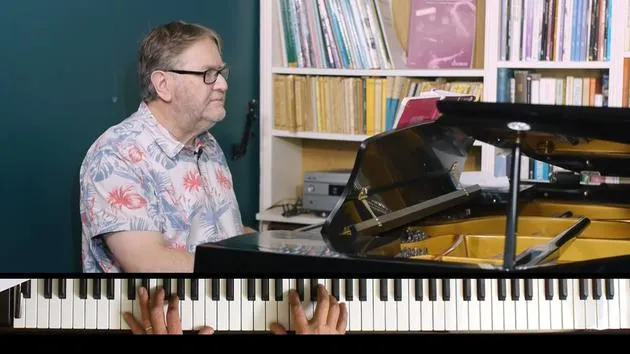
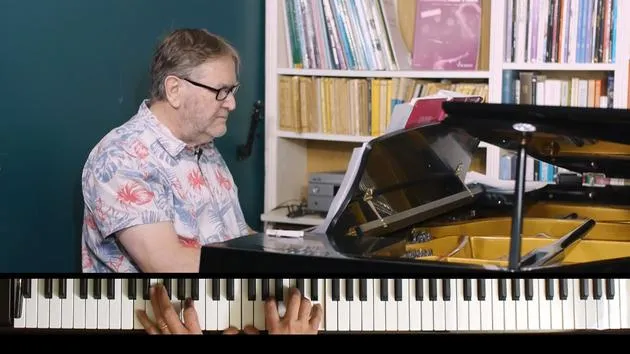
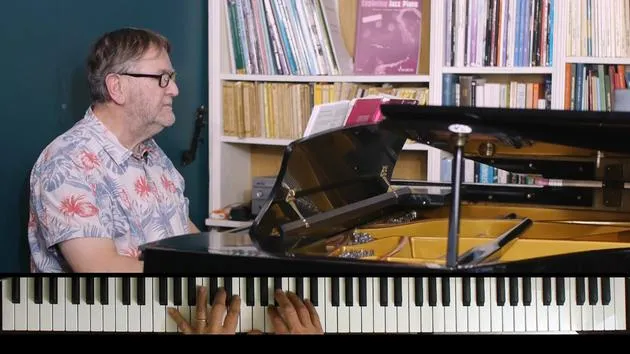
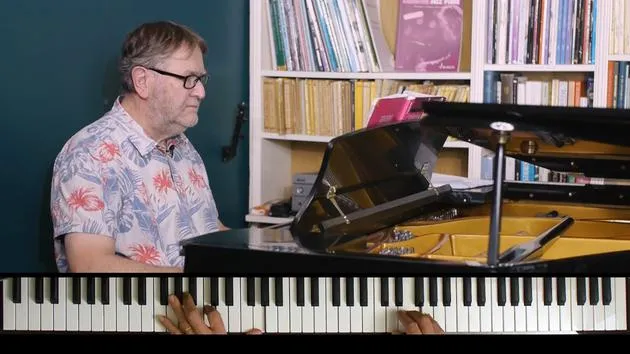
Here's C minor 7, and we're adding the ninth (or the second above).
- Taking the root away, as we did before, leaves us with what looks like E flat major seven in the right hand.
- But we know it's not because we've got a C in the bass.
Whether it's there or not, that's the chord symbol. So it's somewhat counterintuitive, isn't it?
"C minor 7 looks like E flat major 7, but there is a relationship there: the relative major, relative minor."
Playing the Chord
- Play the C minor 7 chord in the left hand.
- You can play E flat major 7 or 3, 5, 7, 9 in C minor.
Next Tune: Cloud 9
So we're going to do this for every chord of the next tune, Cloud 9. The first chord will be:
- E
- D
- G
- F
All minor ninths.
In the right hand, it looks like four major sevenths.
B7 Sharp 5
There's one other chord, which is a B7, that I play with a raised fifth.
- B7 would normally have an F sharp in it. I've raised that to a G.
- So that's B7 Sharp 5 or B7; you could call that an augmented chord if you like.
The reason that chord's there is that it takes us back to E minor.
"B7, sharp 5 wants to go to E minor 9 or just any old E minor. But the minor 9th is the flavour of this tune."
31 Lektionen
1 Std. 44 Min. strukturierte Videolektionen
Erweiterte Videofunktionen
Verlangsamen, Passagen loopen, mitlesen
Handy, Tablet & Desktop
Üben, wo du willst
100 % Zufriedenheitsgarantie
30 Tage Geld-zurück-Garantie
Lern deinen Guru kennen
Lern deinen Guru kennen
Der von der Kritik gefeierte Jazzpianist und Komponist Tim Richards ist einer der erfahrensten Jazzpädagogen Großbritanniens und unterrichtet seit über 30 Jahren privat Klavier sowie am Morley College, am Goldsmiths College, an der University of Surrey, in den Premises Studios und an weiteren Orten im Vereinigten Königreich und im Ausland. Er hat zahlreiche Titel für Schott Music produziert, darunter die zweibändigen Bestseller Exploring Jazz Piano, Blues, Boogie & Gospel Collection und das gefeierte Improvising Blues Piano. Gemeinsam mit John Crawford ist er zudem Koautor von Exploring Latin Piano und Brazilian Piano Collection.
In jüngerer Zeit hat Schott Jazz, Latin & Modern Collection (15 Stücke für Klavier solo) veröffentlicht, das Originale von Tim Richards neben Stücken von Duke Ellington und Thelonious Monk vereint, sowie das zweibändige Set Beginning Jazz Piano (jetzt ein zweiteiliger MusicGurus-Kurs).
„Die wahre Freude an Tims Musik… liegt darin, dass sie zugleich enorm lehrreich und ein großes Vergnügen zu spielen ist. Jeder, der auch nur das geringste Interesse daran hat, Jazzpiano zu lernen oder zu unterrichten, sollte sich unbedingt eine Sammlung von Tims Büchern zulegen.“ PianoDao
Als Interpret ist Tim seit den 1980er-Jahren eine feste Größe der britischen Jazzszene und spielte auch den Blues mit britischen und amerikanischen Legenden wie Otis Grand, Earl Green, Dana Gillespie, Larry Garner, Joe Louis Walker und Mojo Buford. Er hat über ein Dutzend Alben als Bandleader veröffentlicht (mit vielen der besten Londoner Jazzmusiker, darunter Pete King, Gilad Atzmon, Tony Kofi, Jason Yarde, Seb Rochford, Ed Jones, Dick Pearce und viele andere) und ist mit Besetzungen vom Duo bis zum Nonett durch ganz Europa getourt. Seine jüngste Aufnahme, das Album ‚Telegraph Hill‘ des sechsköpfigen Hextet, wurde im The Observer als "Eine wahre Freude von Anfang bis Ende" beschrieben.
Weitere Informationen finden sich auf seiner Website www.timrichards.ndo.co.uk







