



Ein Arrangement programmieren
Mit
Dov WatermanDov Waterman zeigt, wie du in Logic einen Hook, eine Melodie und eine Harmonie aufbaust und dabei die MIDI-Tools und Arpeggiatoren nutzt, um Ideen zu finden, wenn die Inspiration versiegt.
Das steckt im Kurs
14 Lektionen (0h 53m) · 1 gratis
Transkript der Lektion
Music Lesson: Arrangement, Melody, and Harmony
Okay, so this section is going to be about arrangement, melody, and harmony, and how to get the best hook.
Finding the Melody
Where does it come from?
- When inspiration hits, and the melody is there at your fingertips, that's fantastic!
- But when it's not, and you're struggling a bit, there are a few tools in Logic that can help.
Demonstration of a Track
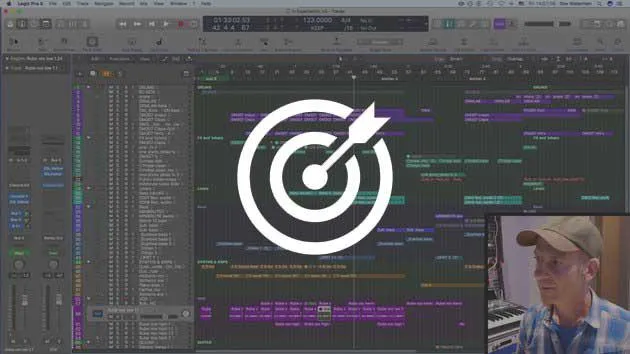
I'm going to play you a small snippet of a track that I've been working on. Literally just a few seconds.
Here it goes.
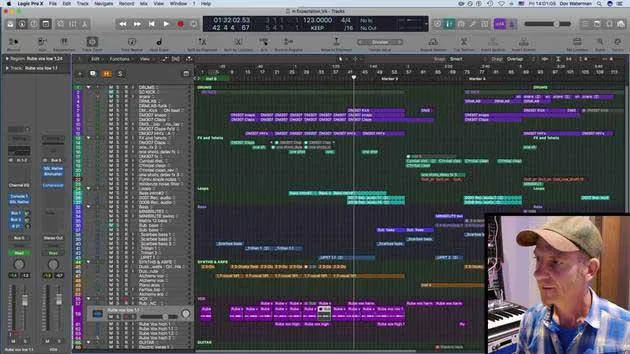
There are a few layers in this track, with lots and lots of sounds. One sound is playing the melody of a chorus section, accompanied by an arpeggiated sound.
What is an Arpeggio?
An arpeggiator is a way of giving a sound some movement.
Tools to Trigger Ideas
Here are a few tools we can utilize to trigger off ideas and experiment a little:
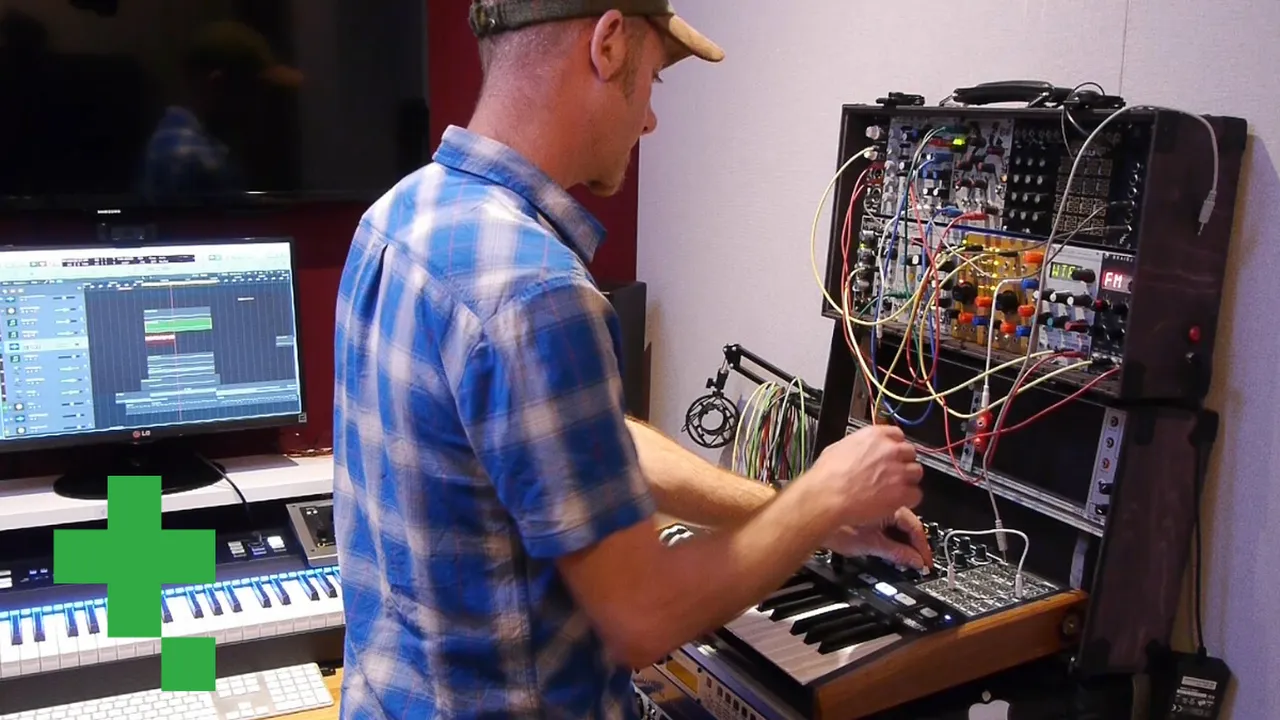
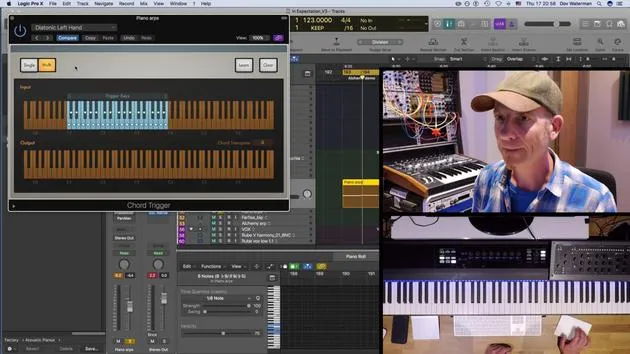
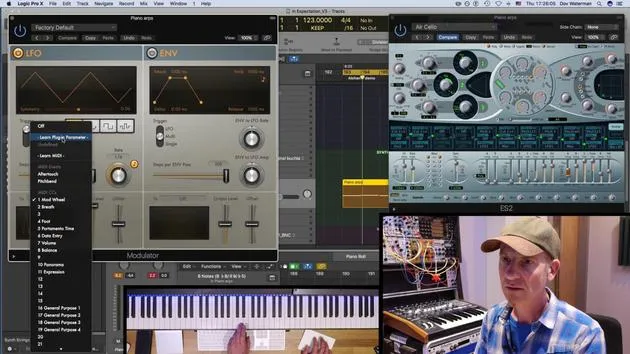
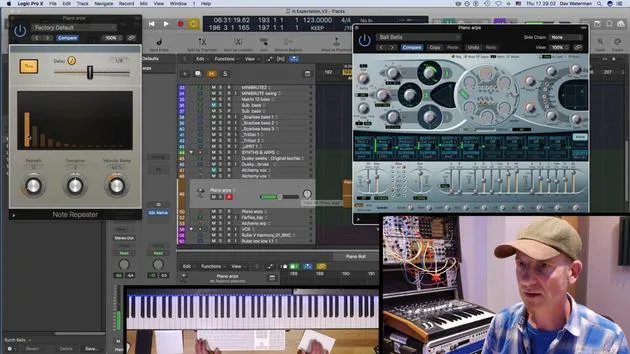
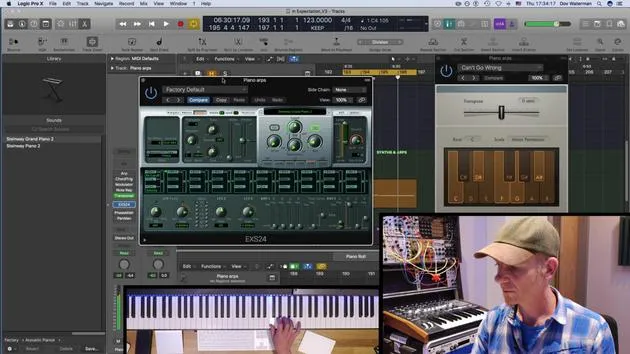
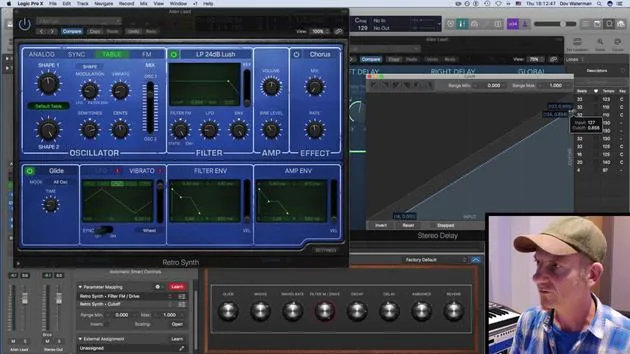
- MIDI Tools in Logic: If we go to our channel strip above the instrument, you will find the MIDI effects. For example, this is a specific instrument, Arturia's SEM.
The green tabs above the instrument are the MIDI effects in Logic. Previously, to use any type of MIDI effect, you had to go through a convoluted routing system in the environment. Fortunately, these MIDI effects have now been brought into the channel strip for easier access.
Identifying Chords
Let's turn off the arpeggiator for a second to identify the chord it's actually playing:
- E minor
- C
- A
- G
- E minor
To give it a little movement, I've turned on the Arpeggiator.
Examining the Arpeggiator
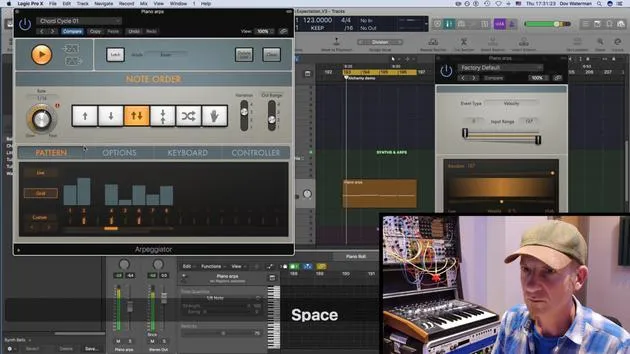
Let's open the Arpeggiator and see what it's doing:
- The two buttons over here relate to outputting your arpeggiator sequence as MIDI notes.
- This bottom button shows what the Arpeggiator is outputting.
When your sequence is playing, if we drag this out, it outputs the notes played.
Using Different Instruments
It's handy to use the same arpeggiator with a different instrument.
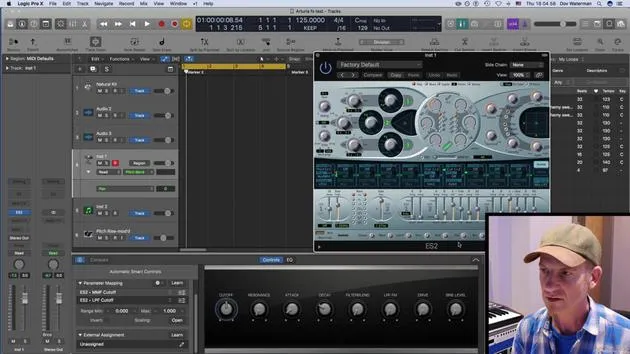
- Let's create another instrument using a polyphonic synth, one of the stock Logic synths.
- Rather than opening up an arpeggiator for that specific sound, you can output the region and the arpeggiator preset.
Sequence Rate and Pattern Options
Moving on to the rate of your sequence:
- This section controls the sequence speed, up or down.
- The octave range is below this.
Next is the pattern options: keyboard and controller options.
- Live mode will play the sequence from the preset or any sequence you have open.
Working with Live Mode
If I have it in live mode and press a key, it will play the generated notes from the chord. This allows you to manipulate the volume, similar to a sequencer.
Custom Section and Chord Bars
The custom section allows you to control various aspects, including volume modifications.
- For instance, using a preset like Pulsing Access doesn't change the notes but alters their volume.
You've also got chord bars here that will play the actual chord without arpeggiation, just generating chords.
Conclusion
To summarize:
- You can randomize patterns and give them some swing.
- The cycle length dictates how long the pattern plays.
- The pattern you're working with can be adjusted to whatever length you like.
The arpeggiator is a great way to create movement and modulation within your chords or melodies!
14 Lektionen
0 Std. 53 Min. strukturierte Videolektionen
Erweiterte Videofunktionen
Verlangsamen, Passagen loopen, mitlesen
Handy, Tablet & Desktop
Üben, wo du willst
100 % Zufriedenheitsgarantie
30 Tage Geld-zurück-Garantie
Lern deinen Guru kennen
Lern deinen Guru kennen
Dov Waterman ist Komponist, Pianist und Produzent. Er hat für Filme wie After Earth, Terminator Genisys, Transformers: The Last Knight und The Snowman Musik geschrieben und das Sounddesign gestaltet und arbeitet als Audio-Editor für Sample-Bibliotheken und Sounddesigner mit Firmen wie Native Instruments und SonoKinetic.
Seine Reihe Composition in Logic geht den Aufbau eines Tracks von Anfang bis Ende in Logic Pro durch – von Templates und Workflow über Synthese und Beat-Programmierung, MIDI-Effekte, Editing bis zum finalen Mix – für Produzenten, die ihre Ideen in fertige Tracks verwandeln möchten.







