



Mit Synth-Elementen arbeiten
Mit
Dov Waterman
Das steckt im Kurs
9 Lektionen (0h 51m) · 1 gratis
01. Willkommen zum Kurs & Dovs Sicht auf Kreativität
3:29
02. Einführung in den Schreibprozess
0:23
03. Fallstudie - Dovs Track Witches' Whisper
3:22
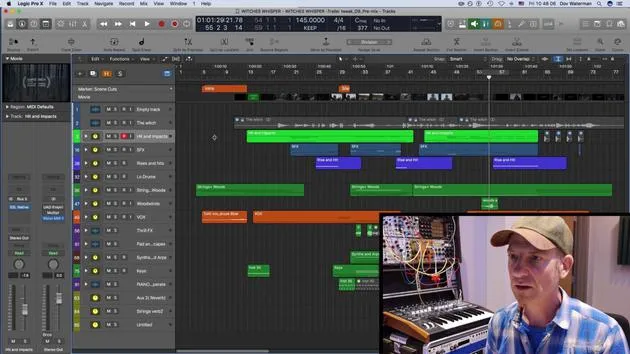
04. Kreativität beginnt mit einer guten Vorlage
Gratis-Lektion5:08
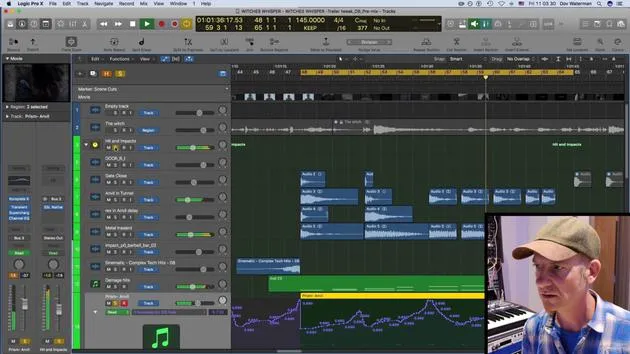
05. Kreative Automation
6:20
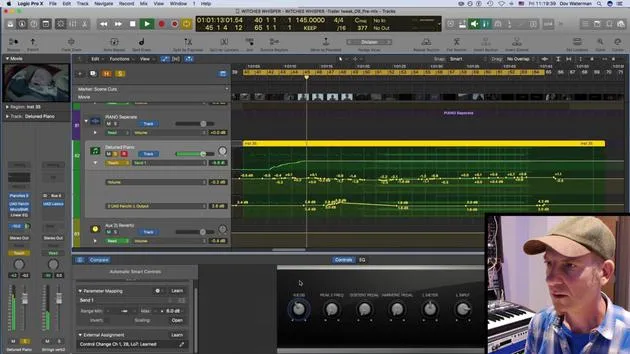
06. Kreatives Sounddesign und mehr Automation
15:23
07. Mit Orchester-Sounds arbeiten
4:09
08. Mit Synth-Elementen arbeiten
Du bist hier12:15
09. CHALLENGE #1: SMART CONTROLS & AUTOMATION
0:55
Transkript der Lektion
Music Lesson: Working with Synth Elements
Introduction
Today, we're going to look at some synth elements in this track. I'm going to zoom out to view the synths and arpeggiators.
Overview of the Track
-
Section Analysis:
- There's quite a lot going on in this section.
- All elements are organized in a folder, summed out to bus 12 with no processing.
-
Stemming Tracks:
- Having them in a folder is beneficial when stemming out tracks.
- This is crucial for collaboration, as the recipient will determine how files are bounced out:
- Stems
- Individual files
-
My Process:
- Typically, I bounce down eight or nine stems of various groups.
- Afterward, I'll bounce a couple of additional reverb stems.
Listening to Synth Parts
Let's play through the synth section to listen to what the synthesizers and arpeggiators are doing.
"This section gives a little ramp up into the next part of the queue."
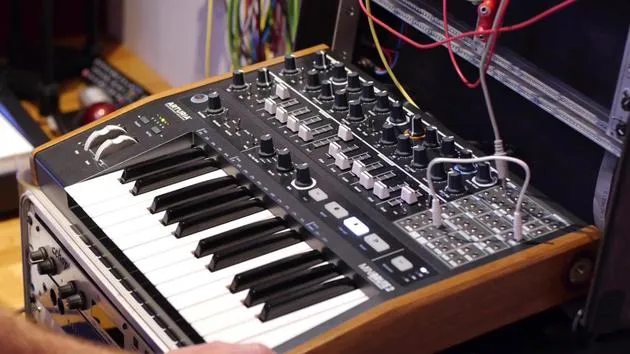
Adding an Arturia MiniBrute 2
I'm going to add another layer using my Arturia MiniBrute 2, a new hardware analog synthesizer.
Layering Intentions
- The goal is to add a layer of intensity that is:
- Clangy
- Metallic
- Organic yet very metallic
Setting Up the MiniBrute
To connect the MiniBrute to Logic, I'll go to the external instrument section:
-
Logic Utility:
- Set to mono, as the MiniBrute is a monosynth.
- Select MIDI channel one for input.
-
Connecting to Apollo:
- Ensure the audio input is set to channel one on my Apollo UAD interface.
Synth Setup
I've copied down a bass line playing a dry, boomy filtered sound. I'll have the MiniBrute play the same line but with a different voice.
Synchronizing MIDI
To sync Logic's internal clock to the MiniBrute:
- Go to Preferences > MIDI Sync.
- Set Logic's MIDI clock to transmit to destination one.
"It's important to note that with multiple synths, Logic can become jumpy."
Recording the Sound
- I will record the MiniBrute's output while playing a MIDI region.
- I'll set up a new audio channel to capture the sound:
- Input one on the Apollo.
- Turn on record and input monitoring.
Adjusting Levels
- Ensure levels are not clipping.
- I aim to set it about six decibels below the peak.
Recording Process
- I'll turn off low latency mode and hit record.
- Focus on aligning the MIDI with the synth's tempo:
- Use triplets for a smoother initial attack.
Final Thoughts
After recording a few takes, I'll be ready to move into audio comping in the next section, utilizing Logic's Take Folder feature.
"This extra layer from the Arturia MiniBrute adds a significant tension to the overall track."
9 Lektionen
0 Std. 51 Min. strukturierte Videolektionen
Erweiterte Videofunktionen
Verlangsamen, Passagen loopen, mitlesen
Handy, Tablet & Desktop
Üben, wo du willst
100 % Zufriedenheitsgarantie
30 Tage Geld-zurück-Garantie
Lern deinen Guru kennen
Lern deinen Guru kennen
Dov Waterman ist Komponist, Pianist und Produzent. Er hat für Filme wie After Earth, Terminator Genisys, Transformers: The Last Knight und The Snowman Musik geschrieben und das Sounddesign gestaltet und arbeitet als Audio-Editor für Sample-Bibliotheken und Sounddesigner mit Firmen wie Native Instruments und SonoKinetic.
Seine Reihe Composition in Logic geht den Aufbau eines Tracks von Anfang bis Ende in Logic Pro durch – von Templates und Workflow über Synthese und Beat-Programmierung, MIDI-Effekte, Editing bis zum finalen Mix – für Produzenten, die ihre Ideen in fertige Tracks verwandeln möchten.







